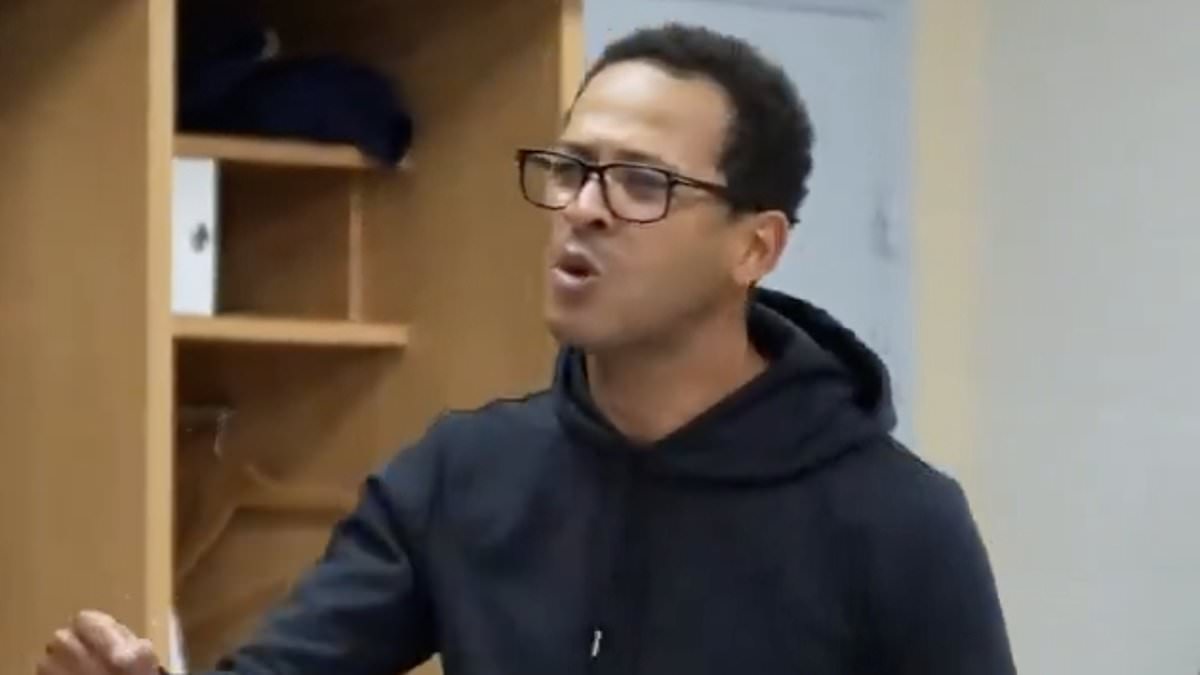

In light of Enzo Maresca’s unexpected departure from Chelsea, a video featuring Liam Rosenior, who is in the running to be the club’s new manager, has recently gained attention online.
On Thursday, Chelsea issued a concise 99-word statement announcing Maresca’s exit. This followed reports on New Year’s Eve suggesting that the Italian manager might leave after a challenging conclusion to 2025.
According to insights from Daily Mail Sport, Chelsea aims to swiftly appoint a successor. Leading the charge is 41-year-old Liam Rosenior, a former defender for Hull City and Brighton, who is currently the frontrunner for the head coach position at Stamford Bridge.
The resurfaced video, originally posted on the social media platform X in September 2024, showcases Rosenior delivering a motivational speech in English, with an interpreter translating into French for his players.
During the speech, Rosenior, emphasizing the need for determination and spirit, challenges his team: “What are we going to do? Accept a 2-2 after a poor start, or even let it slip to 3-2? Or will we show some real courage and win?”

Footage of Chelsea’s potential new boss Liam Rosenior delivering a team talk has resurfaced

Rosenior is on Chelsea’s managerial shortlist after Enzo Maresca’s exit on New Year’s Day
He continues, “When defending, everyone on the pitch must contribute. Every player must defend! Substitutes, when you come on, you need to bring even more energy. Go out there, win the game, and show belief.”
Some Chelsea fans were less than impressed by the speech and let their feelings known in the comments.
‘New Chelsea manager? I just can’t stop laughing,’ one fan posted.
‘No charisma at all,’ a second added. ‘What player is gonna fight for this guy?’
A third chimed in and said: ‘Another inexperienced coach.’
‘Chelsea fans will realise Rosenior is the king of misprofiling players,’ a fourth said in another swipe against the manager.
Rosenior began his coaching career at Brighton where he took on the role of assistant coach with the U23s, while occasionally appearing as a pundit on Sky Sports.
In 2019, he moved to Derby County to become a specialist first team coach and briefly took over as interim first team manager three years later following Wayne Rooney’s resignation.


A group of Chelsea fans did not seem impressed as they reacted negatively in the comments

Rosenior has been Strasbourg manager since July 2024 and is still a very young coach at 41
Rosenior became Hull City boss in November 2022 and went on to earn a nomination for EFL Championship Manager of the Season in 2023-24 after an impressive campaign in charge of the Tigers.
After narrowly missing out on the playoffs the following season, Rosenior was sacked in a decision that shocked many fans given his success since joining the club.
Since July 2024, he has been the manager of Ligue 1 club Strasbourg, who currently sit seventh after qualifying for the Conference League last campaign.
While other candidates have been vetted, sources have told Daily Mail Sport that Rosenior is leading the race as of Thursday night. That would require BlueCo finding a replacement for him at Strasbourg.
There has been no confirmation yet on whether Maresca’s backroom staff members are staying or leaving, including his assistant Willy Caballero.
Maresca’s departure follows a turbulent period which has seen the side win just one of their last seven Premier League matches.
In a 99-word club statement, the Blues said: ‘Chelsea Football Club and Head Coach Enzo Maresca have parted company.
‘During his time at the Club, Enzo led the team to success in the UEFA Conference League and the FIFA Club World Cup. Those achievements will remain an important part of the Club’s recent history, and we thank him for his contributions to the Club.
‘With key objectives still to play for across four competitions including qualification for Champions League football, Enzo and the Club believe a change gives the team the best chance of getting the season back on track.
‘We wish Enzo well for the future.’