

The best science fiction does more than reflect the era in which it was made. Over time, its ideas can become even more revealing, turning films once rooted in their own moment into surprisingly sharp commentaries on the present.
Here are five celebrated movies from the 1990s that imagined unsettlingly believable futures. Some anticipated what life could look like in 2026, while others pointed toward scientific advances whose consequences are still unfolding.
This is not a ranking. The films are listed alphabetically, and each remains worth watching if it has somehow escaped your queue. The common thread is not simply quality, but the striking connections between these stories and modern life — including what they got right and the predictions we are grateful never came true.
12 Monkeys
Fortunately, humanity has not endured a plague that killed five billion people and drove survivors into underground shelters. Yet once the extreme details are set aside, Terry Gilliam’s “12 Monkeys” carries unmistakable echoes of the COVID-19 lockdowns and the misinformation that spread alongside the crisis.
Bruce Willis plays James Cole, a prisoner from a devastated 2035 who is sent into the past to investigate the outbreak that destroyed civilization. His mission is to gather scientific information that could lead to a cure and possibly change history. But a mistake sends him to a mental institution in 1990 rather than 1996, leaving him caught between eras as he struggles to uncover the truth.
Co-written by David Peoples, who also helped bring “Blade Runner” to the screen, “12 Monkeys” initially appears to offer an especially grim view of time travel. The future seems fixed, and every attempt to prevent disaster only confirms how little control anyone has. Watching it after COVID — particularly amid the deaths caused by people ignoring basic health guidance — makes that frustration feel painfully familiar. Still, the film finds hope in an unexpected place: its doomed love story suggests that embracing other people and living fully in the present matters more than surrendering to despair. After years of crisis, that bittersweet idea feels especially timely.
Demolition Man
No one has yet had to replace toilet paper with seashells — largely because the movie never explained how that arrangement would function — but many other details in the colorful 1993 satire “Demolition Man” now seem remarkably familiar. Its futuristic absurdities have found points of connection across the political spectrum.
The libertarian right can read the film’s “verbal morality fines” as an early version of online cancel culture, while the left can view Taco Bell’s status as the only surviving restaurant as a warning about corporate consolidation — a joke that feels newly relevant after Skydance’s acquisition of Warner Bros. San Angeles may be presented as a crime-free paradise, but its supposedly perfect system reveals how technology and aggressive law enforcement can make society more restrictive rather than safer.
The movie’s predictions about technology are also striking. Video meetings resembling Zoom, self-driving vehicles, and voice-controlled homes all exist in recognizable forms today. Its citizens’ fear of germs and physical contact likewise recalls the anxiety of the early post-COVID period. Against that backdrop, Sylvester Stallone’s John Spartan becomes a man stranded in a future that is orderly, heavily regulated, and almost entirely devoid of fun — an environment where Simon Phoenix, played by Wesley Snipes, immediately finds new rules to break.
Because of its authoritarian government, “Demolition Man” is often described as a libertarian-leaning film. Its staying power, however, comes from the way it captures frustrations shared by people with very different politics. The promised wonders of the future are present, but they have been flattened into something sterile and joyless — a vision that feels less exaggerated now than it once did.
Gattaca
NASA named Andrew Niccol’s 1997 debut, “Gattaca,” the most plausible science-fiction movie ever made in 2011. Its future is governed by eugenics: parents can use genetic information to predict a child’s prospects, and social status is determined by biology. Vincent Freeman, played by Ethan Hawke, tries to overcome that system by assuming the identity of Jerome Morrow, played by Jude Law, so he can pursue his dream of space travel. Along the way, the film examines the personal and professional barriers imposed on people with genetic conditions. Vincent’s parents, troubled by the prospect of their naturally conceived son’s short life, use genetic selection for their next child.
Any discussion of eugenics inevitably recalls the crimes of the Third Reich, including the forced sterilization and later euthanasia of people with physical and mental disabilities. Advances in biotechnology have kept the underlying ethical questions alive, and several of “Gattaca’s” once-futuristic ideas — including embryo screening and gene editing — have moved closer to reality.
The film’s warning became more tangible in 2015 with the development of CRISPR, a tool capable of locating and altering specific sections of DNA. Significant restrictions remain: several countries prohibit editing reproductive cells, and the technology has so far been used for specific blood disorders. Even so, CRISPR represents another step toward the world Niccol imagined, in which altering human genomes becomes routine enough that its moral consequences are barely questioned.
The Matrix
Many ideas introduced by the Wachowski sisters in 1999’s “The Matrix” — from being “stuck in the Matrix” to having one’s consciousness awakened by the “red pill” — have since been appropriated by some of the internet’s most toxic figures. Their misuse of the film’s message is not itself a prediction, however. Drawing on cyberpunk, science fiction, and anime, the groundbreaking blockbuster also introduced a new set of technological fears that feel far more relevant than the interpretations promoted by online manosphere figures.
Consider the Agents, led by Hugo Weaving’s chilling Agent Smith. Their role is to preserve the Matrix by preventing people from discovering that their world is an artificial construct. In 1999, the concept was difficult for many viewers to process. Today, it resembles the experience of navigating an online world where AI chatbots stand in for customer-service workers and verified social-media accounts may use ChatGPT to generate inflammatory posts.
It is hardly surprising that the idea of living inside a simulation gained popularity after the film’s release. The internet can increasingly feel populated by automated or anonymous voices rather than real people. When AI-driven engagement accounts fill our feeds and endlessly respond to one another, the Matrix’s Agents seem less like fantasy and more like an unsettling metaphor for digital life.
The Truman Show
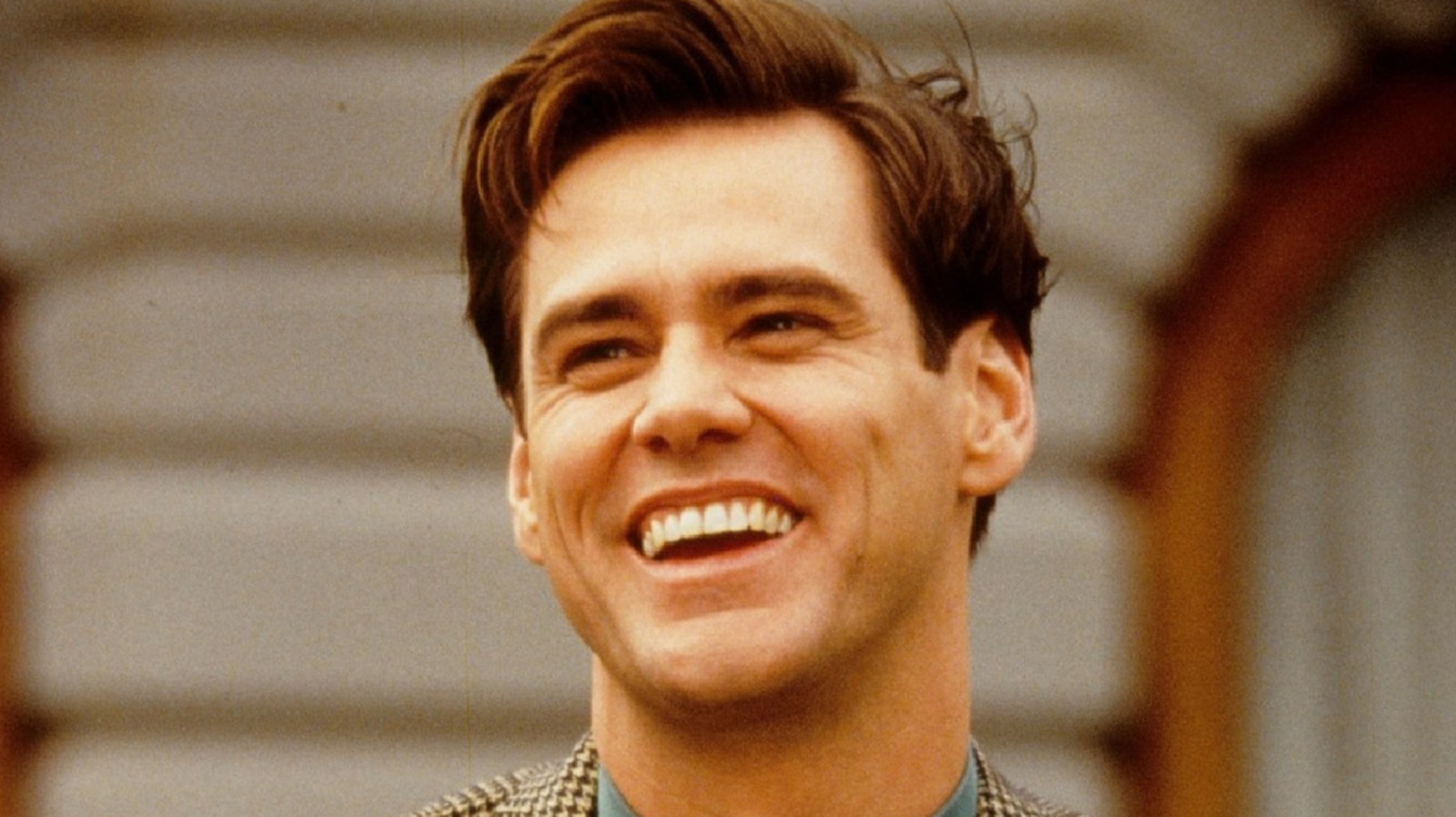
Arguably the most prophetic film here — and the second written by “Gattaca” director Andrew Niccol — “The Truman Show” looked beyond the early reality-TV boom and anticipated the lowbrow media culture that followed. The success of programs such as “Big Brother” helped establish Peter Weir’s film as an influence, with later seasons adding 24/7 livestreams of contestants for viewers seeking an endless supply of unscripted drama.
The social-media era pushed that concept even further. Twitch streamers and influencers now broadcast enormous portions of their daily lives, often inserting awkward sponsorships that make Meryl’s, played by Laura Linney, product placement during Truman’s broadcasts seem almost restrained.
Although “The Truman Show” centers on reality television, its sharper prediction concerns the expansion of surveillance both online and in public spaces. The film’s claim that 5,000 hidden cameras could monitor Truman no longer feels impossible when CCTV networks, smartphone tracking, and potentially listening smart devices are part of everyday life.
Many people have mentioned a product aloud only to see a related advertisement appear on their feeds minutes later. That does not mean each of us lives in a private Truman show, but it does highlight something more troubling: our devices can collect personal information in ways we may not fully understand. Anyone who has owned a phone over the past 15 years can recognize the surveillance anxiety that keeps Weir’s film relevant.


