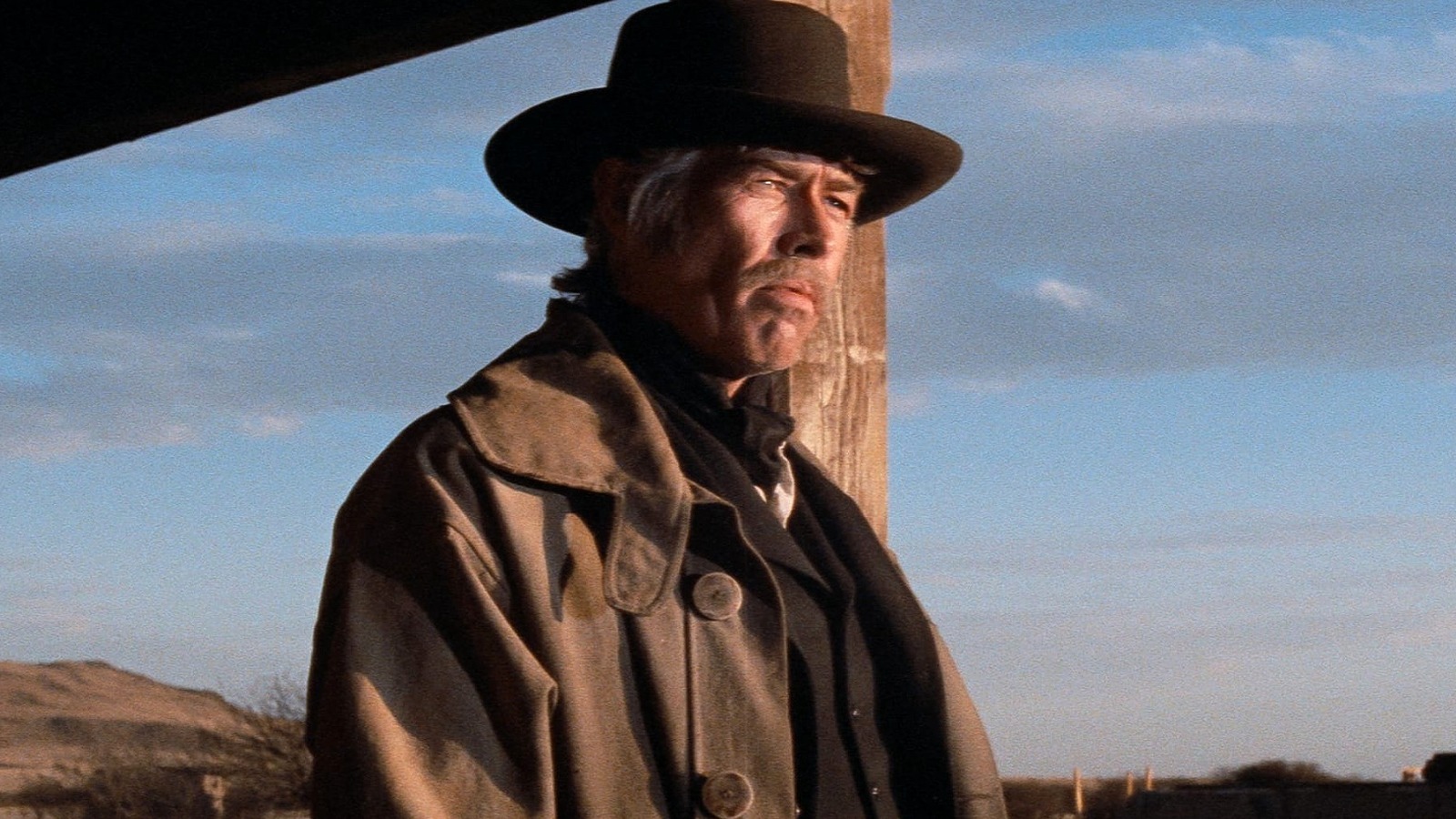

Since the dawn of cinema, the Western genre has captivated audiences, epitomizing a uniquely American storytelling tradition. With tales that are both heroic and romantic, Westerns have also offered critical insights into the early chapters of the United States. As Hollywood transitioned through the transformative 1960s, the industry sought new creative voices to revitalize its appeal, leading to the revolutionary New Hollywood movement of the 1970s. This era gave birth to a grittier, more realistic film style, with the Western undergoing one of the most significant transformations.
The Westerns of the 1970s broke from their predecessors by embracing a more violent and introspective narrative style. These films stripped away the romanticized veneer of the Old West, challenging the traditional lore of brave cowboys and the mischaracterization of Indigenous peoples. The straightforward hero-versus-villain tales evolved into complex stories with nuanced moral landscapes. Despite these shifts, the films remained just as thrilling as the classics featuring John Wayne. A key difference from the Westerns of Hollywood’s golden era was the explicit exploration of themes that were previously constrained by the Production Code, allowing the genre to reach new heights.
Here are five essential Westerns from the 1970s that continue to resonate today, showcasing everything from action-packed adventures to comedic parodies, including a final bow from the legendary John Wayne.
In the film “McCabe & Mrs. Miller,” set in 1902, Warren Beatty portrays John McCabe, a charming gambler who arrives in the emerging mining town of Presbyterian Church in the misty Pacific Northwest. With plans to open a brothel, McCabe introduces three prostitutes he purchased for $200 to the eager townsfolk. However, Constance Miller, a sharp-witted English prostitute played by Julie Christie, sees through McCabe’s bluster. She proposes a partnership, offering to transform the brothel into a reputable establishment with high-class workers in exchange for a share of the profits. As their business flourishes, representatives from the local mining company approach McCabe with a buyout offer. When he declines, they resort to hiring assassins to seize control.
A film like “McCabe & Mrs. Miller” would have been unimaginable before the 1970s, yet it exemplifies the creative spirit of New Hollywood, a period when traditional genres were reimagined to reflect harsher realities. Director Robert Altman, hailed as one of cinema’s greatest auteurs, presents a gritty vision of frontier life—damp, cold, and muddy—while finding a gentle beauty in the narrative. The film features stunning cinematography by Vilmos Zsigmond, inspired by tintype photography, and a poignant score by Leonard Cohen. Julie Christie’s performance earned her an Oscar nomination for Best Actress, and the film has been recognized by the American Film Institute as one of the top 10 Westerns of all time.
McCabe & Mrs. Miller
In another iconic Western, set in 1880s New Mexico, James Coburn stars as newly elected sheriff Pat Garrett, who confronts his old friend, Billy the Kid, played by Kris Kristofferson. Garrett warns Billy that powerful cattlemen want him out of the county, and once Garrett officially takes office, he’ll be obligated to enforce their wishes. Following a violent skirmish with law enforcement, Garrett embarks on a challenging pursuit of Billy, driven by a thousand-dollar bounty offered by the cattle barons and sanctioned by Governor Lew Wallace, portrayed by Jason Robards. Meanwhile, Billy receives unexpected support from a mysterious ally named Alias, intriguingly played by Bob Dylan.
A Western like “McCabe & Mrs. Miller” would’ve been unthinkable before 1971, yet such was the magic of the New Hollywood, that brief period in which genres could be twisted and subverted to reflect life as it really was. Directed by Robert Altman (one of the best directors of all time), the film deglamorizes the myth of the Old West, showing frontier life as cold, rainy, and full of mud. Yet there is also a gentle beauty to Altman’s approach, from Vilmos Zsigmond’s tintype photography-inspired cinematography to Leonard Cohen’s sad song score. The film earned an Oscar nomination for Julie Christie in best actress, and was ranked as one of the 10 best westerns of all time by the American Film Institute.
Pat Garrett and Billy the Kid
In 1880s New Mexico, newly elected sheriff Pat Garrett (James Coburn) meets with his old friend, Billy the Kid (Kris Kristofferson). Garrett informs Billy that the local cattlemen want him out of the county, and when he assumes his official position, he’ll be forced to drive him out. After a shootout between the lawmen and Billy’s gang, Garrett tries to track his friend down, which is easier said than done. Governor Lew Wallace (Jason Robards) entices Garrett to continue his manhunt with a thousand-dollar reward from the local cattle barons, but Billy has some extra help from a mysterious gunfighter known only as Alias (Bob Dylan).
Few directors did more to fundamentally change the Western than Sam Peckinpah, who, with “The Wild Bunch” (released in 1969, the best year for Westerns), upped the action, violence, and mayhem of the genre to a shocking degree. As such, his films were often mutilated by studios and censors upon their release, which was certainly the case with “Pat Garrett and Billy the Kid.” Before it hit theaters in 1973, Metro-Goldwyn-Mayer pressured Peckinpah to edit the movie down for length, leading to his eventual departure from the cutting room. The version that was released was but a hint of Peckinpah’s vision, which has been lovingly restored with a Criterion 4K release. Modern viewers can now fully appreciate this lyrical ode to an American dream destroyed by capitalism, dramatized in the broken friendship between Pat Garrett and Billy the Kid.
Blazing Saddles
In the 1870s, corrupt attorney general Hedley Lamarr (Harvey Korman) plans to make millions by building a railroad through the Western town of Rock Ridge. When driving the townspeople out through violence fails, Lamarr institutes plan B: He convinces the dimwitted governor William J. Le Petomane (Mel Brooks) to make railroad worker Bart (Cleavon Little) the first black sheriff of Rock Ridge. The racist townspeople are initially hostile towards their new lawman, save for Jim (Gene Wilder), the alcoholic gunslinger known as “the Waco Kid.” But Bart eventually wins them over, and with Jim’s help, he hatches a plan to stop the crooked railroad company from destroying their town.
One of the best comedy movies of all time, “Blazing Saddles” breaks every taboo imaginable in lampooning Hollywood’s oldest genre. Packed with wall-to-wall jokes about racism, flatulence, and the hidden homosexual undercurrent of cowboy movies, Mel Brooks’ 1974 satire still retains the power to shock us with the bluntness of its humor. Never before or since have you heard racial epithets hurled with such frequency as a punchline, and surprisingly, almost all of them still land. Yet even as it’s spoofing every cliche and trope of Westerns, it’s also paying loving homage to them, making it a surprisingly effective spurs and saddles saga. The film earned Oscar nominations for best film editing, best original song (for the title tune), and best supporting actress for Madeline Kahn as the Marlene Dietrich-inspired singer Lili Von Shtupp, a seductress who’s just too tired to get it on.
The Outlaw Josey Wales
During the American Civil War, Missouri farmer Josey Wales (Clint Eastwood) joins the Confederacy after his wife and child are murdered by Union Army Captain Terrill (Bill McKinney) and his gang. Intent on revenge, Wales refuses to surrender when the war ends with the Confederacy’s defeat, and his fellow soldiers are massacred by Terrill after surrendering their weapons. He flees to Texas after gunning down some of Terrill’s men, and word spreads of the outlaw Josey Wales. Wales finds friendship with an aging Cherokee, Lone Waite (Chief Dan George), and falls in love with Laura Lee Turner (Sondra Locke), yet he can’t escape the bounty on his head.
Despite its troubled production, “The Outlaw Josey Wales” turned out to be one of the best Clint Eastwood Westerns. Eastwood, who was both the star and producer, actually took over directing duties after firing original helmer Philip Kaufman when production was already underway. This led the Directors Guild of America to institute a rule prohibiting an actor or producer from doing that in the future (named, appropriately, the Eastwood Rule). Yet none of those production hurdles are present in the finished product, which is as exciting and thoughtful as Eastwood’s best works as either a director or leading man. It also depicts Indigenous Americans in an empathetic way that flies in the face of many Westerns that came before. Released in 1976, the film was a box office success that earned an Oscar nomination for best original score.
The Shootist

Sunset Boulevard/Getty Images
At the turn of the 20th century, aging gunslinger J.B. Books (John Wayne) gets a terminal cancer diagnosis from the same county doctor (James Stewart) who treated his gunshot wounds 15 years ago. With just weeks left to live, he decides to spend his remaining days in Carson City, Nevada. Books rents a room from Bond Rogers (Lauren Bacall), a widow who lives with her teenage son, Gillom (Ron Howard). Hoping to keep his identity a secret, Books gives a fake name, and she’s incensed when she finds out a notorious gunfighter is living in her boarding house. She becomes increasingly concerned as her son spends more time with the old man, who assures her he’s of no harm. Yet several townspeople with questionable motives disrupt Books’ hopes for a peaceful death, and he decides to go out with a fight.
One of John Wayne’s best movies of all time, “The Shootist” was also the final film the Duke completed before his own death from cancer in 1979. Directed by Don Siegel, it’s both a swan song for Wayne and a farewell to the kind of traditional Hollywood Western that made him an icon. As films like “The Wild Bunch” and “Butch Cassidy and the Sundance Kid” pointed the way toward a rougher, tougher kind of cowboy flick, this 1976 release looked back at a gentler era, highlighted by the presence of Wayne’s “Man Who Shot Liberty Valance” costar James Stewart.


