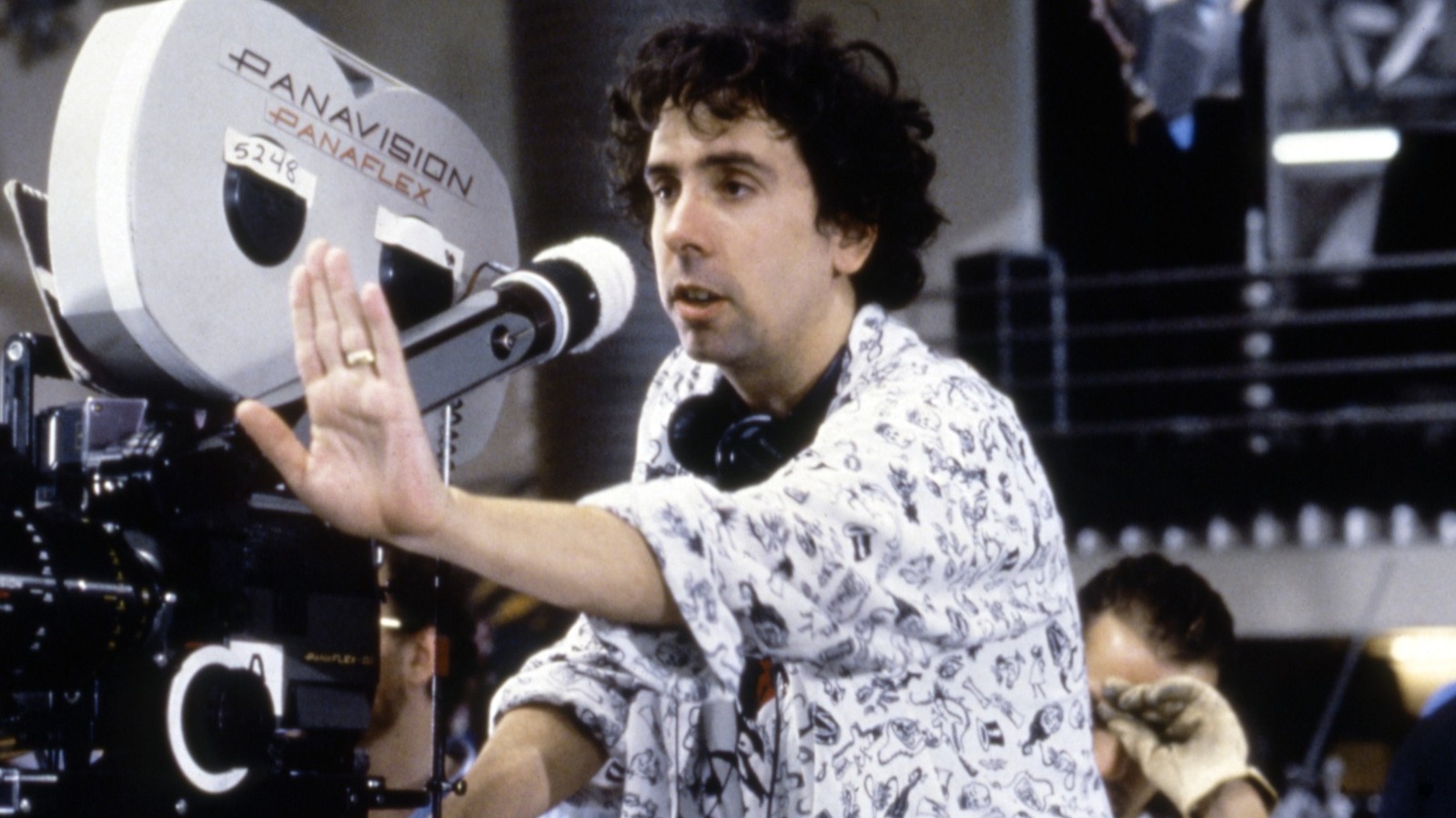

Long before Tim Burton became synonymous with gothic fantasy, he was already showing audiences that horror could be playful, emotional, and deeply imaginative. One of the clearest early examples of that sensibility was his embrace of stop-motion animation, a style he would later help popularize through films such as “Beetlejuice” and the Henry Selick-directed “The Nightmare Before Christmas.” But Burton’s fascination with eerie, handmade worlds can be traced back even earlier to “Vincent,” the Disney-backed short he released at just 24 years old.
Warner Bros. Pictures/Sunset Boulevard/Corbis via Getty Images
Debuting in 1982, “Vincent” centers on Vincent Malloy, a young boy who filters everyday life through the darkly theatrical lens of his hero, horror great Vincent Price. In his mind, ordinary childhood becomes something far stranger: monsters lurk, a snake-like creature evokes the sandworm Burton would later use in “Beetlejuice,” and the boy fantasizes about turning his dog into a zombie, an idea that would echo in “Frankenweenie.” As his family tries to pull him back to reality, Vincent only retreats further into his inner world, making the short as melancholy as it is macabre.
The animation plays a major role in making that emotional and visual balance work. Brought to life by Stephen Chiodo, who would later become known for “Killer Klowns from Outer Space,” the short uses stop-motion to give Vincent’s imagination a tactile, almost homemade quality. The clay figures feel both real and childlike, grounding the fantasy while preserving the sense that these images could have been pulled directly from a young mind at play.
What makes “Vincent” even more fascinating is that it was not originally conceived as a film at all. In “Burton on Burton,” as cited by Remind Magazine, Burton explained that the project began as a children’s book. “I wanted to do that kind of animation because I felt there was a gravity to those three-dimensional figures that was more real for that story,” he said. That instinct proved crucial: the rough, physical texture of stop-motion gave Burton’s strange creations a vivid presence while still allowing them to feel like products of imagination.
The connection to Vincent Price was more than thematic. The horror icon himself served as the short’s narrator, lending the film an unmistakable sense of reverence and authenticity. Burton later reflected on why Price meant so much to him, explaining, “When you’re younger things look bigger, you find your own mythology, you find what psychologically connects to you. And those movies, just the poetry of them, and this larger-than-life character who goes through a lot of torment – mostly imagined – just [spoke] to me…”
Tim Burton originally pictured Vincent as a book
That idea of building a personal mythology sits at the heart of “Vincent.” The short is not simply a tribute to Price, but a portrait of a child using fantasy to understand himself and the world around him. In that sense, it also serves as an early blueprint for Burton’s career, forecasting the lonely dreamers, sympathetic outsiders, and lovingly grotesque imagery that would define so much of his later work.
Along with being inspired by the horror legend, Vincent Price himself was the film’s narrator. Burton explained his appreciation for Price and his movies, saying, “When you’re younger things look bigger, you find your own mythology, you find what psychologically connects to you. And those movies, just the poetry of them, and this larger-than-life character who goes through a lot of torment – mostly imagined – just [spoke] to me…”
Finding your own mythology is exactly what “Vincent” is about as he imagines what his world would look like if he were Price. A few years later, both men would work together on what would be Price’s last film, and their collaborations cemented their legacies as dreamers who taught adults that it’s okay to explore their imaginations well after childhood.


