
Static Media
Science fiction is enjoying another remarkable run at the movies. From “Mad Max: Fury Road,” “Annihilation,” and “Arrival” to “Dune,” “Blade Runner 2049,” “Ex Machina,” and the more recent “Project Hail Mary,” the genre has surged back into the cultural and box office spotlight. Many of these modern standouts also echo a previous high point for sci-fi cinema: the 1980s. Yet for all the visual sophistication, thematic ambition, and technical leaps that separate today’s films from that era, something essential feels harder to find now. To understand what has gone missing, it helps to return to “Star Wars.”
“The Empire Strikes Back” arrived at the dawn of the 1980s and immediately set a towering standard, not only as one of the greatest science fiction films ever made but arguably as the finest sci-fi sequel in Hollywood history. It helped usher in what many fans still consider the genre’s strongest decade, shaping the language of blockbuster filmmaking with its mix of rugged location work, elaborate soundstage environments, cutting-edge effects, and mythic scale. Like so many great sci-fi films of the ’80s, “Empire” felt ahead of its time — and in some ways, it still does.
What many contemporary sci-fi epics struggle to recapture, however, is the romance of “Empire.” Not romance only in the sense of love, though the film certainly has that, but romance in the older, grander meaning: noble quests, perilous adventure, emotional sweep, and awe in the face of the unknown. “The Empire Strikes Back” moves effortlessly between Arthurian mysticism and gritty, used-future science fiction, creating a balance that modern blockbusters rarely attempt with the same confidence.
Romance is the defining quality of The Empire Strikes Back
Lucasfilm
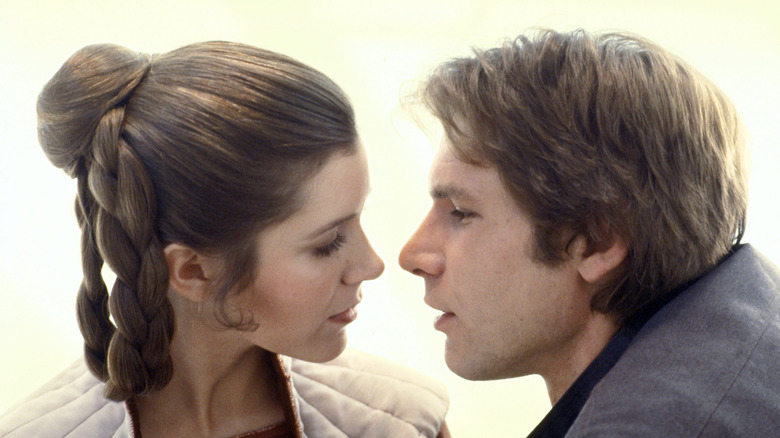
“Empire” is the love story of the original “Star Wars” trilogy, establishing a pattern later echoed by the second chapters of the subsequent trilogies. Han and Leia’s relationship sits at the film’s emotional center, shaping its rhythms and deepening its stakes. But the movie’s romantic power extends far beyond their banter and longing. It is there in Yoda’s strange, lyrical teachings about the Force on Dagobah. It is there in the deadly beauty of Hoth, a frozen wasteland that still feels touched by myth. It is there in the unforgettable reveal of Cloud City, gleaming in the sky like a dream too elegant to survive.
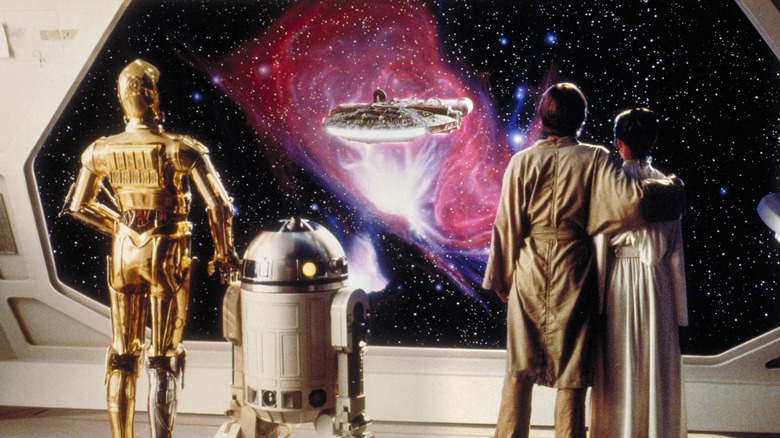
“The Empire Strikes Back” understands that space can feel romantic. It understands that the future can shimmer with possibility. Lando Calrissian’s wardrobe, and the refined look of Bespin’s upper tiers, suggest a community trying to carve out style, grace, and civilization beneath the looming threat of the Empire. Then Darth Vader arrives, and that fragile beauty collapses almost instantly.
There is certainly a kind of romance in the deserts of Arrakis in Denis Villeneuve’s “Dune” films, but it is shadowed by fatalism and the machinery of a brutal future. The universe of “Dune” is vast, cold, and punishing. By contrast, the universe of “Star Wars” feels alive, wounded perhaps, but still capable of renewal. “Project Hail Mary” finds uplift in human ingenuity and resilience, yet its triumphs are less about the enchanted grandeur of a living cosmos than about survival, problem-solving, and endurance.
The Empire Strikes Back doesn’t sacrifice hard sci-fi for magic
Lucasfilm
“Star Wars” is often dismissed as fantasy wearing sci-fi clothing, but that undersells how carefully its science fiction details operate around the edges. “Empire” is rich with small, functional touches: the T-47 snowspeeders initially struggle on Hoth because they are stuntfighters being modified for extreme cold, and Lando explains to Han that Cloud City’s limited size has made labor and supply problems especially difficult to manage.
Those details may not be what viewers consciously focus on, but they matter. They give the world texture and push the plot forward. The Rebels are vulnerable because their equipment was never designed for the environment they are trapped in. Lando makes a deal he despises because his colony lacks the independence and resources to stand alone. That blend of practical world-building and sweeping myth is part of what made “The Empire Strikes Back” so enduring — and part of what modern science fiction could stand to rediscover.
At the same time, the sense of magic and adventure of the original trilogy pervades. The sci-fi epic has taken on an understandable aura of severity in recent years — something that wasn’t really possible in the ’80s due to the limitations of special effects. You could always sort of tell you were watching a movie, in a way that is a bit easier to obfuscate now. But in focusing on that severity, we’ve also lost some of the romance that Lucas used to balance the energy in “Empire” — a magical side to the epic that today feels distinctly of its day.


