
Share this @internewscast.com
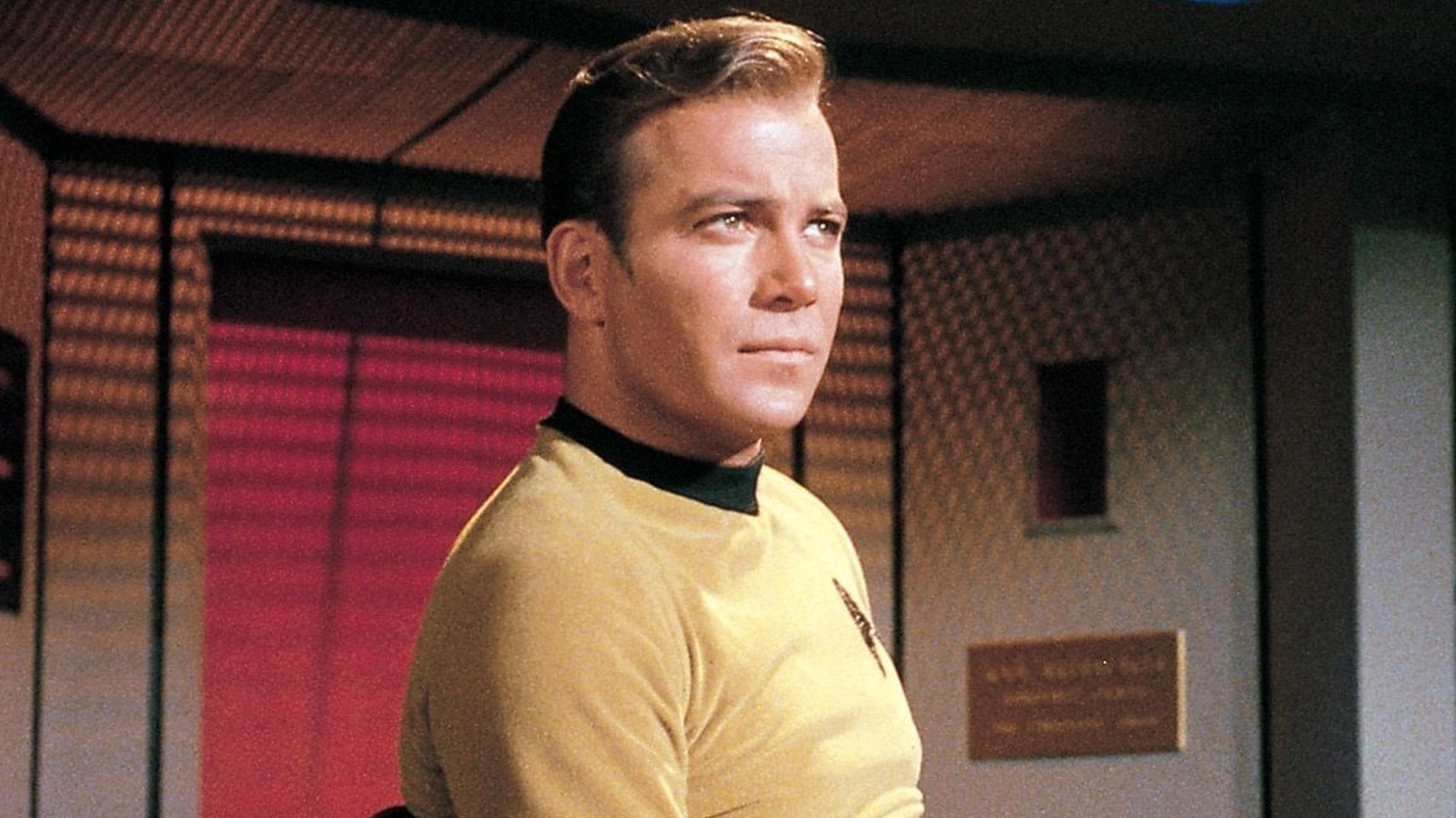
Science fiction has given us many memorable figures, but few characters embody the trifecta of military prowess, exploratory spirit, and intellectual depth as well as James T. Kirk. Originally brought to life by the charismatic William Shatner, Kirk has carved out a lasting legacy as a dynamic and complex figure within the genre. Often thought of as a daring commander who fearlessly leaps into action, Kirk’s reputation as a swashbuckling adventurer is only part of his story. Through my lens as a former military service member, I see a more intricate portrait of Kirk, revealing layers that many might overlook.
Kirk made his debut in 1966 when Shatner assumed the role after the initial “Star Trek” pilot didn’t succeed. The series quickly developed around its magnetic captain, bolstered by Shatner’s engaging performance. Although “Star Trek” ended its original run in 1969, Kirk remained a pivotal figure as the franchise expanded in the 1980s. Over time, his persona became larger than life, often distilled to a caricature of his cowboy diplomacy.
Today, it’s common to view Kirk as a headstrong leader who thrives on defying no-win scenarios. While this perception contains some truth, it’s an oversimplification. A closer examination of Kirk’s history reveals a more nuanced character—a thoughtful strategist who relies on both intellect and intuition.
Commanding the USS Enterprise may be Kirk’s primary role, but his intellectual prowess is frequently underestimated. Starfleet Academy, known for its rigorous standards, demands exceptional intelligence from its cadets. Kirk’s brilliance often manifests in his strategic choices, yet his passion for knowledge extends beyond the captain’s chair—he is an avid reader.
In “Where No Man Has Gone Before,” Kirk’s penchant for literature is humorously highlighted by Lt. Mitchell, who calls him a “stack of books with legs.” This reputation was well-earned during his academy days, where critical thinking was essential. In “Star Trek II: The Wrath of Khan,” Spock gifts him a copy of “A Tale of Two Cities,” underscoring Kirk’s literary acumen. His love for books, often overshadowed by his daring deeds, aligns him with modern military leaders.
Captain Kirk is a serious bookworm
During my time in the U.S. Army, every commander I served under valued continuous learning, typically encouraging their teams to engage with a curated reading list. These lists often included strategic classics such as Sun Tzu’s “The Art of War.” While “Star Trek” never explicitly states whether Kirk maintained such a list, his character’s depth suggests that he likely drew from historical insights to inform his leadership style.
In “Where No Man Has Gone Before,” Lt. Mitchell (Gary Lockwood) jokes with Kirk for being a bookworm. In the academy, he was known as a “stack of books with legs … in his class, you either think or sink.” In “Star Trek II: The Wrath of Khan,” Spock (Leonard Nimoy) gives Kirk a copy of Charles Dickens’ “A Tale of Two Cities,” and it’s clear that Kirk is well-versed in the novel’s themes. Too often, his love of literature is overshadowed by his actions on the bridge when in reality, he’s a lot like modern military commanders.
While serving in the U.S. Army, I never worked for a commander who didn’t have a reading list. These are lists of books that commanders encourage their subordinates to read. You’ll often find Sun Tzu’s “The Art of War,” Roger H. Nye’s “Challenge of Command,” and others. While it’s never revealed in “Star Trek” whether Kirk had a reading list or not, it’s likely that he did, as he’s the type of commander who studies history to learn how best to apply the lessons of the past.
Modern misconceptions of Kirk are based on later depictions and parodies
I grew up watching the OG James T. Kirk and now view his command decisions through my military experience, so I see him differently than new fans might. When they think of Kirk today, they probably focus on modern depictions, both in and out of the franchise. For example, “Galaxy Quest” parodies “Star Trek,” focusing on its commander, Jason Nesmith (Tim Allen). He’s a brash, overacting hothead, and a parody of both Kirk and William Shatner combined.
The stereotype of “reckless Kirk” probably first arose after “Star Trek: The Next Generation” came onto the scene. There’s a pretty obvious stark contrast between Kirk and Picard (Patrick Stewart), driving many fans to argue their merits throughout the 1980s and ’90s: Because Picard is a stoic diplomat, Kirk seems comparatively antithetical in his personality. By simply contrasting the two, Kirk receives an undeserved reputation that doesn’t fit the character, and he’s now seen as more of an impulsive sci-fi swashbuckler a la Han Solo than the studious-but-charming thinker he was in the TV show and movies.
There were plans to do a prequel in the ’90s that would have depicted Kirk as a young hothead at Starfleet Academy, but this never manifested. However, when the rebooted “Star Trek” came out in 2009, its Kirk (Chris Pine) was depicted as a lawless young man with an edge. This characterization has done a lot to reinforce the same stereotypes and misconceptions about Kirk, veering quite far of Shatner’s depiction. “Star Trek” also embraces the notion that Kirk tries to sleep with every alien woman he comes across (among other things that only adults might notice in the show), but that’s not accurate. In the original depictions of Kirk, he sleeps with or shows intimacy toward several women, most of whom aren’t aliens.
The Kobayashi Maru proves Kirk’s focus and determination, not his recklessness
Kirk is often seen as the type of commander who makes rash decisions, but that couldn’t be further from the truth. In reality, Kirk is more of a chess player, using strategy and tactics to gain advantages in combat. What is true is that he’s not a rule follower: fundamentally, he doesn’t believe in no-win scenarios, which is an affront to Starfleet’s teaching, as the Kobayashi Maru demonstrates.
The test is a no-win scenario that shows cadets that no matter what they do, there are times when they cannot win… and Kirk is the only cadet to ever beat the Kobayashi Maru. He explains this in “Star Trek II: The Wrath of Khan,” saying, “I changed the conditions of the test. I got a commendation for original thinking. I don’t like to lose … I don’t believe in a no-win scenario.” This is the fundamental core of Kirk’s command philosophy, and it shows his drive and determination.
Indeed, in several moments during the film, Kirk is faced with no-win scenarios, and he comes out on top — until the end. There, Spock’s death at the hands of Khan (Ricardo Montalban) teaches him a valuable lesson about loss in the face of overcoming unbeatable odds. I remember how completely shocking this was to watch on the silver screen for the first time, and it’s notable how the death of Spock completely changes Kirk’s command philosophy. It grounds him in reality.
Captain Kirk is a charismatic man of action determined to make a difference
Most parodies of Kirk show him to be an incredibly charismatic man who places personal relationships above all else. While friendship and other relationships are certainly important to him, he is, at his core, a man of action. He’s dedicated to his mission and is focused on a positive outcome, which is seen throughout Kirk’s entire backstory.
No matter what, Kirk’s first love is the USS Enterprise, and he demonstrates this during his career. At the end of “Star Trek III: The Search for Spock,” Kirk is demoted from Rear Admiral to Captain. This is because he stole the Enterprise, violated the Genesis Quarantine, and lost the ship. Instead of being upset about the demotion, Kirk is thrilled because he will once more be allowed to command a starship. And while it’s easy to see why these actions would earn him the reckless daredevil stereotype, but that ignores that while his actions were “lawless,” they were also methodical and correct. He’s not someone who breaks the rules because he’s inherently a rebel — he’s someone who breaks the rules because he cares so much about achieving a positive end result.
This sentiment is echoed decades later in “Star Trek: Generations,” when Kirk takes a moment to offer some advice to Captain Picard. He tells him, “Don’t let them promote you. Don’t let them transfer you. Don’t let them do anything that takes you off the bridge of that ship, because while you’re there, you can make a difference.” The need to make a difference is Kirk’s driving focus, and neither promotion nor retirement suited him.
What you thought you knew about Captain Kirk barely scratched the surface
NBC
James T. Kirk has been around in various forms of media for over 60 years, and throughout that time, he’s certainly earned a reputation. I see him as a calculating, tactical commander who understands his enemies as well as he does himself, and I base my opinion on more than what the franchise offers. Being a veteran, I have a solid understanding of the types of commanders who work best with their subordinates, and Kirk fits the mold.
He may be something of a ladies’ man, but you have to judge the actions of Kirk here based on the real-life time period he’s depicted — that is, the 1960s, where the small screen expectations of the time would be for the lead character in his role to visibly be involved with women but also not in a long-running relationship. Besides, that aspect of his personality faded as time passed, as more attention was given to his intellect, strategic mindset, and desire to never stop learning. He’s not brash, he isn’t arrogant, and he’s not reckless — Kirk is a logical, well-intended commanding officer who places the mission above his own well-being, and should be recognized as one sci-fi television’s greatest characters, not the parody that so many people think he is.