

A24
Contains spoilers for “You Can See Everything”
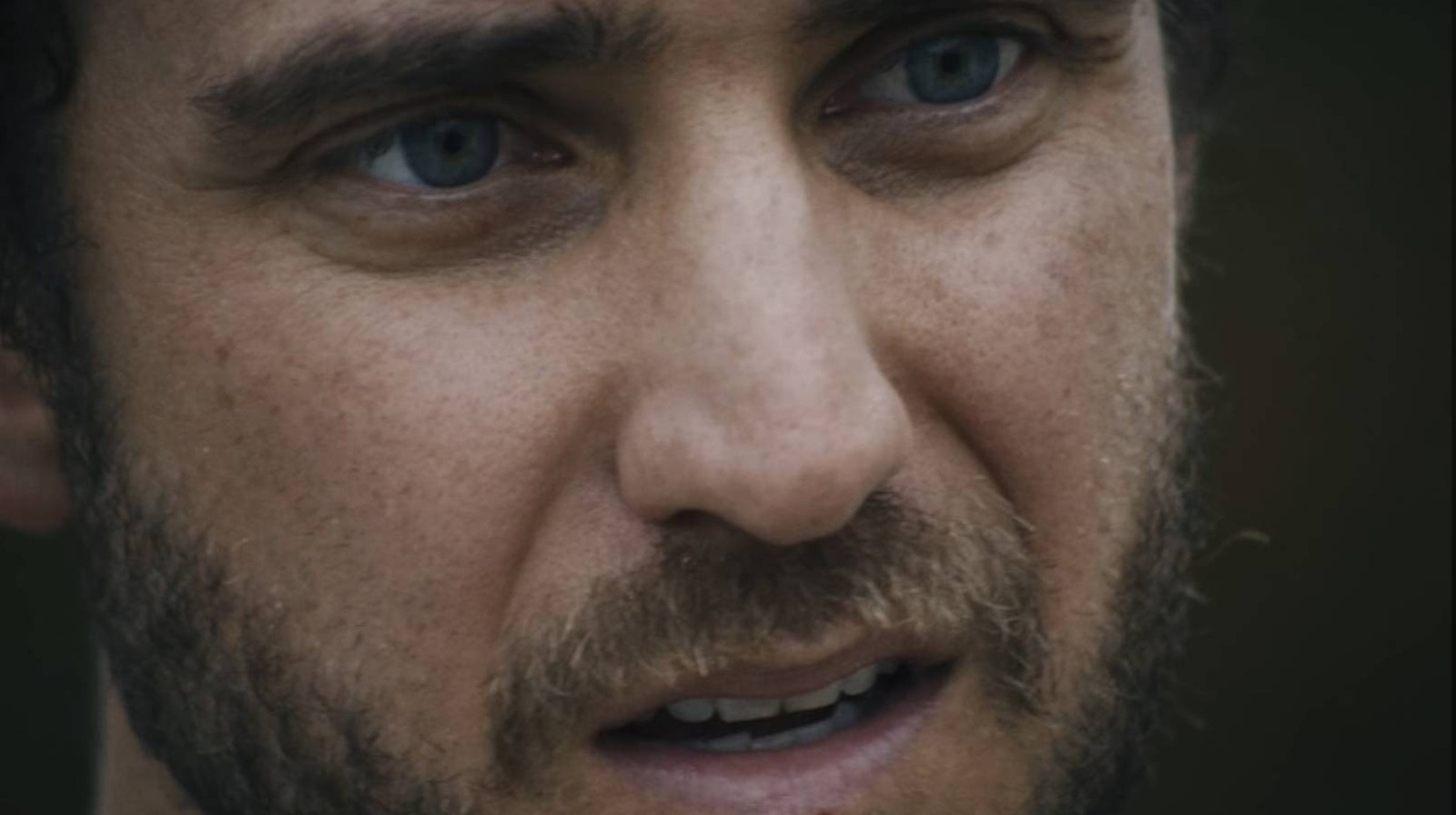
Viewers entering “You Can See Everything” may have expected a collision between two forces: Nathan Fielder’s dry, reality-bending comedy and Elizabeth Holmes’ intensely distorted account of Theranos. Instead, one of the film’s most unsettling surprises is Billy Evans, Holmes’ partner and the father of her children, whose behavior often comes across as calculated and unnerving.
Fielder follows Holmes through the final 34 days before she begins her prison sentence, attempting to understand her version of Theranos’ collapse. During filming, Holmes was living with Evans in a modest Del Mar, California, rental home. The couple met in 2017. As Fielder points out, Evans was raised in considerable wealth: His parents, William and Anne Evans, founded the Evans Hotel Group, which operates three luxury hotels across California.
Evans earned an economics degree from M.I.T. and now serves as CEO of Haemanthus, a diagnostics startup developing technology designed to analyze biological materials and identify possible illnesses. The company’s ambitions closely echo Theranos’ stated mission, though Theranos ultimately failed to create the technology it promised. Evans has repeatedly argued that Haemanthus is not intended to become “Theranos 2.0.”
People have strong reactions to Billy Evans in You Can See Everything
A24
Many viewers likely tuned in hoping for extraordinary glimpses of Holmes before her incarceration, where she remains today. Yet Evans repeatedly commands attention, including in a scene where he removes a bowl of eggs from Holmes because he believes she is whisking them incorrectly. Across the documentary, his conduct produces several moments that are difficult to watch without discomfort.
At one point, Nathan Fielder questions him about creating an AI facsimile of Holmes that people could do anything they want with. He doesn’t even seem bothered that people could create pornography with such materials, something that rubbed X user @aGuyOnMyPhone the wrong way: “I still can’t get over Nathan Fielder asking Billy Evans if he’s worried that he’s facilitating the creation of ai porn of the mother of his children for a quick buck, to which Billy can only limply provide tired platitudes about the ai revolution.”
One standout scene sees Evans get into a heated argument with the secret star of “You Can See Everything,” Amanda Seyfried. She portrayed Holmes on “The Dropout” and returns to play her here in a reenactment for a moment there’s no footage of. Evans clearly didn’t appreciate Seyfried’s portrayal, leading to a full-on shouting match between the two, leading them to argue about Charlie Kirk. For many, like @torcheeks, it was pure cinema: “Amanda Seyfried wine drunk arguing with Billy Evans about Charlie Kirk while Nathan Fielder sits quietly and observes you couldn’t script this.”
Billy Evans wanted You Can See Everything to tell Elizabeth Holmes’ story
A24
Hiring a comedian to document the days before your imprisonment may seem like an unusual decision. Holmes explains in “You Can See Everything” that Evans introduced her to Fielder by showing her a clip from his work at a gas station—apparently the “Nathan for You” segment in which a gas station owner recounts drinking his grandson’s urine when frightened.
Still, the precise reason Fielder seemed suited to the project remains uncertain. He suggests that his lack of scientific expertise meant he would not challenge Holmes on the technical details of Theranos. His real advantage, however, may be an understanding of performance, kayfabe and human behavior. That is where “You Can See Everything” is most effective.
Speaking on the “All-In” podcast, Evans said the documentary was meant to give Holmes room to present her own account. He argued that “The Dropout” had gotten aspects of the real story wrong, making Fielder’s film an opportunity to reshape the public narrative: “The whole idea was here she is, see her, and make up your own mind … It’s not to re-litigate the case.” Evans had not watched the completed documentary when that interview was recorded, although he acknowledged in the trailer that Holmes “looks insane.”
Did that strategy work? Holmes is once again dominating the conversation, and Evans has emerged as a more visible figure in the Theranos saga. That attention could ultimately serve him well. Even so, “You Can See Everything” offers fewer definitive answers than fresh questions—and perhaps that ambiguity was exactly what Evans wanted.


