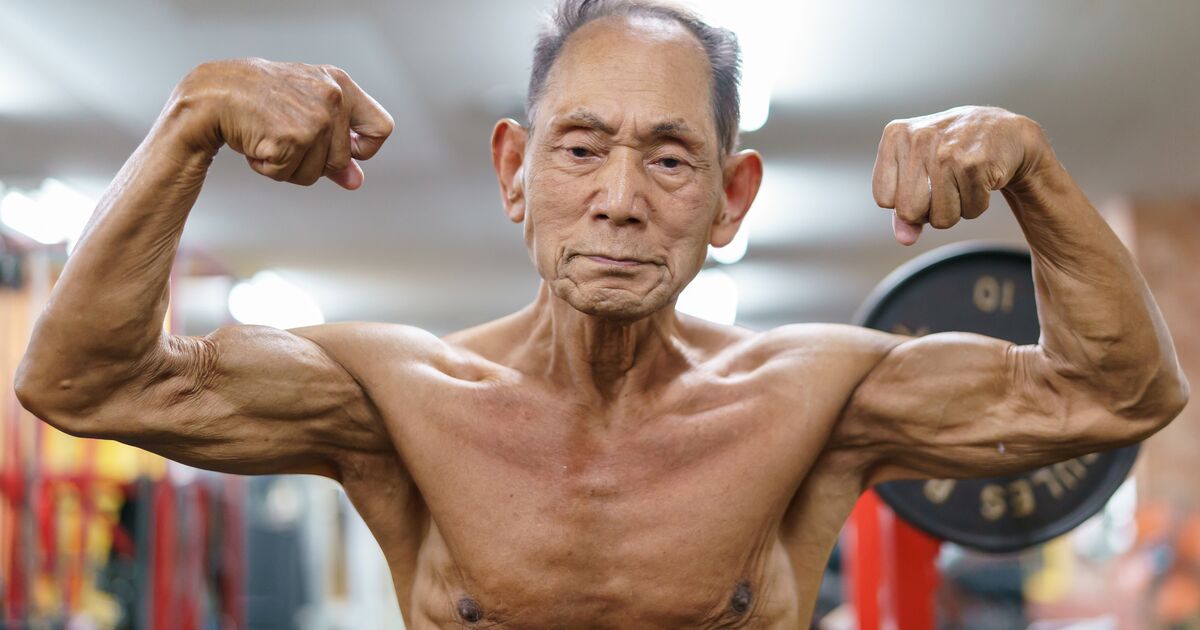


Toshisuke Kanazawa is a champion bodybuilder who recently celebrated his 90th birthday (Image: GETTY)
Toshisuke Kanazawa, a 90-year-old bodybuilding champion, has shared the daily habits he believes have helped him live a long and healthy life. The Japanese athlete has claimed the Japan Masters Bodybuilding Championships title in the over-85 category several times and remains determined to compete again.
Rather than retire from the sport, Kanazawa continues to train for two hours a day, six days each week. He says he intends to remain active for as long as his body allows.
The veteran bodybuilder attributes his longevity to a clean-living routine and says he has never suffered a serious illness.
His routine includes around seven hours of sleep each night, no smoking and no alcohol. In their place, he dedicates several hours each week to structured exercise and gym training.

He says a clean lifestyle has helped him stay healthy (Image: GETTY)
Kanazawa follows an equally disciplined diet. He stopped eating meat and fish decades ago and often relies on five staple foods, including brown rice sprinkled with furikake, fermented soybeans and miso soup mixed with two raw eggs.
“I used to have six protein shakes a day but now I have three. As I get older, it’s harder to stomach that much liquid,” he told The Guardian.
Although he can no longer perform demanding movements such as bench presses and squats, he has adapted his workouts and continues exercising with gym machines.
He also reports that he has never been seriously ill, while many of his health-check results are said to resemble those of considerably younger men. “I’m 100 per cent natural,” he said. “And I haven’t lost my marbles yet, right?”

The 90-year-old continues to train six days each week (Image: GETTY)
The health benefits of Toshisuke’s diet
Brown rice
Brown rice is considered a whole grain because its bran and nutrient-rich germ remain intact. By contrast, these outer layers are removed from white rice during processing.
As a result, brown rice typically provides more fibre, vitamins and minerals than white rice, including magnesium, manganese and phosphorus. Its higher fibre content may support digestion and help people feel satisfied for longer.
Some studies have associated greater brown-rice consumption with a reduced risk of type 2 diabetes. However, clinical trials that directly compare brown and white rice have delivered more varied findings.
More generally, diets that include plenty of whole grains have been linked with improved cardiovascular and metabolic health.
Furikake
Furikake is a Japanese seasoning commonly scattered over rice. Its ingredients differ by variety but may include sesame seeds, seaweed, salt, sugar and dried fish.
The seasoning can bring plenty of flavour without adding many calories, although its nutritional profile depends on the brand. Certain varieties are high in sodium, meaning furikake is best used sparingly rather than automatically viewed as a health food.

Brown rice features regularly in his diet (Image: Getty)
Fermented soya beans
Another key food in Kanazawa’s diet is natto, the traditional Japanese dish made from fermented soybeans. Soybeans provide plant-based protein, fibre, vitamins and minerals, while fermentation creates additional bioactive compounds.
Natto is also a particularly rich source of vitamin K2, although levels can vary. Research on fermented soy foods has identified peptides, isoflavones and other compounds produced during fermentation that could support cardiovascular and metabolic health. However, evidence for several of these specific benefits is still developing.
Miso soup
Miso is a fermented food containing plant protein, vitamins, minerals and bioactive compounds. Research suggests it may have potential cardiovascular, metabolic and antioxidant benefits, although more human research is needed to establish the effects of miso itself.
Eggs
The NHS says eggs are a good source of protein and contain a range of vitamins and minerals. Two eggs therefore add a substantial amount of protein and several important micronutrients to a meal.
The fact that Toshisuke eats them raw does not make them more nutritious than cooked eggs however. Raw or lightly cooked eggs can carry a risk of Salmonella, although UK food-safety controls mean that eggs carrying the British Lion mark or produced under the Laid in Britain scheme can generally be eaten raw or lightly cooked by most people. Pasteurised eggs are another option for reducing the risk.