
Britain could experience a significant population surge under the Green Party’s proposed open-door immigration policy, according to a recent critical analysis.
Experts project that the UK’s population might swell by 4.4 million within just five years if Zack Polanski secures leadership in the 2029 elections.
This dramatic rise is attributed to the Greens’ policy of unrestricted immigration, which anticipates nearly 900,000 new arrivals annually.
In contrast, the report forecasts a mere 200,000 increase in population under a potential Reform UK administration, with net migration figures hovering around 40,000 per year.
Under Conservative governance, the population is expected to grow by 800,000, or 160,000 each year, while a Labour-led government could see numbers increase by 1 million to 1.3 million.
The variation in Labour’s estimates reflects considerations of the Home Secretary’s proposal to extend the period required for qualifying for permanent residency in the UK from five to ten years.
If Shabana Mahmood is successful in having the measures applied to those already in the UK, the population would rise by one million in the next parliament.
The Green Party, expected to make strong gains in next month’s local elections, has said: ‘In an ideal world, most border controls would not exist.’

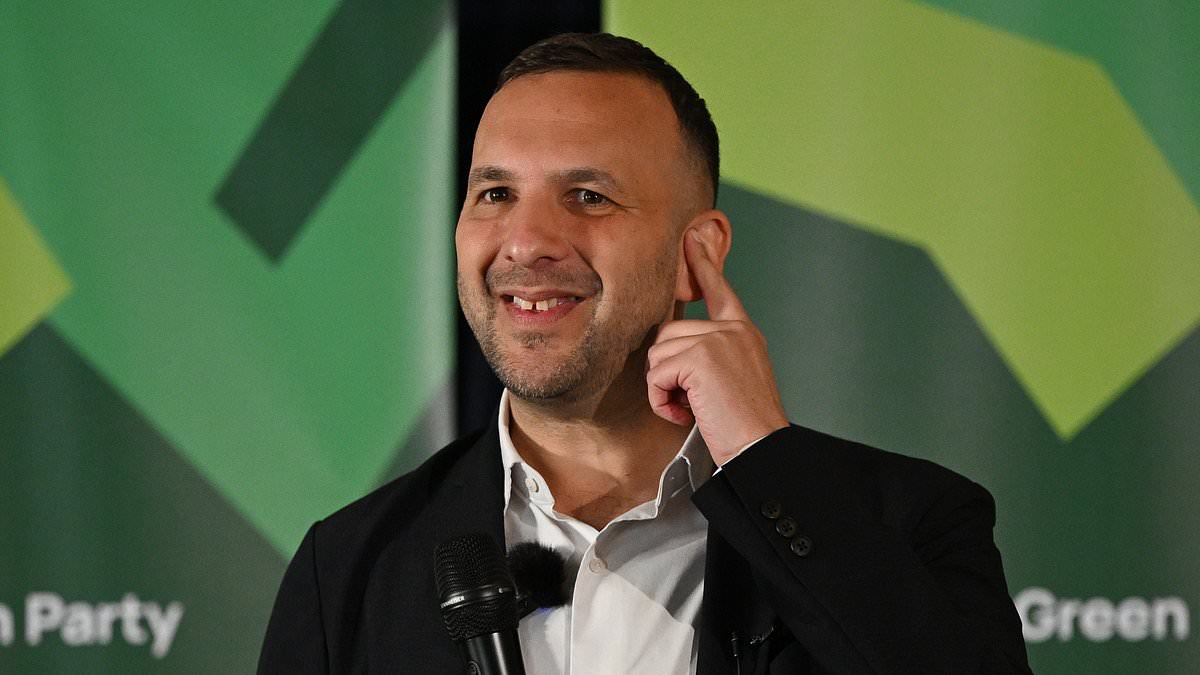
Economists estimate the number of people living in the UK would soar by 4.4million in just five years if Zack Polanski (pictured) wins power in 2029

An increase of 800,000 has been forecast under the Tories – or 160,000 a year – and between 1million and 1.3million if Labour clings on for another term
Mr Polanski plans to ‘abolish’ immigration detention and grant amnesty to illegal migrants allowing them to stay in Britain – giving them access to free housing and the NHS.
Stating that ‘migration is not a criminal offence under any circumstances’, internal policy documents outline ambitions to ‘establish a system that recognises that all migrants are treated as citizens in waiting and therefore supports and encourages them to put down roots in their new home’.
Opponents of Mr Polanski have branded the plans ‘financially reckless but also dangerous.’
A study by City investment bank Panmure Liberum estimated the population would jump from 71.5million in 2029 to 75.9million in 2034 under the Greens.
The report found the population would rise to just 71.7million under Reform UK and to 72.3million under the Tories. The UK population is currently 69.5million.

Simon French, Panmure Liberum’s chief economist and a former Civil Service economic adviser, said: ‘The spread of policies from the four leading UK parties could lead to a difference of more than four million in the UK population by the end of the next parliamentary cycle.
‘That extraordinary spread is because the policies of the Green Party and Reform UK are as diametrically opposite as anything I have seen in 25 years of analysing UK migration policy.’
The Office for National Statistics projects a 1.6million population rise by the next parliament, based on ‘natural change’ averaging a drop of 10,000 a year – as deaths marginally outweigh births – and net migration of 340,000.
Mr French said the population excluding immigration is ‘basically stable’, adding: ‘All the movement is net migration.’
Therefore a surge of 4.4million in the population under the Greens suggests net migration of around 900,000 a year versus around 40,000 under Reform UK and 160,000 under the Tories.
A Green Party spokesman said: ‘These figures are made up nonsense and we’ve been given no idea how they are calculated.
‘The Greens support a fair and managed migration system and successive governments have presided over a broken and unfair system.
‘The Greens are positive about the economic and societal benefits of immigration.
‘People are concerned about the impacts of immigration because of a massive affordability crisis, but unlike other parties we won’t scapegoat migrants for the unfairness created by our rigged economic system.’
Reform and the Tories were approached for comment.