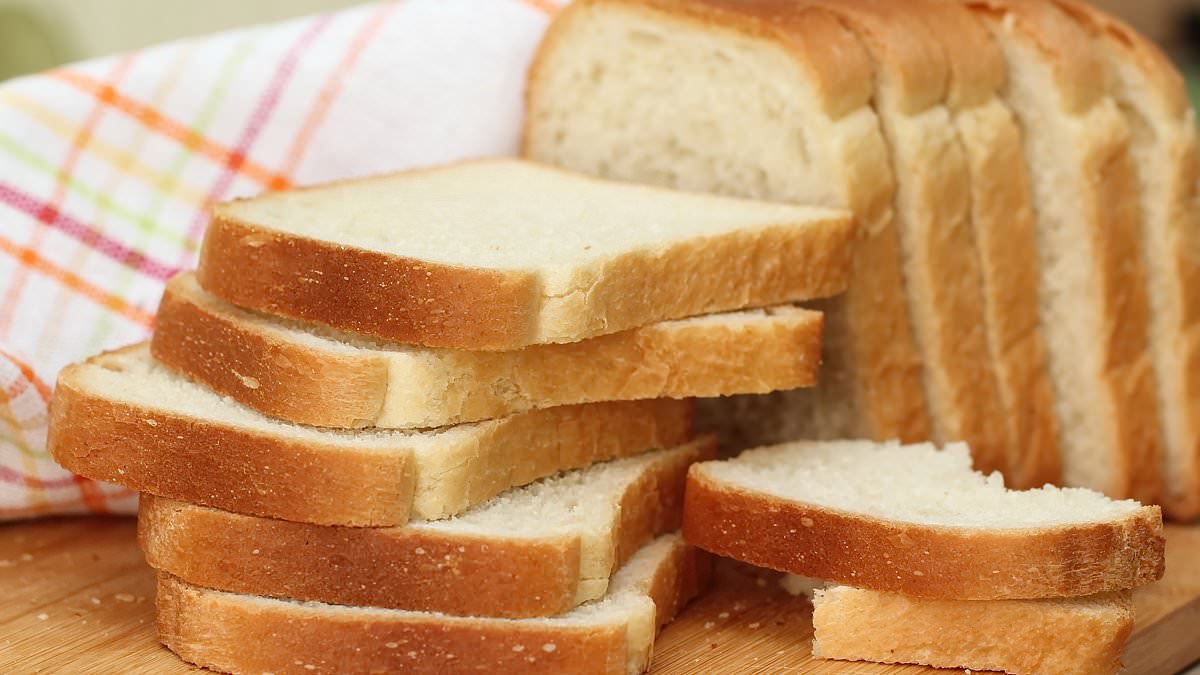


Opting for artisan bread doesn’t necessarily mean you’re choosing a healthier option, as recent analysis reveals that some of the least expensive supermarket breads are among the most nutritious.
A study conducted by consumer advocacy group Which? discovered that budget-friendly wholemeal breads can surpass pricier rye and malted varieties in nutritional value. In fact, some loaves priced at just 59p emerged as the most balanced in terms of nutrition.
This research dispels the myth that spending more guarantees better quality, especially when it comes to bread.
After evaluating 60 different types of bread, including wholemeal, malted, seeded, blended, and rye, experts emphasized that consumers shouldn’t equate a higher price with improved health benefits.
The analysis utilized the 2004 Nutrient Profiling Model (NPM), a framework established by the Food Standards Agency, to meticulously assess each loaf’s nutritional content and assign a score out of 100.
Breads received higher scores for beneficial nutrients like fiber and protein, while deductions were made for containing sugar, saturated fat, and calories.
Among the standout performers was Aldi’s Village Bakery Medium Wholemeal, priced at just 59p per loaf.
It contains 7.9g of fibre per 100g, alongside 10.6g of protein, just 2.5g of sugar and less than a gram of salt – giving it one of the strongest overall nutritional profiles in the test.
While all of the loaves analysed passed the ‘healthy’ threshold score of 62, there was a significant gap between the best and worst rated.
Aldi’s top-performing loaf scored around ten points higher than the lowest-ranked bread in the study.
That title fell to Biona Organic’s Original Rye Bread which, despite its £3.10 price tag, came bottom of the rankings.
Although it contained 10g of fibre per 100g, it had the lowest protein content of all 60 breads tested at just 4.2g, alongside 1.13g of salt and 3.7g of sugar.
This made it among the saltiest loaves analysed, while also being one of the most calorific.
Despite scoring 70 – meaning it still met the criteria for a ‘healthy’ product – it ranked last overall due to its poorer nutritional balance compared with cheaper supermarket alternatives.
Commenting on the findings, nutritionist Shefalee Loth said: ‘Our analysis sends a powerful message to shoppers: you don’t need to pay a premium to get a nutritionally superior loaf.
‘In fact, some more expensive breads may even be less healthy than budget wholemeal supermarket versions that cost a fraction of the price.
‘Choosing 100 per cent wholemeal guarantees bread naturally richer in B-vitamins, magnesium and iron, providing essential fibre and protein for lasting satiety.
‘For those not keen on wholemeal, our findings show that a blended loaf could provide a significant nutritional boost without compromising on the flavour of a white loaf.’
In total, 13 breads achieved the highest score of 80 in the analysis – making them the most nutritionally balanced options on supermarket shelves according to the NPM model.
All but one of the top-scoring breads were wholemeal, with Hovis’s ‘Best of Both’ the only blended loaf to feature among the healthiest options.
Hovis also appeared with its Wholemeal Medium loaf, while Warburtons was the other major brand to feature among the highest scorers.
The remainder of the top-ranking breads were dominated by supermarket own-label products from Co-op, Lidl, Morrisons, M&S, Ocado, Waitrose and Sainsbury’s.
Iceland’s The Daily Bakery malted bloomer also secured a place among the best performers, thanks to its relatively low sugar and salt levels.
However, both major brands and budget supermarkets also appeared further down the rankings.
Hovis’s Medium Sliced Granary scored just 72, with the bread marked down for its relatively low fibre content of 3.7g per 100g.
M&S’s Only 4 Ingredients Wholegrain Sliced Rye received the same score.
Aldi also featured among the least healthy options, with its blended Both in One Medium and Village Bakery Classic Malted Bloomer both ranking near the bottom.
Biona, which took the lowest spot overall, appeared twice more among the lower-ranked loaves with its Organic Rye Bread with Sprouted Seeds and Pumpernickel Rye, both scoring 74.
Other higher-priced brands – including Allinson’s, Black Sheep and Schneider – also featured among the less healthy options.
Meanwhile, popular loaves from Warburtons, including its Half & Half and Original Seeded Batch, were also marked down.
Supermarket options from Morrisons and Tesco appeared too, alongside Wildfarmed’s Sliced Seeded, which rounded off the list of loaves that fell short on nutritional balance.