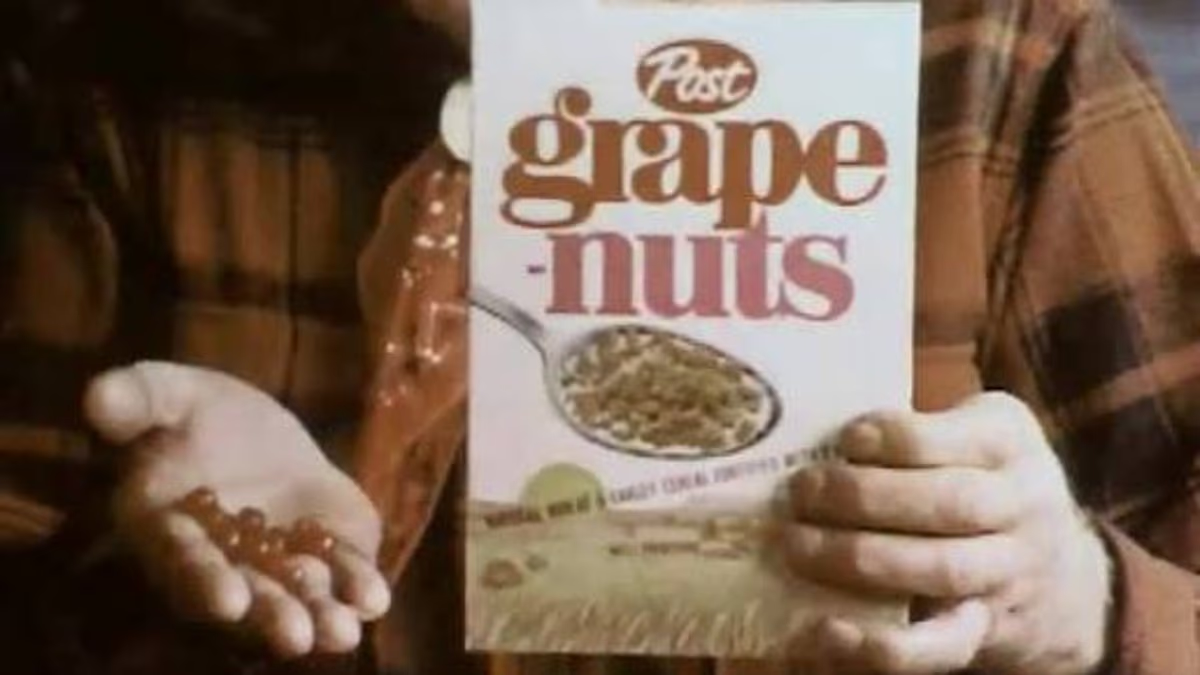

Decades before supermarket aisles were packed with protein-packed granolas and cereals promising better gut health, Grape-Nuts had already carved out a loyal following as a no-nonsense, ultra-crunchy breakfast choice for health-minded shoppers.
Although it never became a British breakfast staple on the scale of Weetabix or Corn Flakes, its pared-back recipe — flour, salt and dried yeast — along with its high-fibre profile, has helped keep the cereal on shelves for well over 100 years.
It is best known for its famously tough bite: even after soaking in milk for 10 minutes, the tiny nuggets can still remain stubbornly crunchy.
Similar in appearance to a finely crushed granola, the cereal also earned a place in adventure lore after accompanying Sir Edmund Hillary during his historic 1953 climb of Mount Everest, reinforcing its image as a durable, energy-giving health food.
More recently, however, Grape-Nuts has been pushed into the background by sweeter cereals and brands with far bigger marketing budgets.
Yet with more consumers now reading labels closely and looking for foods with fewer ingredients and less processing, some nutrition specialists say the old-school cereal may be ready for a comeback.
Registered dietitian Nichola Ludlam-Raine, founder of Nic’s Nutrition, explains: ‘One of Grape-Nuts’ standout features is that they’re relatively simple in terms of ingredients compared with many breakfast cereals, and they provide wholegrains, fibre, iron and several B vitamins.
‘They also tend to be low in added sugar, which sets them apart from many cereals marketed at adults and children alike.
‘As more consumers become interested in ingredient lists, wholegrains and reducing added sugars, cereals such as Grape-Nuts may hold more appeal.’

Grape-Nuts have been popular in the US for more than 100 years and finally made their way to Britain in 1954. Naturalist and forager Euell Gibbons promoted the cereal in the 70s

Pictured: A vintage 1950s magazine advert for Post Grape-Nuts cereal, featuring a classic illustration by Dick Sargent
But what exactly are Grape-Nuts?
Despite their name, Grape-Nuts contains no actual grapes or nuts. They are made from just a few simple ingredients: wholegrain wheat flour, malted barley flour, salt and dried yeast.
These base ingredients are baked into a hard loaf, which is then crushed and toasted to achieve the cereal’s signature rocky crunch.
The ‘nuts’ refers to the nutty flavour profile and the crunchy texture resembling grape seeds.
Twice the bowel friendly fibre as Weetabix and porridge
Resoundingly, yes.
Grape-Nuts are an excellent source of fibre and are fortified with essential vitamins and iron, making them beneficial for digestive health, energy levels and blood flow.
Per 45g serving, Grape-Nuts contain 160 calories, less than a gram of fat, five grams of protein and just under a teaspoon of sugar (that comes naturally from the flour).
They contain no saturated fat – the type that is linked to high cholesterol and heart disease.
They contain seven and a half grams of dietary fibre per bowl, which provides roughly a third of your recommended daily value and almost twice as much as two Weetabix biscuits. A 40g bowl of oats contains only three and a half grams of fibre.
Experts have long advised eating at least 30g of fibre daily as it’s known to reduce the risk of bowel cancer – which is on the rise in the under 50s.
Fibre is also thought to be helpful for clearing cholesterol out of our bloodstream, reducing the risk of it damaging arteries and leaving you vulnerable to heart trouble.
Add yoghurt for optimum benefits and a satisfied appetite
In the 50s, Grape-Nuts were marketed heavily as a diet food for health-conscious housewives, famously centred around the slogan: ‘Fills you up, not out’.
Grape-Nuts are known to be highly filling – and there is a scientific reason behind why.

Top dietitian Nichola Ludlam-Raine recommends pairing the cereal with protein and healthy fats
The cereal’s high fibre content and dense structure force the body to work harder to break it down.
This slows gastric emptying – the rate at which food leaves your stomach – resulting in a steady, prolonged release of energy that wards off mid-morning hunger.
Ms Ludlam-Raine, author of How Not to Eat Ultra-Processed, adds that their dense, crunchy texture also means they take longer to chew, which may encourage slower eating and give your body’s fullness signals more time to kick in.
However, how satisfying they are depends on what you eat them with.
‘A bowl of Grape-Nuts on its own may not keep you full for as long as one paired with protein and healthy fats,’ explains Ms Ludlam-Raine.
‘Adding milk, Greek yoghurt or kefir for protein, alongside fruit and a handful of nuts or seeds, creates a more balanced breakfast that is likely to keep you satisfied for longer and provide more sustained energy throughout the morning.
‘Building a breakfast that combines fibre, protein and healthy fats is the most effective approach.’
Women with busy mornings may benefit most
Grape-Nuts can be a particularly good choice for adults wanting to increase their fibre intake.
Studies show that only about four per cent of UK adults hit the recommended 30g daily fibre target, with national averages hovering between 17g and 20g.
Because Grape-Nuts are a great source of iron, they may also help support people with higher iron requirements, such as menstruating women.
However, Ms Ludlam-Raine stresses that cereal shouldn’t be relied on as the sole source of iron.

Nutritionists split food into three groups based on the amount of processing they have gone through
Grape-Nuts are heavily fortified with non-haem iron, which is absorbed less efficiently and can be blocked by natural compounds in wholegrains.
For reliable iron levels, diversify your intake with highly absorbable sources, such as lean red meat, poultry, and fish.
Consuming Vitamin C-rich foods, like a small glass of orange juice, with an iron-fortified breakfast cereal increases iron absorption by up to 100 per cent.
Grape-Nuts contains slow-digesting wholegrain carbohydrates, which may also appeal to people looking for sustained energy across the morning.
The only downfall? A large pinch of salt
Compared with many sugar-coated cereals or granolas, Grape-Nuts are lower in added sugar, higher in fibre and richer in iron.
They are also lower in calories than a typical bowl of porridge or Shredded Wheat made with milk, although roughly the same as wheat biscuits.
Grape-Nuts are surprisingly high in salt compared to its competitors, containing half a gram per serving. However, this is equal to little more than a large pinch, and accounts for just eight per cent of your recommended daily allowance.
Salt is added both for flavour and to aid in the yeast fermentation process during production.
Ms Ludlam-Raine explains: ‘Rather than there being one best cereal, it’s more useful to look for cereals that provide at least three to six grams of fibre per 100g (ideally higher), are low in added sugar, and are based predominantly on wholegrains.’


