
The US Centers for Disease Control and Prevention warned in July that West Nile virus transmission had arrived unusually early in parts of the country, marking the heaviest early-summer activity since 2004. In Delaware, officials responded by turning to an unexpected surveillance tool: chickens.
“They kind of are the proverbial canary in the coal mine,” said Tom Moran, who leads the mosquito control section at Delaware’s Department of Natural Resources and Environmental Control.
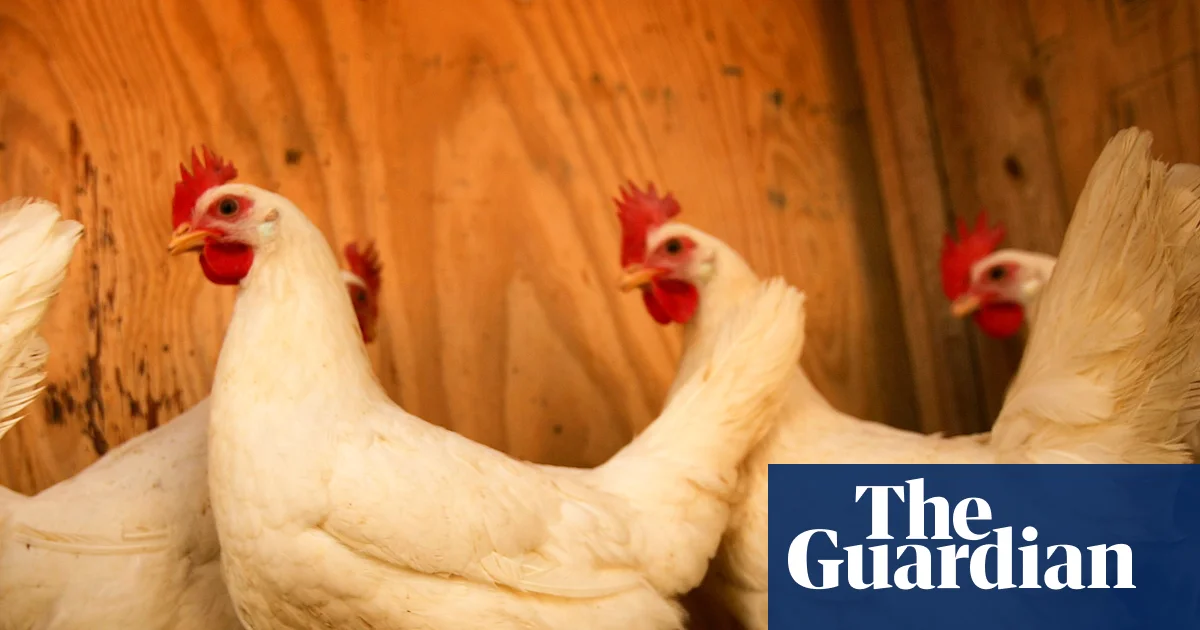
Known as sentinel chickens, the birds provide an early signal that mosquito-borne diseases are circulating—particularly Eastern equine encephalitis, or EEE, and West Nile virus.
Their blood tests can reveal when virus activity is beginning to rise, giving officials time to focus mosquito-control operations and alert residents to take precautions. The data also helps doctors consider these illnesses when patients develop flu-like symptoms outside the usual flu season, potentially speeding diagnosis. Veterinarians, meanwhile, can ensure that horses are vaccinated.
The birds are considered “dead-end hosts,” Moran said. Although chickens can become infected and test positive, they cannot pass the viruses on to mosquitoes or people, making them well suited for disease surveillance.
Delaware has maintained flocks of four chickens at 20 sites across the state since launching the program in the early 1980s. The relatively low-tech system offers a way to track viruses that can cause severe illness or death.
“It is kind of the old-school gold standard,” Moran said. Some states now test groups of mosquitoes instead, a method that can identify virus activity sooner because chickens typically need about a week to develop antibodies after an infected bite.
Delaware tested both approaches before choosing to rely solely on chickens. “The chickens sometimes pick up virus activity in an area that the mosquito pools did not,” Moran said. Unlike mosquitoes, the birds remain at their assigned locations, allowing officials to determine with greater confidence that infected insects are present in that specific area.
“It gives you a little more surgical information,” Moran said. “You take that information and try to use it to lessen the specter of any human transmission.”
Virus cases generally emerge from north to south as migrating birds introduce the pathogens to mosquitoes, Moran said. In Delaware, the season typically gets underway in early August.
The chickens can also be screened for newly emerging mosquito-borne diseases. When West Nile virus reached Delaware in 2000, officials initially tested dead wild birds for signs of infection. They soon expanded surveillance to the sentinel chickens already stationed throughout the state.
Other jurisdictions monitor diseases such as St Louis encephalitis. If a neighboring state identifies a pathogen of local concern, Delaware could quickly adapt its program, Moran said, adding: “We could probably pretty quickly get up to speed and start testing for that here too.”
The decades of data collected from sentinel chickens on virus patterns can be invaluable for creating models that predict the severity of a season. That’s what Lindsay Campbell, associate professor of entomology and nematology at the University of Florida, has focused on in her research. She digitized decades of paper records from Florida’s Department of Health and mosquito control programs, and she’s also drawn on environmental patterns – temperature, precipitation, land cover – as well as community science data like eBird to track bird migration patterns.
The data, and the models built from it, can offer insight into the conditions driving good and bad years for West Nile and EEE.
The sentinel chickens are providing important data “telling us what happened, while we would like to know what might happen in the future”, said Robert Guralnick, curator of biodiversity informatics at the Florida Museum of Natural History and a co-author with Campbell.
“It gives us the opportunity to go ahead and see the ebbs and flows, essentially, of these viruses over time, and then we can try to link them with different environmental characteristics to see if we can maybe predict when there might be elevated activity in the natural environment,” Campbell said.
There are many factors likely involved in how diseases like these spread – the hosts, like mosquitoes, birds, and other animals, as well as environmental conditions. That makes it complicated to predict how severe a year will be. But these models are examining, for instance, if weather patterns or temperatures from four or six or twelve months earlier affect how bad a viral season is.
“For some viruses, like EEE virus, we’ve seen a strong association with a certain type of landscape that is associated with the mosquito vector – that’s really important for that virus,” Campbell said. For West Nile virus, they’ve identified some precipitation and temperature patterns a few months before chickens start testing positive.
“The information that these programs have been able to provide is really invaluable,” Campbell said of sentinel chickens. Guralnick agreed. “It’s a clever way to gather really good information about what’s happening,” he said.
Over the decades, officials have tried new things and learned what works best. For the first few years of the Delaware program, they used white leghorn chickens – but they proved, in Moran’s words, to be “very flighty”. They frequently tried to escape, running into the bushes and forests.
“It’s literally like a scene from Rocky, where you’re chasing the chicken around – you can’t catch these things,” Moran said. It would sometimes take an hour to track the chickens down. Once they switched to a breed of Rhode Island red chickens, their work went much more smoothly.
Similarly, officials have experimented with other means of tracking mosquito-borne illnesses, including one research project that proposes using honey traps to catch the insects. “We’re always looking: is there a better way, a faster way, a cheaper way, a more accurate way – it checks all those boxes?” Moran said. “Folks are always pushing the ball forward.”
But for now, chickens rule the roost.


