It’s a known fact that as you age, you lose muscle mass. That’s why it’s imperative to know what you should and should not do in your daily routine. We spoke with Antonio Reyes, master coach for Body Fit Training, who breaks down 10 bad habits that can cause you to lose muscle mass.
“As many of us embark on the fitness journey for the first time or others that are steadfast on it, oftentimes we can do things that, whether we realize it or not, can derail our progress,” Reyes tells us. “Do something enough times, and it quickly becomes a habit. It is both well documented and much more commonly understood that building and keeping lean tissue (muscle) is vital to performance, health, and quality of life. Many of you are hitting the gym, taking group strength classes, and doing everything necessary to build and keep the muscle.”
To help keep your “muscle mass under construction” box checked, Reyes is calling out 10 bad habits that can cause you to lose muscle mass. He also shares some of his best tips to help you maintain lean tissue as you grow older. Keep reading to learn what you should and shouldn’t do, and when you’re finished, check out these 8 Tips for Boosting Muscle Growth After 50, According to a Trainer.
You’re not eating enough protein each day.
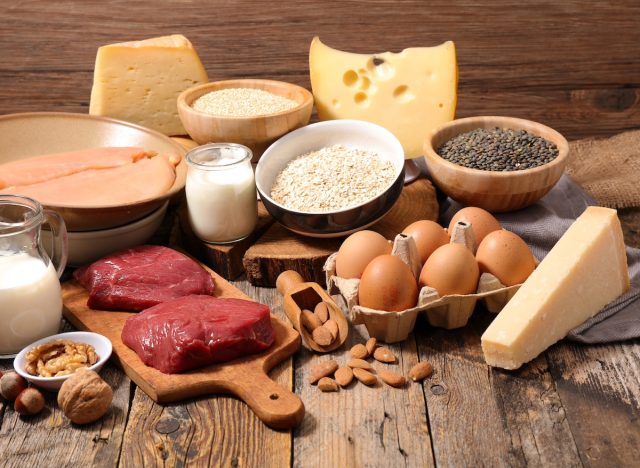
Plain and simple, protein is essential if you’re looking to build and preserve muscle. But are you including enough of it in your weekly diet?
Reyes points out, “A good rule of thumb is 80% of [your] body weight (measured in pounds) in grams of protein per day. Use it as a starting point and become consistent.”
You’re eating too much protein.
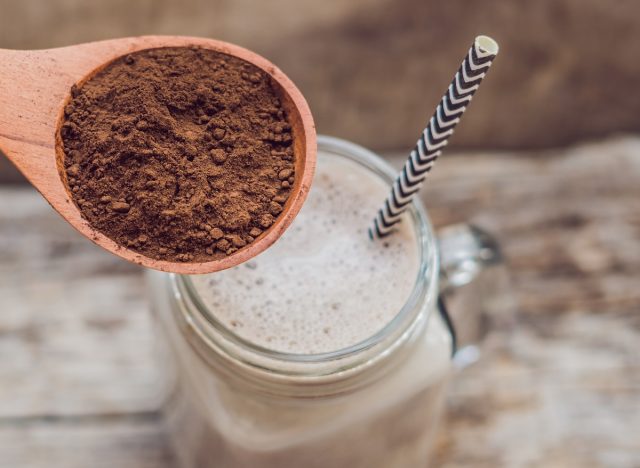
Too much of anything is never a good thing, and protein is no exception to the rule. When you overdo it with protein, it “displaces” other necessary macronutrients.
“Stick to the guideline in point one above,” Reyes suggests. “[You can] go as high as 100% to 120% of [your] body weight assuming that you’re performing very high volume weight training.”
You’re maintaining a calorie deficit for an extended period of time.
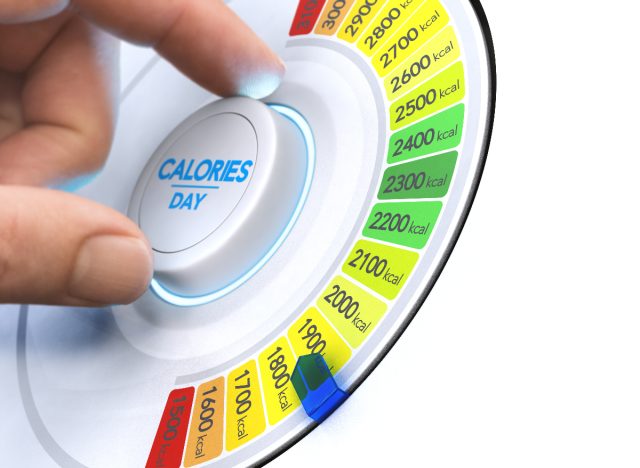
Establishing a calorie deficit is essential when it comes to losing weight. However, when you maintain that deficit for a long period of time, it can result in muscle loss.
“Have a structured and planned out nutritional program where you set a goal for how long to be in a deficit,” Reyes encourages. “Follow this with a calorie maintenance phase, then a calorie surplus phase. Repeat.”
You’re not drinking enough water.

You may not know this, but muscles are composed of a lot of water and require water to stay healthy. Reyes explains, “The body’s thirst mechanism is delayed. By the time you’re thirsty, you’ve already been dehydrated. Therefore, relying on thirst as a gauge of hydration is rather inaccurate.”
Plan to drink a good amount of water throughout the day. For instance, drinking eight ounces every two hours is a great plan. A solid gauge is being mindful of your urine color. If it’s clear to light yellow, it means you’re getting enough water. If it’s dark yellow, it means you’re dehydrated and need to drink more H2O.
You’re drinking too much alcohol.

Drinking alcohol dehydrates your body, which can cause your muscles to break down. “We aren’t talking about the occasional social gathering and having a cocktail,” Reyes says. “We mean having a habit of alcohol making up a portion of the daily nutritional intake.”
You don’t have a structured nutritional plan in place.

You need to have a sufficient water, protein, and calorie balance. If not, you can be at risk of losing muscle mass.
“The best way to ensure that these are in sufficient quantities is to plan ahead and structure each day of the week,” Reyes suggests. “Break it down to the number of meals per day and then work on the actual meals themselves. Alternatively, use a meal prep company. They offer convenience and structure and can help with your specific muscle mass-building goal.”
You’re a diet hopper.

Most diets consist of a “structured and planned program.” However, if you’re a dieter who tries a new one only to switch to another in a few weeks, your body will be confused. You’re not doing anything consistent or productive by “diet hopping.”
Reyes advises, “Stick to a plan for eight to 12 weeks, and assess periodically.”
You’re not routinely keeping track of your body composition.

Sometimes in life, what you don’t know won’t hurt you. When it comes to your body composition and weight loss, though, you need to be in the know.
“The best way to know if you are gaining, losing, or maintaining is to have body composition assessed,” Reyes says. “There are many methods and some are better or more accurate than others. However, the important things are to get it done, get it done regularly (every two to four weeks), and try to do them under the same conditions (time of day, hydration state, etc).”
You’re not catching enough Z’s each night.

Your body heals, grows, and repairs itself while it sleeps. When you’re trying to build and preserve muscle mass, getting the right amount of sleep is essential. Everyone requires a different amount of sleep each night, so there may be a “trial and error” phase in determining the right amount for you.
“As a general rule, most people need an average of seven hours a night for a full recovery period,” explains Reyes. “Remember, just because you CAN get away and function with little sleep doesn’t mean you should!”
You don’t have a progressive resistance training routine in place.
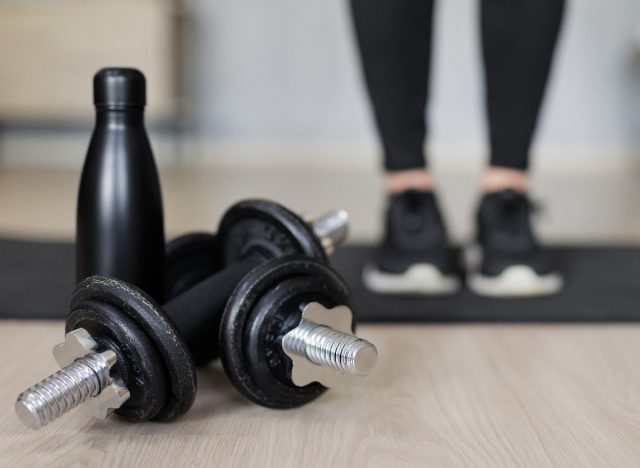
In order to build muscle and preserve it, you have to challenge yourself. There are plenty of ways you can accomplish this, including increasing the weight, performing more reps, switching up your exercises, modifying your speeds, and more.
Reyes points out, “Regardless of how we choose to create this ‘progressive overload,’ it is paramount for muscle mass retention. This is pretty much the only stimulus your body will receive as to ‘why it should keep this muscle that costs so much to make.’ Bring out the logbook and track your workouts. Alternatively, some apps can be used or professionals can be hired to do your programming.”

Sign up for our newsletter!