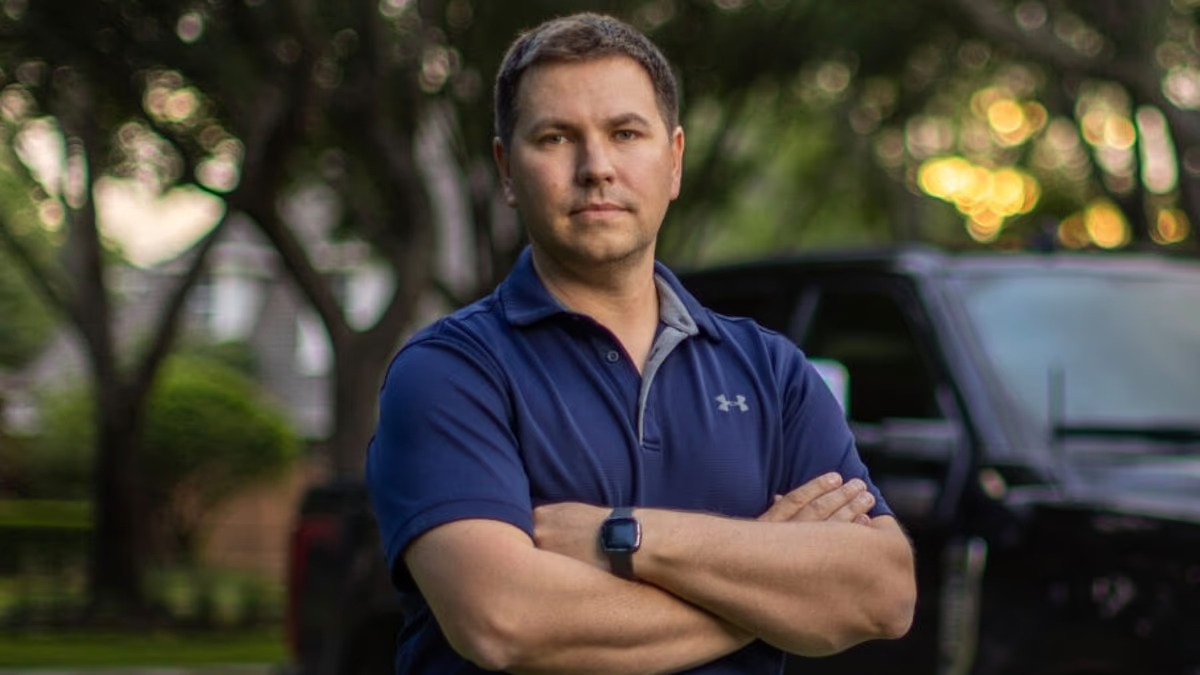

A groundbreaking medical breakthrough has seen a man living with HIV successfully cured through an innovative transplant procedure, as announced by his doctors.
This 63-year-old Norwegian, who had battled HIV for nearly two decades, represents a significant milestone in medical history. The virus, which afflicts around 1.2 million people in the United States, undermines the immune system, leaving the body vulnerable to infections.
Though the origins of the man’s HIV-1 subtype B—a prevalent strain in Europe and the Americas—remain uncertain, the virus is typically spread among men who have sex with men and individuals who use intravenous drugs.
The patient, whose identity remains confidential, was on antiretroviral therapy for about 11 years. These medications help decrease the HIV viral load. However, in 2018, he was diagnosed with the rare blood cancer myelodysplastic syndrome, unrelated to his HIV condition.
Following two years of battling cancer, medical professionals embarked on a quest to find a stem cell donor with the same genetic mutation as the patient—a mutation in the CCR5 gene, which acts as a barrier to HIV entry into cells. The aim was to eradicate both the cancer and HIV.
When a suitable donor proved elusive, the medical team opted to use the man’s older brother, who was a genetic match for cancer treatment. Remarkably, on the day of the transplant in 2020, genetic testing revealed that the brother also possessed the rare CCR5 mutation, present in only about one percent of Europeans.
‘We had no idea. That was amazing,’ Anders Eivind Myhre, one of the man’s doctors at Oslo University Hospital, told AFP.
While the man is not the first patient to receive such a transplant, doctors believe he is the first to get the healthy cells from a family member.

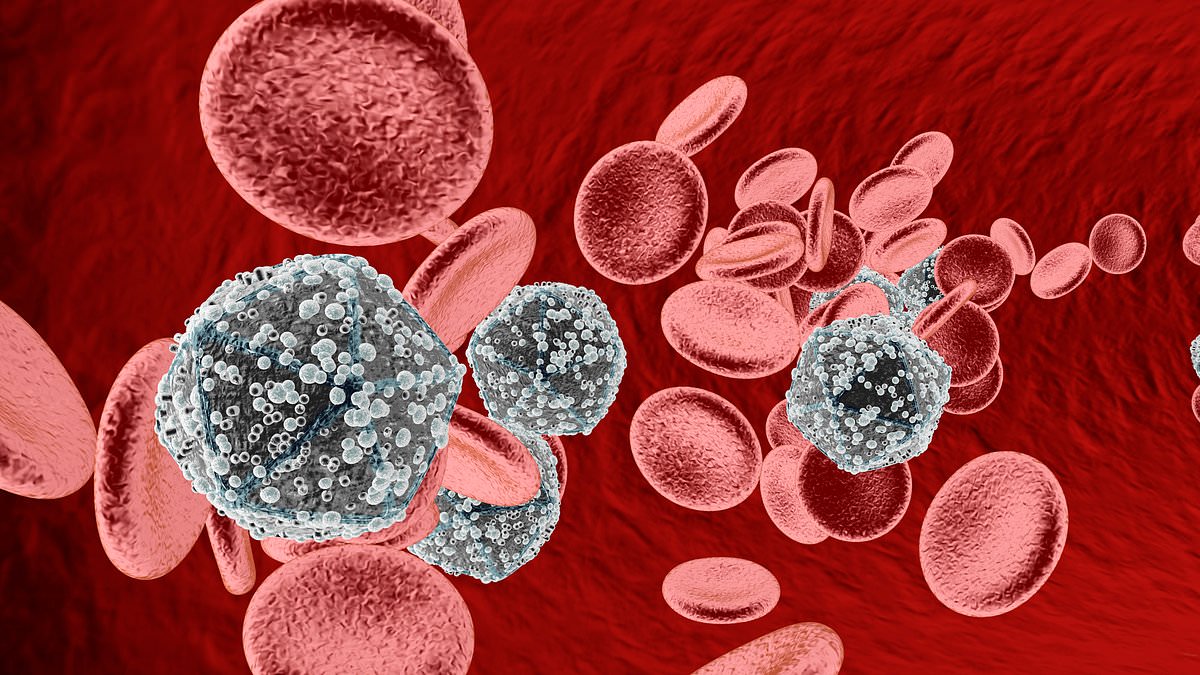
A man in Norway has been cured of HIV, a virus that attacks the body’s immune system and leaves it unable to fight off foreign invaders (stock image)
Two years after the transplant, the man was able to stop his antiretroviral regimen, and he no longer has any trace of HIV in his body, as his immune system had been ‘completely replaced’ by his brother’s.
‘For all practical purposes, we are quite certain that he is cured,’ of HIV and cancer, Myhre said, adding that the patient’s story was ‘like winning the lottery twice.’
Myelodysplastic syndromes are a group of blood cancers where immature blood cells in the bone marrow fail to mature properly, leading to low red blood cell counts. Red blood cells are crucial for transporting oxygen from lungs to vital tissues.
Striking between 10,000 and 15,000 Americans per year and killing most patients within five years, symptoms include fatigue, shortness of breath, paleness, easy bruising or bleeding, pinpoint-sized red spots just beneath the skin and frequent infections.
The only cure for myelodysplastic syndromes is an allogeneic stem cell transplant, which replaces the patient’s diseased bone marrow with healthy blood-forming stem cells. This led to the man, who has been dubbed the ‘Oslo patient,’ being considered for a stem cell transplant.
For HIV patients receiving stem cell transplants, their immune cells are replaced with cells genetically resistant to HIV due to the CCR5 mutation.
The Oslo patient is one of a handful of people to be functionally cured of both HIV and cancer due to stem cell transplants from donors with the CCR5 mutation.
In 2008, Timothy Ray Brown, who was nicknamed the ‘Berlin patient,’ had the same procedure as the Oslo patient but from an unrelated donor to cure both his cancer and HIV and was free from HIV for the rest of his life. He died in 2020 at age 54 from leukemia.
Marc Franke, also known as the ‘Düsseldorf patient,’ was also cured of both HIV and acute myeloid leukemia from the procedure in 2023, which used stem cells from an unrelated donor.

Timothy Ray Brown, also known as the ‘Berlin patient,’ was the first person to be cured of HIV and cancer with a stem cell transplant in 2008. He is pictured above in 2019 and died in 2020

Brown, pictured with his dog Jack in 2011, was one of just a handful of people to be cured of HIV. About 12 years later, an unidentified man in Norway was cured with the same procedure
An outlier was the ‘Geneva patient,’ who was cured of HIV in 2021 after receiving a stem cell transplant from a donor who did not have the CCR5 mutation and has been free of the disease ever since. As of late 2024, he still has no HIV detected in his blood.
The Oslo patient’s case is particularly unique, however, in that he’s the first patient to receive the transplant from a sibling. His doctors wrote in Nature Microbiology that his case ‘contributes valuable evidence to the existing knowledge base regarding HIV cure cases.’
However, the researchers cautioned that the procedure is not a cure for most people with HIV and is meant for patients who also have blood cancers. Stem cell transplant is also risky, with complications ranging from infections to bleeding to organ failure and infertility.
The Oslo patient had several complications after the procedure, including graft-versus-host disease, which occurs when the donor cells attack the recipient’s body and lead to rashes, diarrhea, nausea, vomiting, cramping and jaundice.
However, he has since stopped his HIV medications and is ‘having a great time’ with more energy than ever, Myhre said.
Given his newly robust health, study co-author Marius Troseid of the University of Oslo said the Oslo patient’s nickname may no longer be appropriate.
‘The Oslo patient is perhaps no longer a patient. At least he doesn’t feel like it,’ he told AFP.