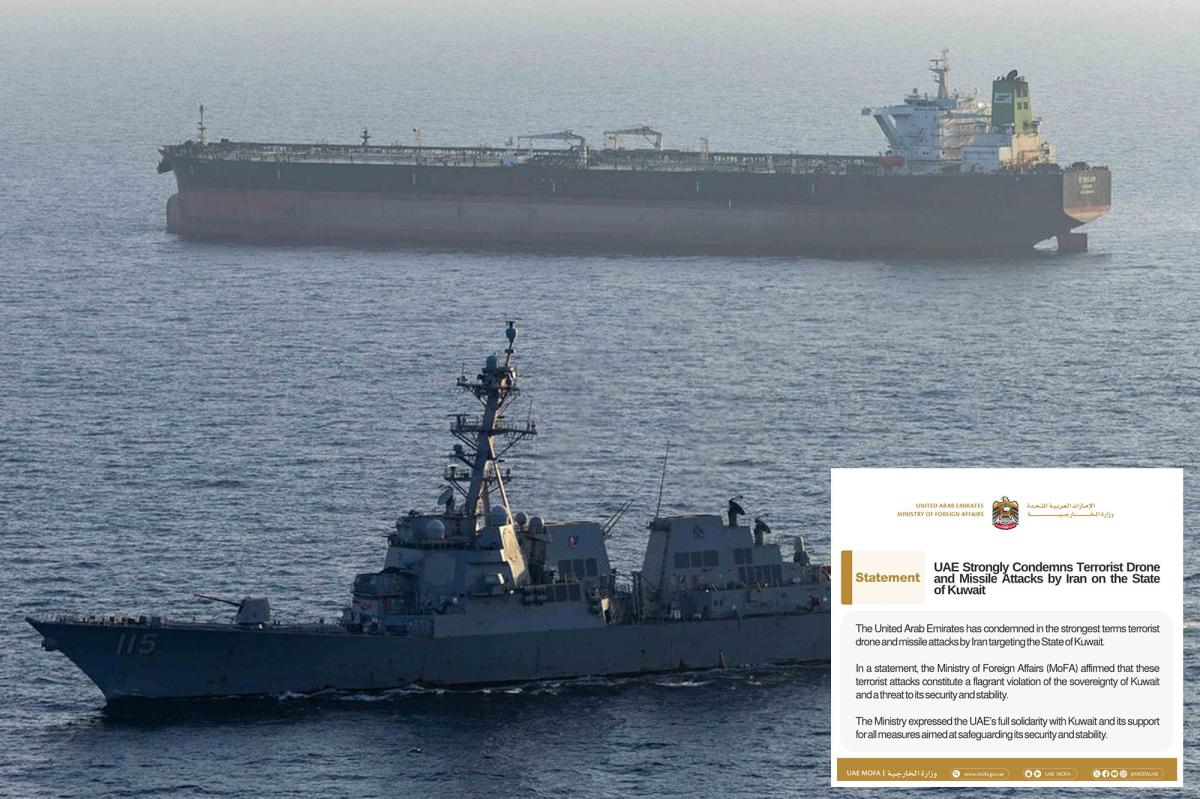


In a bold move late Wednesday, Iran fired a ballistic missile towards a U.S. military base located in Kuwait. This act was purportedly in response to the U.S. military’s recent destruction of Iranian drones in the strategically crucial Strait of Hormuz.
Kuwaiti defense systems successfully intercepted the missile, as confirmed by the U.S. Central Command (CENTCOM). They also reported that the U.S. mission to neutralize the Iranian drones had been a resounding success.
Describing the incident as a severe breach of ceasefire agreements, CENTCOM released a statement on social media Thursday. “Hours before this violation, Iranian forces launched five aggressive drones aimed at the Strait of Hormuz, posing a significant threat,” the statement detailed.
CENTCOM further revealed, “U.S. forces intercepted all drones successfully and thwarted the launch of a sixth drone from a control site in Bandar Abbas, Iran,” according to their Tampa, Florida headquarters.
“In collaboration with our regional partners, U.S. Central Command remains on high alert and committed to safeguarding our interests and personnel from unwarranted Iranian hostility,” the statement continued.
Reacting to the missile attack, Kuwait’s foreign ministry condemned the act as a “clear breach of sovereignty and security,” holding Tehran fully accountable for the aggressive action.
The statement also expressed Kuwait’s “strongest condemnation and denunciation of the criminal Iranian attacks that targeted the territory of the state of Kuwait with missiles and drones in a dangerous escalation” and called for their immediate cessation.
Neighboring Gulf states Qatar, Saudi Arabia, and the United Arab Emirates all also condemned the missile launch, with the UAE branding it a “terrorist attack” by Iran.
All three described the air strike as “a flagrant violation” of Kuwait’s sovereignty, and expressed “full solidarity” with their neighbor and “support for all measures” it takes to preserve its security, sovereignty, and stability, in statements shared by their foreign ministries.
The strike was also condemned by the head of the Gulf Cooperation Council (GCC), Jasem Mohamed Al-Budaiwi.
“The secretary-general pointed out that the continuation of these treacherous attacks is a flagrant violation of the principles of international law, the Charter of the United Nations, and the principles of good neighborliness,” the GCC told Al Jazeera.
“His Excellency affirmed the GCC countries’ full support for the state of Kuwait in all measures it takes to preserve its security and stability, and the safety of its citizens and residents,” the statement continued.
Oil prices rose by up to 4% while bond prices fell in the wake of Iran’s escalation, which dented investor confidence in a quick peace deal.
Brent crude peaked at nearly $96 per barrel in overnight trading, down from the $126 per barrel high from late April, but still 33% above pre-war levels and 50% higher than this time in 2025.