
Share this @internewscast.com
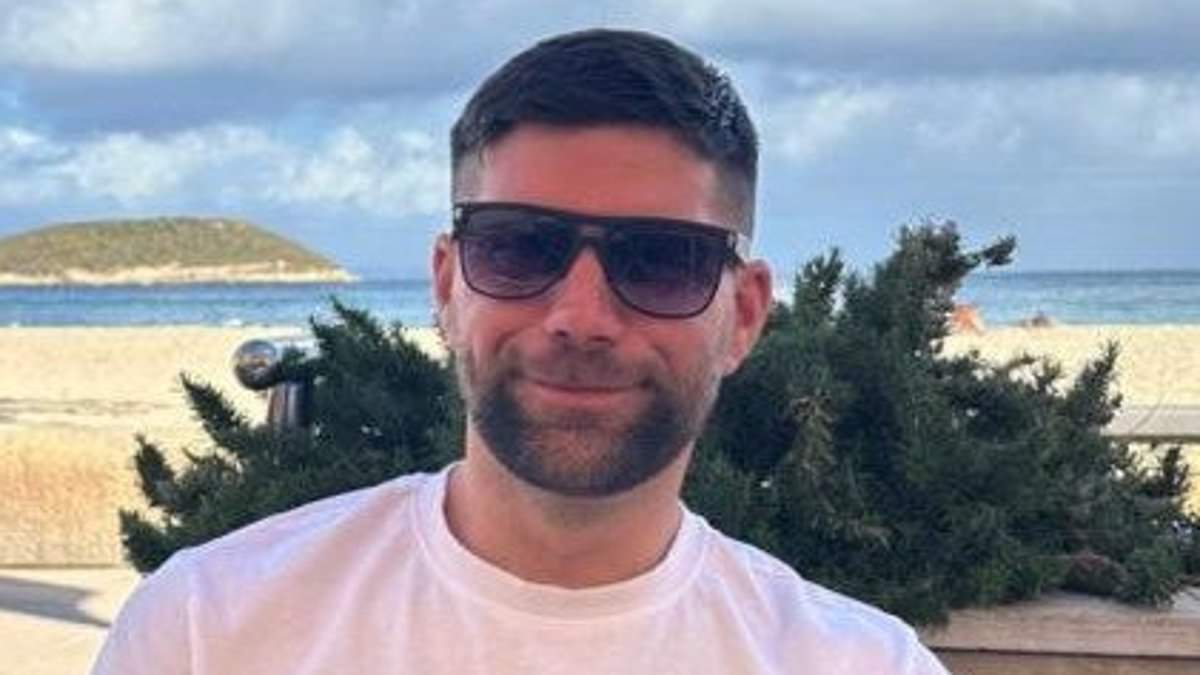
When Grant Learmont began feeling stiffness in his back and hips, he assumed it was a minor muscle issue from either exercising or his job.
However, within just three weeks of consulting his general practitioner in early January, the 40-year-old builder from Dumfries, Scotland, received a devastating diagnosis: stage four prostate cancer, with only a few years left to live.
Reflecting on the initial doctor visit, the father of two shared, “Both the doctor and I thought it was likely a muscular problem, probably from my work in construction or playing football.”
He explained, “It seemed logical to think it was muscular, so the doctor arranged for me to see a physiotherapist.”
After his visit to the physiotherapist, where he was advised on certain exercises, Learmont noticed a troubling development. By early February, the pain had moved from his lower back and hips to his shoulder and chest.
“When I sat up in bed or took a deep breath, the pain was intense,” he recalled, adding, “It was severe enough that I had to call the doctor again.”
Later that night, he received a phone call from the GP saying they’d found ‘abnormalities’ in his blood and that he could have a blood clot.
Mr Learmont was given a hospital appointment the next morning, on Valentine’s Day, to get a CT scan.

Grant Learmont, 40, was unaware his bad back was signs of prostate cancer
It revealed shadows in his spine, pelvis, and left hip which indicated metastatic bone disease, caused by incurable stage four advanced metastatic prostate cancer.
‘When he told me ‘extensive bone disease’, I was like “right, OK”, but when he said it had led on from prostate cancer I thought “what?”, said Mr Learmont.
‘I was totally confused, I had absolutely no symptoms – going to the toilet has been absolutely fine, any other symptom – not a thing.
‘Just a slight bit of pain in the weeks leading up to it, and that was it.’
The prostate is a small gland, about the size of a walnut, located at the base of a man’s bladder.
It is the most common cancer in men in the UK, with around 63,000 cases diagnosed each year. The disease mainly affects older men, with the highest rates in those aged over 75.
The prostate, which is about the size of a walnut, is located between the penis and the bladder, and surrounds the urethra.
Its main function is to produce seminal fluid – which nourishes and transports sperm.

Mr Learmont with his wife Kirsten and their two children, Tilly and Shaw
Men with early prostate cancer will often suffer no symptoms — unless the cancer grows next to the urethra.
They may notice problems getting or keeping an erection, unexplained weight loss or fatigue.
Prostate Cancer UK says that if the cancer breaks out of the prostate or spreads to other parts of the body, it can cause different symptoms.
These can include back pain, hip pain or pelvis pain – which can be caused as the cancer spreads to bones – as experienced by Mr Learmont.
Doctors have since given Mr Learmont a testosterone blocking hormone injection to stop the hormone from fuelling the cancer, but further scans showed the cancer was even more extensive than previously thought – appearing in his collarbones, ribs, and sternum.
He starting ‘triplet therapy’ consisting of a hormone injection, oral hormones, and chemotherapy in mid-April.
Doctors have said Mr Learmont could live for another four to 10 years, but they are uncertain.
Mr Learmont said: ‘They don’t know – it’s a needle in a haystack.’
His focus is now on raising awareness about the disease, and particularly wants people to know that younger men are also at risk.
‘I want to raise awareness and raise money, to show people – for years this has been seen as a disease that older people get, in their 60s and 70s,’ he said.

Mr Learmont is now cycling to raise awareness and funds for prostate cancer charities
‘I’m proof in the pudding it can happen to younger people.
‘Especially because I’m in the building trade, loads of builders and joiners are always moaning about aches and pains.
‘I want to raise awareness – if you’ve got a constant pain or you’re feeling sore, go and get checked out.’
Mr Learmont, alongside his wife Kirsten, daughter Tilly, 19, and son Shaw, 17, are raising money for prostate cancer charities by taking part in the 56.7-mile long (91.2-km) ‘Tour de 4’ charity cycle through the Scottish countryside.
Set up by former track cyclist Sir Chris Hoy, who was diagnosed with stage four prostate cancer in 2023, the ride will take place in Glasgow this September – with riders tackling 3,830 ft (1,167 m) of elevation.
The family, as well as some family and friends, has already raised more than £10,000 in donations.
Mr Learmont said: ‘My wife’s been amazing – she’s been there by my side throughout my tests.
‘We want to raise as much money as we can towards prostate cancer.’