
Cancer can affect anyone.
Around one in two people will receive a cancer diagnosis during their lifetime, while most of us will know someone close to us who has faced the disease.
It is a frightening reality, but a cancer diagnosis is not automatically a death sentence.
An expanding body of research shows that lifestyle changes can lower the risk of developing some cancers and may also improve a person’s ability to tolerate treatment and recover if cancer occurs.
As a lung cancer specialist in Manchester, I see the value of what is known as cancer prehabilitation every day.
Prehabilitation involves making practical changes soon after a diagnosis to prepare the body for treatment and reduce the likelihood of complications afterwards.
Surgery, radiotherapy and chemotherapy are only part of the picture. A patient’s physical condition before treatment can greatly influence how well they cope with it and how quickly they regain their strength.
The sooner those preparations begin, the greater the potential benefit.

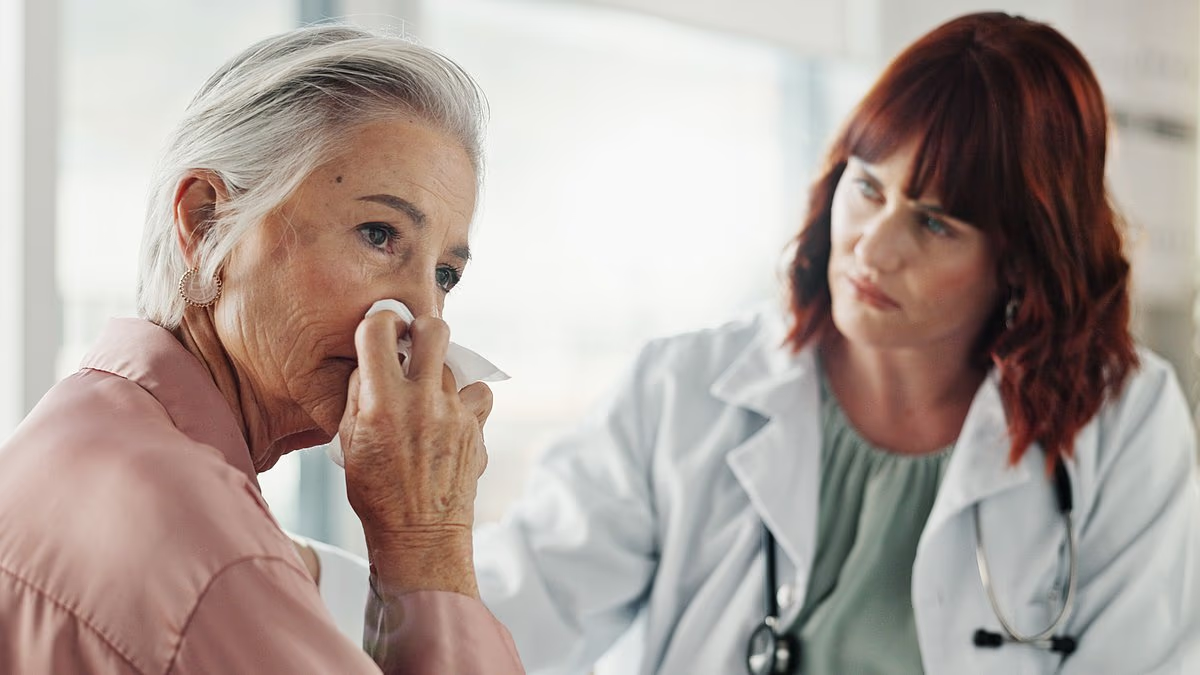
About half of people will develop cancer during their lifetime, and most will see someone they know go through it (picture posed by models)
Many people do not realise that there are clear, practical steps we can take to give ourselves the best possible chance of getting through cancer treatment, whether or not we currently have the disease.
There are also straightforward checks that can be carried out at home to provide an indication of how prepared the body may be for the demands of treatment.
So where should you begin?
The most familiar advice is to stop smoking and, if you are significantly overweight, work towards losing weight.
Most people know that smoking is linked to 16 different types of cancer.
What is less widely understood is that quitting after a cancer diagnosis can still make a substantial difference to recovery.
Studies indicate that people who give up smoking after being diagnosed tend to live longer than those who continue.
They may also respond more effectively to treatment, experience fewer infections and side effects, and spend less time in hospital.
Smoking limits the oxygen supplied to tissues, delays wound healing, compromises the immune system and may accelerate the breakdown of certain cancer medicines.
Alcohol is important to consider too. It contributes to the development of several cancers, including breast, bowel and mouth cancer, while reducing intake before treatment can support the body’s recovery.
Excess weight is another recognised cancer risk. Body fat can release hormones, growth signals and inflammatory substances that encourage cells to divide more often and may damage DNA.
Losing weight can therefore help reduce the risk of some cancers.
However, the guidance is different after a diagnosis. Being underweight, or unintentionally losing weight and muscle, can raise the risk of serious treatment complications because the body has fewer reserves to draw on during recovery.
At that point, the focus should be on nourishing the body and preserving muscle, rather than following a weight-loss diet.
Other factors, which are often overlooked, can also reveal how well a patient may cope with cancer treatment.
Cardiovascular fitness, muscle power, balance and co-ordination — in other words, the abilities that help us move — can all have a significant effect on cancer recovery and survival.
After cancer surgery, one of the most valuable steps a patient can take is to get out of bed and start moving as soon as it is safe, even if they are uncomfortable.
Early movement lowers the risk of pneumonia and blood clots, while also supporting the healing process.
For this reason, we assess a patient’s fitness after diagnosis to help ensure they are as prepared as possible for whatever form of treatment lies ahead.
In hospital, that assessment may include several tests, ranging from lung capacity to heart and muscle performance.
But a couple of simple checks can also be completed at home. Strong results suggest that the body may be better equipped to face the challenges of treatment.
One useful indicator of mobility and general physical health is the distance a person can walk in six minutes.
To try the test, set a timer and choose a flat, uninterrupted route — without stairs or traffic lights — that can be measured using a phone app or another method.
Walk as far as possible in six minutes at a brisk, steady pace, but do not jog or run.
You can slow down or pause if necessary. Stop immediately if you develop chest pain, dizziness or severe breathlessness. Anyone with a heart or lung condition should speak to their GP before attempting it.
Covering more than 400 metres is generally considered a strong result. For my patients, it offers useful reassurance because it provides a practical snapshot of heart, lung and muscle function.
The sit-to-stand test is another simple way to assess physical ability.
Using a standard chair without armrests, sit with your arms folded across your chest. Count how many times you can stand fully upright and sit down again within 30 seconds.
The test primarily examines leg strength, while also providing an indication of balance. Twelve or more repetitions is a good result for people over 60, while younger adults would generally be expected to complete more.
Falling short of these targets does not mean you will die from cancer or that you would be unable to receive treatment.
Nevertheless, stronger muscles and better mobility give the body more capacity to withstand the physical strain of cancer treatment.
That is why prehabilitation is becoming such an important part of cancer care, and why the Government’s National Cancer Plan includes a commitment to offer it to every cancer patient.
It is an approach I feel particularly strongly about after working with Cancer: Project Zero, an action plan developed by UK cancer medicines company AstraZeneca with the ambition of achieving zero cancer deaths in Britain.

The stronger your mobility and muscles, the better equipped your body may be to cope with cancer treatment
With guidance from a physiotherapist or exercise specialist where appropriate, as little as two weeks of targeted practice can produce measurable improvements in fitness and muscle strength.
There is no need to wait for a cancer diagnosis before becoming more physically active.
Doing well on these simple tests may indicate that you are in better condition to face a serious illness, while regular activity also benefits health more broadly.
The final part of the picture may be the simplest: making sleep a priority.
Many people routinely get fewer than seven hours of sleep a night. Over time, this shortfall can affect hormone levels, weaken immune defences and place additional pressure on the body’s organs.
But one of the most significant consequences may be psychological rather than physical.
Research has repeatedly connected poor sleep with poorer mental health. That can make it more difficult to cope with a cancer diagnosis, as well as the appointments, investigations and treatments that follow.
Sleep is often sacrificed when life becomes busy, but it deserves far greater importance.
Prehabilitation is emerging as a vital element of modern cancer care. It also offers a useful blueprint for healthier living more generally.
Many measures that lower the risk of dying from cancer also improve health in numerous other ways.
Stopping smoking, eating a balanced diet that includes whole grains, building muscle strength and maintaining good balance, alongside getting sufficient sleep, all contribute to overall wellbeing.
Some people have several of these changes still to make, while others may already have healthy habits in place.
My advice is not to delay. Changes are far easier to introduce before someone is dealing with the fear and pressure of a potentially life-threatening diagnosis.
Research suggests that roughly four in ten cancers can be prevented.
For cancers that cannot be prevented, early detection and being as physically prepared as possible for treatment are crucial.
That means accepting screening invitations. Bowel and cervical screening can sometimes prevent cancer from developing, while the NHS now offers lung screening checks to people aged 55 to 74 who have ever smoked. It also means asking your GP about any new or persistent symptoms without delay.
Above all, it means building a body that is as resilient as possible — and starting today.


