
Menopause often brings with it certain troubling symptoms that many women feel reluctant to discuss.
For Helen Barnard, these symptoms were particularly challenging, leaving her feeling, in her own words, like “a shell of myself.”
Three years ago, Helen, now 56 and a global events manager at a surgical robotics company, began experiencing intense night sweats. She frequently awoke to find her hair soaked and was forced to flip her pillow to find a dry spot.
Initially attributing her symptoms to the pressures of her demanding career, Helen soon found herself drained from trying to cope with the condition.
Throughout her workday, she would feel a persistent dampness at the back of her neck and behind her ears.
During meetings and presentations, Helen became self-conscious, fearing her colleagues were more focused on her perspiration than on her words.
Eventually, she began to alter her schedule at conferences so she had time to have a shower between long days of presentations and evening networking dinners.
‘It’s really difficult to describe what sort of impact this sort of thing has,’ she says today.

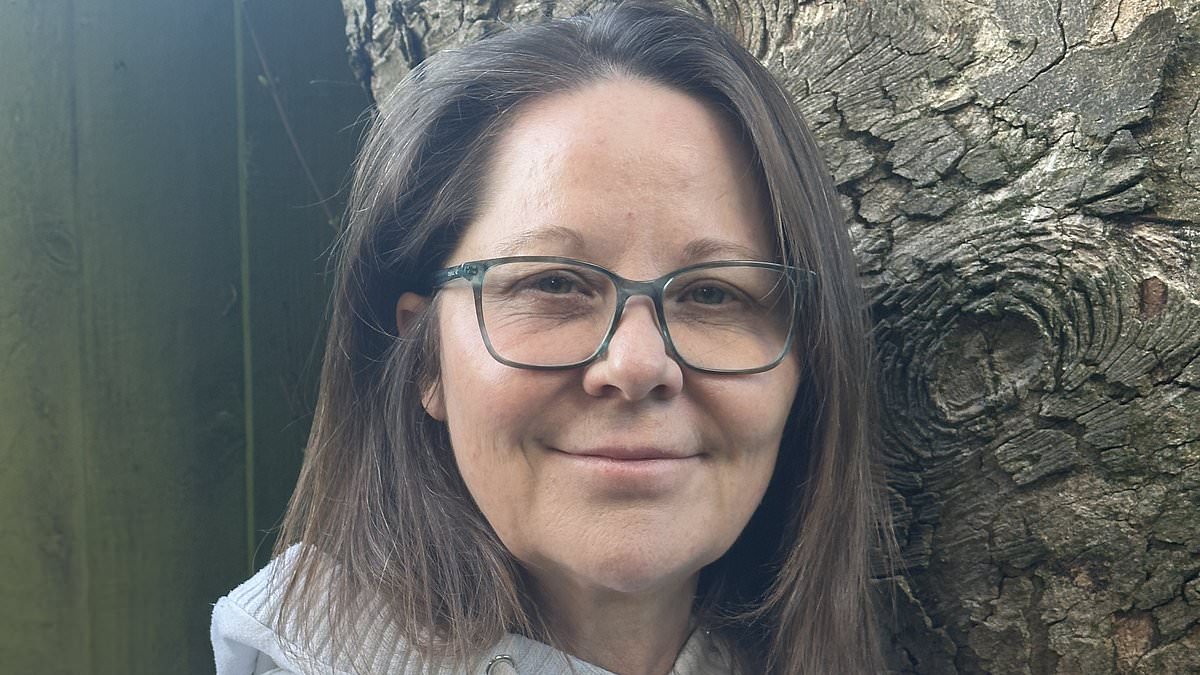
Helen Barnard says she felt like ‘a shell’ of herself due to suffering from menopause sweats

Talking at meetings or making presentations, Helen became convinced that her colleagues were focused on her sweating (posed by model)
‘I became a different person because of it. I’d wear my hair down to try to disguise it, but it would stick to my head and neck. I’d be conscious of this heavy, spreading dampness during the day.
‘I’d wear a hat in Zoom meetings and laugh it off as a “bad hair day” but it was so much worse than that – it affected my mental health.
‘I became a shell of myself, and was so focused on it not affecting my performance because I felt like I’d be judged negatively – that was exhausting in itself. And I couldn’t tell anyone what was going on. I didn’t know myself.’
What Helen was experiencing is a common symptom of menopause which affects as many as 80 per cent of women in midlife.
The drop in oestrogen levels affects the hypothalamus, the body’s temperature sensor in the brain, which can make the body much more sensitive to small temperature changes.
This is what leads to hot flushes – intense sensations of sudden heat which can spread throughout the body. And for a smaller proportion of women, it triggers noticeable sweating, particularly on the face, underarms, back and chest.
In some cases, symptoms can be so severe they are comparable to a clinical condition known as hyperhidrosis, or excessive sweating, which can persist for years as women’s hormone levels fluctuate and decline.
And while there are treatments – including HRT, which can be highly effective in treating sweating and hot flushes – these are not always suitable for every woman.

Dr Sabika Karim, a GP and founder of Skin Medical, recommended that Helen try Botox injections
For Helen, from Northampton, the ‘lightbulb moment’ came when she had a conversation with Dr Sabika Karim, a GP and founder of Skin Medical, an aesthetics practice in Northwood, Middlesex.
‘She suggested the sweating was menopause related and the penny dropped – that meant I could actually do something about it,’ Helen says.
Helen opted not to take HRT because she did not have other significant symptoms.
Instead, she had a Botox treatment which is often used to treat hyperhidrosis.
It involves using tiny microdoses of botulinum toxin – more commonly known for its cosmetic use in promoting a more sculpted, youthful complexion – to paralyse the sweat glands in problem areas, effectively stopping them from producing sweat.
Studies show that it can significantly reduce sweating and improve quality of life. The evidence is more limited when focused specifically on menopausal sweating.
But one small Swedish study from 2019, based on just eight patients, showed benefit on the face and scalp.
Dr Sabika Karim said: ‘There’s a huge emotional side to this kind of problem for women. When you stop looking and feeling the way you used to, that has a massive emotional and psychological effect, and it can really knock your confidence.

Botox treatment is often used to treat hyperhidrosis as it paralyses the sweat glands in problem areas, effectively stopping them from producing sweat

Helen opted not to take HRT – which can be highly effective in treating sweating and hot flushes – because she did not have other significant symptoms
‘It comes at a time when many women have made huge strides in their careers and family lives and suddenly feel they can’t be taken seriously because their hair or face or underarms are sweating uncontrollably.
‘I’ve had patients who have resorted to spraying their hair with antiperspirant.
‘The Botox can be injected all around the scalp, the forehead, and the underarms. Some women have it for lifestyle reasons – sweating less means they have to wash their hair less, so it’s often termed the “Botox Blowdry”.’
Botox is not permanent, and wears off after three to four months, which means patients need to repeat the procedure regularly. It costs £350 for a scalp treatment at Skin Medical, £250 for the forehead and £500 for the underarms.
Helen noticed a difference after a week, and describes it as ‘life-changing’.
‘That sounds like an exaggeration, but it isn’t,’ she says. ‘I instantly felt more confidence and felt like myself again. People might see it as cosmetic, but for me it was about my mental wellbeing.’
The procedure is not available on the NHS because of the cost, but Doncaster-based GP Dean Eggitt says it is a very effective option to combat menopause-related sweating.
‘It can be very useful for some women, particularly if sweating is their primary menopause symptom,’ he says. ‘Botox works brilliantly to paralyse those muscles that contract to produce the sweat, switching off that sweating response.’
But he adds that there are other options which may be significantly cheaper.
‘HRT works very well to treat exactly this sort of thing, and that is available on the NHS,’ Dr Eggitt says. ‘If any woman experiencing these kinds of symptoms said she didn’t want HRT I’d want to have a very careful conversation about the risks and benefits, as it can be transformative.
‘But antidepressants also have a vasomotor effect, and an old-fashioned blood pressure tablet called clonidine can also be effective.
‘It’s also worth thinking about diet, and including more plant-based oestrogens from foods like lentils, chickpeas, tofu, flaxseeds, berries and peaches. The amount of oestrogen may be modest, but it may be enough to help solve some menopause related problems.’
For details of the treatment, visit skinmedical.com