
Share this @internewscast.com
As dawn broke over the mountains in Arizona, Dawn Mussallem energetically pedaled her exercise bike, imagining herself climbing a steep hill.
Though she couldn’t feel the sun’s warmth on her skin or the breeze through her hair, the exercise offered a brief escape from the reality of her hospital surroundings.
For months, Mussallem consulted numerous doctors as her health deteriorated, experiencing symptoms like breathlessness, fatigue, and a rapid heartbeat. Yet, her concerns were continually dismissed. One doctor handed her an inhaler without a proper examination, another suggested increased usage, and a third dismissed her symptoms as imaginary.
Her ordeal reached a critical point when she collapsed on her way home from medical school. Rushed to the hospital, scans revealed a tumor encircling her heart, leading to a Stage 4 cancer diagnosis.
Determined not to abandon her dreams, Mussallem spent four months in 2000 attending medical school from her hospital bed. Despite being given a grim prognosis of just 20 months to live and being told she wouldn’t have children, she persisted. She continued her studies with the help of classmates who brought her notes.
“I decided to live life in a way that was most meaningful to me and sought out a medical team that could support that journey,” Mussallem shared with the Daily Mail.
After about a year of chemotherapy, a bone marrow transplant and radiation, she survived. Mussallem completed medical school and, against all odds, became pregnant – an anomaly that was later written up in a medical journal.
But the damage to her heart proved too great. Nearly two decades later – after flatlining on stage during a presentation and experiencing a stroke that left her blind in one eye – she faced a heart transplant.

At 26, Dawn Mussallem was diagnosed with stage IV non-Hodgkin’s lymphoma and told she had 20 months to live. She survived cancer, a bone marrow transplant, heart failure, a near-death experience, a stroke and ultimately a heart transplant

Dr Dawn Mussallem is pictured at the finish line of the Annual DONNA Marathon, which she completed one year after undergoing a heart transplant
Fascinated by centenarians since childhood, Mussallem, now 52 and a qualified doctor, studied exercise physiology and nutrition in college to understand what allowed people to live well past 100.
Eventually, it led her to Fountain Life, a longevity company built on the principle that could have saved her years of suffering: early detection.
As chief medical officer, she now oversees AI-powered screenings that detect hidden diseases, from soft plaque in arteries to accelerated brain aging, before they become a crisis.
Mussallem first noticed something was wrong in her own body in 2000. She was 26, healthy and athletic.
A former competitive gymnast and runner, she suddenly could not catch her breath.
Climbing a set of stairs felt like trudging through molten concrete. Walking across her school campus left her winded and fatigued.
Months later, her concerns had been dismissed by three doctors and she was just weeks into her first year of medical school when she collapsed.
The 15cm tumor was compressing her heart so tightly that blood could no longer flow.

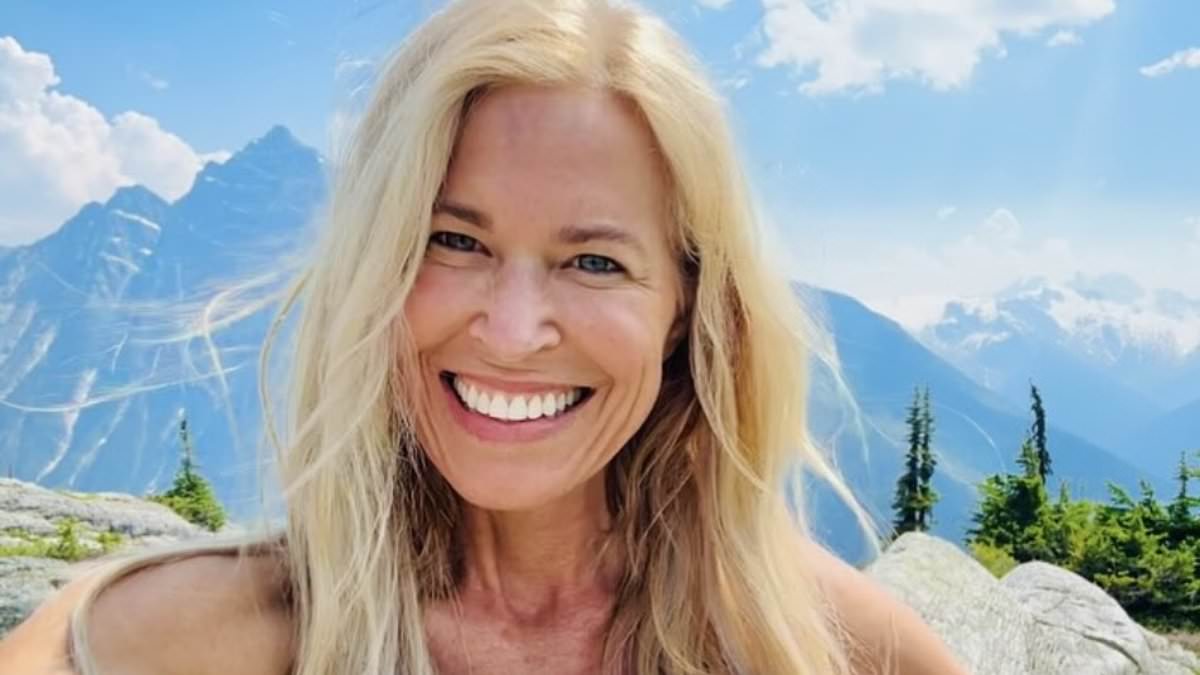
Dr Dawn Mussallem is pictured in July 2024 at Glacier National Park
After removing the mass, doctors delivered the devastating news a day later. She had Stage 4 aggressive non-Hodgkin lymphoma (NHL), a cancer of the lymphatic system – the body’s infection-fighting network.
The subtype Mussallem had – diffuse large B-cell lymphoma – is aggressive but treatable.
A the time, however, treatments were far more brutal. Without monoclonal antibodies or refined protocols, Mussallem faced a grueling combination of toxic chemotherapy, a painful bone marrow transplant and radiation.
NHL causes about 80,000 new cancer cases annually in the US, accounting for four percent of all cancers, according to the American Cancer Society. It can strike at any age, but most often affects adults over 60.
Mussallem’s oncologist placed a stationary bike in her room and she rode it every morning at 4am, despite bouts of pain so severe she remembers moaning through the nights.
By 2001, she was cancer-free.
Mussallem graduated from medical school with honors in 2004, then completed residency and fellowship at the prestigious Mayo Clinic, where she went on to found its integrative oncology program.
About two and a half years later, Mussallem, then 29, gave birth to her daughter, Sophia – something she never dreamed would happen.

Dawn Mussallem running the Annual DONNA Marathon in Jacksonville, Florida after undergoing a heart transplant one year prior
But her joy was soon overshadowed by a life-threatening medical complication.
Just weeks after giving birth, Mussallem went into heart failure. Her ejection fraction – a measure of how well the heart pumps – had dropped to eight percent.
Doctors told her the sobering truth: medicines would help temporarily, but eventually they would run out of options. Surgeries came next. Then, a heart transplant.
For nearly two decades, Mussallem managed her heart failure with the habits she had trusted since childhood: a whole food, plant-predominant diet, walking, lifting weights, prioritizing sleep and avoiding ultra-processed foods.
Mentally, she showed up for herself every single day, even when her heart was lagging.
She built her career, raised her daughter and joined Fountain Life’s medical board, all while living with advanced heart failure.
In 2016, while giving a presentation to hospital leaders at the Mayo Clinic, she collapsed on stage. Her heart had finally stopped. A defibrillator implanted in her chest shocked her repeatedly, but there was no rhythm to jump-start.
What she experienced in those four minutes defies easy words, she said. There was no white light, but the presence of something far greater.

Dr Dawn Mussallem giving the keynote commencement speech for Mayo Clinic medical students in May 2023
‘What I remember in this moment, how I would describe it, was an arrival at this place that was completely unknown to me… I felt as if the hands of God were holding me,’ she told the Daily Mail. ‘It was like embodied love.’
Mussallem was in no hurry to return to her body, but she did.
She underwent a procedure to cinch a valve that was allowing blood to flow backward, but it caused a stroke, leaving her blind in her left eye and placing her on the transplant list.
For 14 months, she waited. Her small body size made finding a matching heart difficult – she needed a child’s heart or one from a very petite adult.
When a donor finally emerged in January 2021, it came with complications. The donor was considered high-risk – they were an IV drug user with hepatitis C. Transmission of the hepatitis C virus from an infected transplanted heart is common.
But that did not deter Mussallem. ‘Within a few hours, I knew that that was the right heart for me,’ she said. ‘I also learned a lot about judgment. Why would I judge another person’s life? That person had this beautiful willingness to give their heart and it saved my life.’
Once again hospital-bound but eager to get back to her active lifestyle, Mussallem told the Daily Mail she was set on running a marathon once she received her new heart. After weeks in the hospital, she resolved to get it done.
‘There was one man who ran a marathon [after a heart transplant], and the closest anyone had ever run it was 18 months [post-transplant],’ she said. ‘And so I was like, “Oh, okay. Well, I want to do it at the year mark.”‘

Dr Dawn Mussallem is pictured on a run in 2024, three years after undergoing a heart transplant. She now runs marathons several times a year and loves to scale Camelback mountain in Arizona
After the long recovery, she was so deconditioned that her calf muscles were indented. Just taking a few steps required the help of two people and a walker.
‘It felt like I was lifting 500lbs on each leg,’ Mussallem said.
In the hospital, she asked nurses to unhook her from the wall every hour so she could walk laps. Within weeks, she asked her surgeon if she could jog. He gave the green light.
Three months after her transplant, Mussallem ran a 5km. Four months later, she climbed Arizona’s Camelback Mountain, the same peak she had scaled twice daily before getting sick.
By eight months, her cardiologist ran a 10 mile race alongside her to make sure she was safe. She didn’t pass out.
Then, in February 2022, on the one-year anniversary of getting her new heart, Mussallem ran the DONNA Breast Cancer Marathon in Jacksonville, Florida, in honor of her patients.
Mussallem said she never asked the daunting question that haunts so many people facing terminal diagnoses: Why me?
She credited her sunny outlook to her upbringing. Mussallem had a childhood steeped in love, support and faith, giving her a firm sense of security.
She developed a mindset that resisting hardship was far more exhausting than accepting it, and trained herself to look for lessons in everything.
But it was not until the near-death experience that she fully understood something she had only glimpsed before.
‘It’s very much our ego self that tethers us to this physical world,’ she said. ‘And maybe I have more understanding of that after having a near-death experience.’
Now, she reframes death not as something to fear but as something to understand. It is a perspective she traces back to that early curiosity about what lies beyond, and the quiet knowing she has carried that she was never alone.