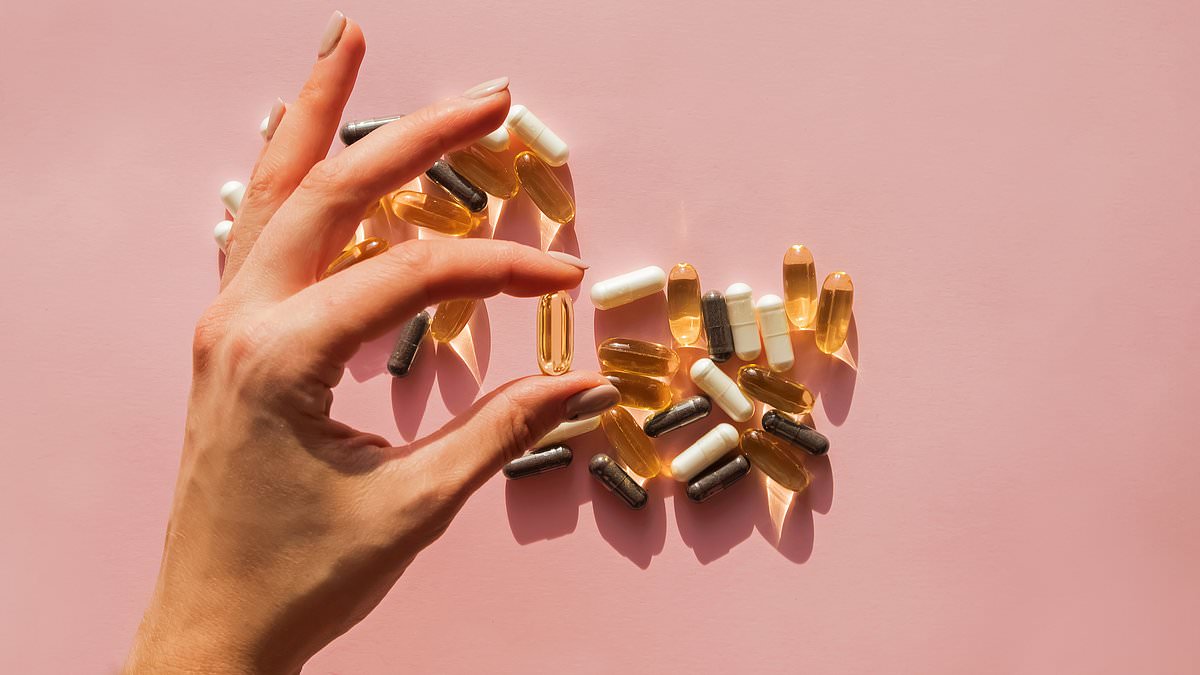

Step into any health store, and you’ll be greeted by shelves filled with an overwhelming variety of supplement bottles. The options seem endless.
On social media, fitness influencers are constantly showcasing products they swear by to help you achieve your fitness goals.
Chat with colleagues, and you might hear them praise certain supplements for boosting their daily energy levels.
It’s no surprise that for those new to the world of supplements, the choices can be both perplexing and daunting. Experts caution that taking the wrong supplements—or too much of them—can pose health risks.
So, how do you determine which supplements are truly beneficial and which ones might be better left on the shelf?
We turned to two experts for insights on the supplements worth investing in and those combinations you should steer clear of to maintain your well-being.
Ella Kaur Maan, registered nutritionist and practitioner lead at supplement brand DR.VEGAN, told the Daily Mail: ‘In recent years, there has been a noticeable rise in the number of people talking about supplements, and in many ways this reflects a positive shift towards people becoming more proactive about their health.
‘With growing awareness around nutrition, immunity, energy levels and long-term wellbeing, more individuals are looking for ways to support their bodies beyond just diet alone.

The Daily Mail enlisted two supplement experts to explain which ones may be worth taking – and which combinations are best avoided for the sake of your health
‘But this increase has also been accompanied by an overwhelming number of products on the market, which can make it difficult to know what is genuinely beneficial and what may simply be clever marketing.
‘While supplements can play a valuable role in supporting health, it’s important to approach them with the right level of understanding.’
What are supplements?
As the name suggests, supplements are designed to supplement one’s diet by providing nutrients that the body may be lacking.
They are most commonly taken in tablet or capsule form or as powders that can be mixed into drinks.
One of the most popular supplements in Britain is vitamin D – the nutrient the body naturally produces through sunlight exposure – which plays an essential role in immune function, muscle strength and brain health.
Vitamin D is especially important during the winter months, when sunlight levels are lower.
Another common supplement is vitamin C, which helps protect cells and maintains healthy skin.
Vitamin B12 is also popular – more commonly among people with plant-based diets – to aid red blood cell production, provide nervous system benefits and harness energy from food.
Omega-3 fish oil, meanwhile, is linked to supporting heart and brain health.
Magnesium is frequently taken too, with many using it to aid their mood, relaxation and sleep.
And probiotics – which contain live bacteria and yeasts – have also grown in popularity because of their links to gut health benefits.
Many of these essential nutrients can also be found combined in a multivitamin – many of which also contain calcium and zinc.
Are supplements good for you?
Whether a supplement is beneficial depends largely on whether your body actually needs it – and whether it is suitable for you to take.
Supplements can help address nutritional gaps or deficiencies for some, while for others they may offer little benefit and, in some cases, could be unnecessary or even harmful.
Join the discussion
Do YOU think people take too many supplements unnecessarily?

Ella Kaur Maan, registered nutritionist and practitioner lead at supplement brand DR.VEGAN, says ‘there has been a noticeable rise in the number of people talking about supplements’
If you are unsure which supplements to take, or whether you should take them at all, it is always best to consult a doctor or qualified healthcare professional first.
Ms Maan says: ‘From a nutritional perspective, supplements can be incredibly helpful when used appropriately.
‘Modern lifestyles, busy schedules, dietary restrictions and even soil depletion can make it more challenging to consistently meet optimal nutrient levels through food alone. In these cases, supplements can help bridge nutritional gaps and provide targeted support for areas such as energy, immunity or bone health.
‘That said, the quality of supplements matters just as much as the decision to take them in the first place. Two products may look almost identical on the surface, but can differ significantly in terms of ingredient quality, dosage and overall formulation.
‘Marketing claims, packaging and trends can often influence decision-making, but they don’t always reflect the effectiveness of what’s inside.
‘Focusing on well-formulated supplements that provide meaningful levels of active ingredients, with transparent sourcing and minimal unnecessary additives, can make a far greater difference than simply choosing products based on popularity or price point.
‘It’s also important to remember that supplements are designed to complement a healthy lifestyle, not replace it.
‘A balanced diet, adequate sleep, hydration and stress management remain the foundation of good health, with supplements acting as an additional layer of support where needed.’
What mistakes do people make when taking supplements?
Dietitian Dr Carrie Ruxton, from the Health and Food Supplements Information Service, believes the most common mistake is buying supplements promoted by influencers on social media – or without considering whether they are right for you.
She adds: ‘As a dietitian, I think about what people could be missing in their diets. Older adults need more B vitamins for cognitive function and marine omega-3s to protect brain and heart health.
‘Younger women should focus on iron, magnesium and folate. Women going through the menopause can benefit from additional protein plus gut health supplements, such as probiotics and extra fibre.
‘Young children are advised by the NHS to take vitamins A, C and D to support growth and can also benefit from fish oils.
‘Vegans need more vitamin B12, zinc, iodine and vitamin D. A simple way to get advice is to chat to your local pharmacist who will be able to advise on the right supplement for you’.

Dietitian Dr Carrie Ruxton, from the Health and Food Supplements Information Service, believes the most common mistake is buying supplements promoted by influencers online
Ms Maan agrees, and adds that many consumers do not realise what is actually in the supplements they buy.
Though two products may look similar, she says, the amount of active ingredients – vitamins, minerals or compounds that deliver benefits – can vary.
With that in mind, she says it is important to focus on ‘nutrient density’, or how much of the useful ingredient you get per dose, rather than packaging or price alone.
Otherwise, people may spend money on products that contain too little to be effective.
Ms Maan adds that many tablets, powders and gummies also contain sugars or sweeteners that offer no nutritional value and may cause issues such as digestive discomfort or blood sugar spikes.
She continues: ‘Finally, one of the biggest misconceptions is treating supplements as a quick fix. While they can support areas such as energy, immunity or recovery, they are not a substitute for the fundamentals of good health.
‘Poor diet, lack of sleep, high stress levels and low physical activity will all have a far greater impact on overall wellbeing than any single supplement can counteract.
‘Ultimately, supplements work best when they are used intentionally – alongside a balanced diet and healthy lifestyle – and when there is a clear understanding of what your body needs and why you’re taking them in the first place.’
Which supplements shouldn’t be taken together?
Ms Maan warns that some supplements are best taken separately because they can interfere with each other’s effects.
She says: ‘Supplements that may cancel each other out include antimicrobial herbs and probiotics. High doses of garlic, oregano, thyme and clove can affect bacteria in a probiotic supplement, so it’s best to take them at different times of the day.
Ms Maan also claims green tea and calcium supplements can reduce iron absorption, making them a poor match alongside taking iron.
She adds: ‘Another problem may be ‘supplement stacking’ and toxicity, which can occur with fat soluble vitamins, which includes Vitamins A, E and K, and D, and Iron, and taking multiple supplements that may lead to an excessive intake of a nutrient.
‘An example may be someone taking a multivitamin with a good level of Vitamin A, a cod liver oil supplement which contains Vitamin A, a fortified protein powder and skin supplement that also contain Vitamin A.
‘These supplements, in addition to a diet high in Vitamin A, may lead to vitamin A toxicity.
‘The same principle can apply to too much iron which may be a problem in men, or non-menstruating women.
‘In addition, there can also be genetic factors affecting the absorption of iron – some people can’t remove excess iron efficiently, causing them to have too much iron.’
Dr Ruxton adds: ‘I wouldn’t advise taking lots of different supplements containing the same nutrients. Just stick with a daily multivitamin and multimineral supplement which will contain recommended amounts and be well within official safe limits.
‘Follow the dose instructions on the label and avoid taking more than this. Supplements don’t ‘cancel each other out’ but your diet can interact with supplements.
‘For example, vitamins A, D, E and K are better absorbed with fat in a meal, such as cheese, avocado or nuts, while iron is best absorbed with a glass of orange juice because it is rich in vitamin C. High fibre meals can slow down mineral absorption’.


