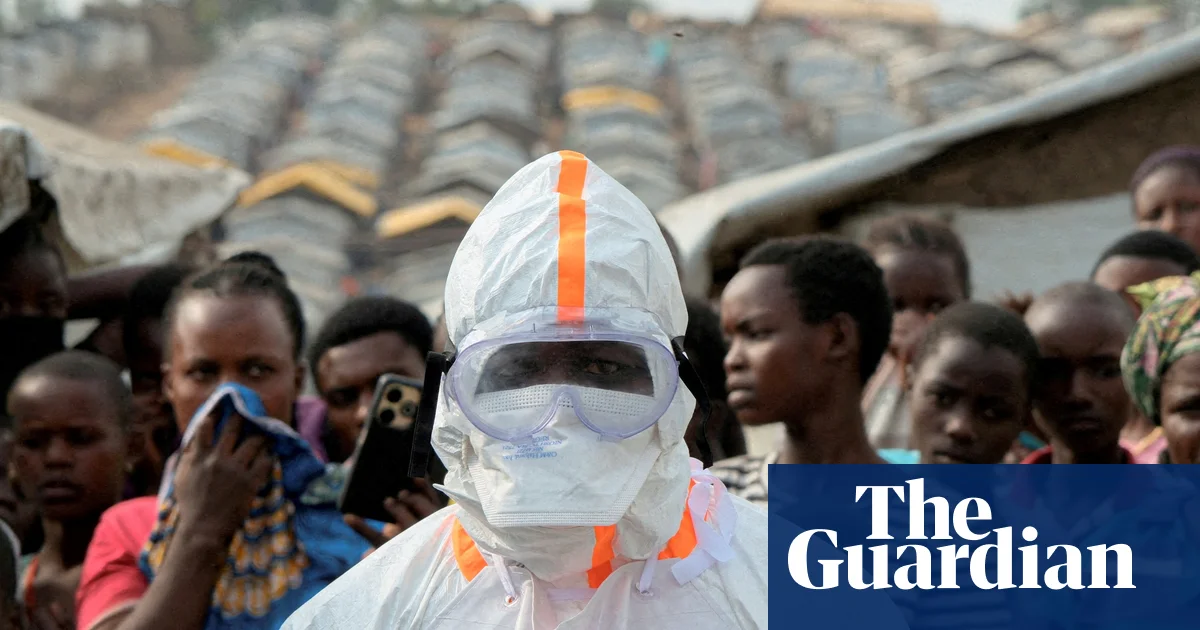

Nearly two months after the Democratic Republic of the Congo confirmed an Ebola outbreak in one of its provinces, health officials say the virus is still spreading quickly, reaching new areas and infecting more people.
Government figures from 8 July show 1,759 recorded cases and 600 deaths. The outbreak has also crossed into Uganda, where authorities have confirmed 20 cases, including two fatalities.
The infections have been linked to the rare Bundibugyo strain of Ebola, for which there is currently no approved vaccine or treatment.
Wessam Mankoula, who leads emergency preparedness and response at the Africa Centres for Disease Control and Prevention, told reporters on Thursday that this is the fastest-growing Ebola outbreak ever documented — not only among previous Bundibugyo outbreaks, but across all known Ebola-causing viruses.
In a further sign of concern, the Congolese health ministry said suspected cases have now been identified in Tshopo and Haut-Uélé provinces, suggesting the disease is continuing to move beyond its initial centre in Ituri.
Health experts say a combination of factors is driving the rapid spread, including persistent conflict, reductions in aid and attacks targeting healthcare workers and treatment facilities. Some have warned the outbreak could become the deadliest Ebola crisis ever recorded.
So how are these challenges shaping the course of the outbreak — and the efforts to bring it under control?
A dangerous overlap of conflict and disease
The DRC outbreak was first reported in May in the north-eastern province of Ituri. Since then, it has spread into the neighbouring provinces of North Kivu and South Kivu.
The three regions are sites of lengthy armed conflicts, involving different actors, that have caused deaths and displacements. Ituri is the centre of a long-running conflict between militias vying for control of its mineral resources.
Ladd Serwat, a senior analyst at the Acled conflict monitoring group, said armed groups in the province have complicated humanitarian access in the past, particularly where communities are perceived to be aligned with rival ethnic groups.
In North Kivu and South Kivu, the Congolese army and allied militia are fighting the M23 rebel coalition. The government and the rebels control different parts of the province.
Serwat said that although health workers can travel through the provinces, the administrations will make it more difficult to coordinate the medical response and the sharing of information.
He added: “The overlap between militant activity, population displacement and weak state control could significantly complicate efforts to contain the outbreak.
An assessment by the International Organisation for Migration earlier this year found that 3.3 million displaced people live in Ituri, North Kivu and South Kivu, the last of which hosts 1.2 million alone.
The collapse of humanitarian funding
Humanitarian funding for the DRC declined sharply in 2025, largely because the Trump administration froze foreign aid assistance to programmes funded through the state department.
Carla Martinez, the DRC head at the UN’s Office for the Coordination of Humanitarian Affairs, said the reduction in funding forced more than 10 humanitarian organisations to reduce or suspend activities.
That weakened local health systems and surveillance networks, making it harder to detect and contain outbreaks quickly and increasing the risks posed by Ebola and other diseases, she explained.
“The Ebola outbreak is a stark reminder that when humanitarian systems are underfunded, they become more vulnerable to new emergencies,” she said. “Without additional resources, both the public health response and broader humanitarian operations will come under increasing strain, with potentially serious consequences for the DRC and the wider region.”
Healthcare under attack
Healthcare workers and treatment centres for Ebola have come under attack both in the current outbreak and past ones in Ituri, North Kivu and South Kivu. The incidents include violence, riots and property damage, and disrupt the provision of essential services.
During the current outbreak, 10 Red Cross volunteers have been attacked, with four sustaining injuries, said Alex Lock, a spokesperson for the International Federation of Red Cross and Red Crescent Societies.
He noted that most of the incidents occurred during safe burials conducted by Red Cross volunteers and were caused by mistrust fuelled by rumours and misinformation circulating about the disease.
In one incident during a burial last month, four volunteers were injured, including two who were severely hurt and had to be airlifted to the capital, Kinshasa, for treatment.
Misinformation about the virus and distrust of health responders has been fuelled by the decades-long unrest and outside interference in eastern DRC.
Lock said the attacks force them to halt or postpone critical response activities, disrupting vital containment efforts and putting community members at greater risk.
“An immobilised colleague means a direct reduction in response capacity,” he said. “This hinders our operational effectiveness and benefits no one, neither the community in need nor those of us working tirelessly to support them in containing and eradicating the virus.”


