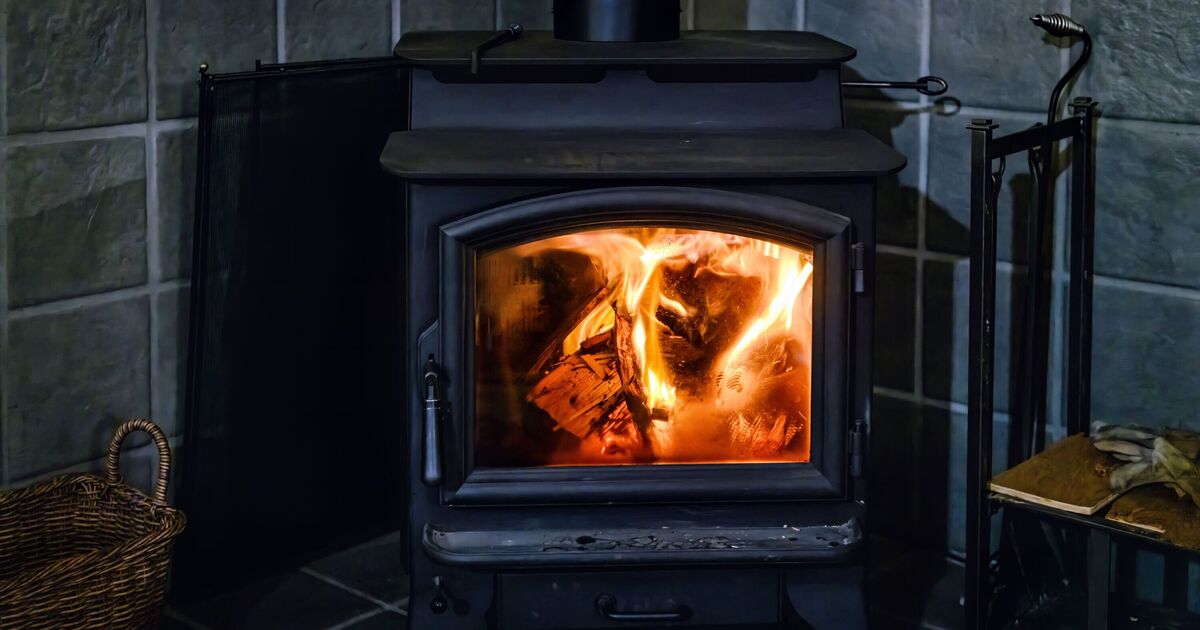

Residents in the UK who use wood-burning stoves have been cautioned by medical professionals about potential health risks. Wood burning contributes to air pollution through the release of particulate matter (PM), which consists of tiny solid particles that linger in the air.
These particles, including dirt, dust, and soot, can be inhaled and penetrate deeply into the lungs, even entering the bloodstream. Exposure to PM2.5, a type of pollution measuring 2.5 micrometers, has been associated with a range of health issues, from heart disease to bladder cancer. Research from the University of Cambridge has also linked prolonged exposure to air pollution with an increased risk of dementia, attributed to inflammation caused by these particles.
In an investigation conducted by Hannah Healey for Which?, air quality was monitored over five days while using a wood-burning stove. The study revealed a significant rise in PM2.5 levels, from an average of 0.65µg/m3 without the fire to 9.01µg/m3 when the stove was in use, marking a staggering increase of 1,286%.
Professor James Allan, an expert in Air Pollution Measurement at the University of Manchester, explained to Which? that even low levels of air pollution can have negative health effects. He noted that particulate matter from wood burning is particularly harmful.
Professor Allan added, “The level of indoor air pollution produced by wood-burning stoves can vary significantly. Factors such as the type of stove, how it is operated, and the home’s ventilation play crucial roles.”
Dr. James Heydon, an associate professor at the University of Nottingham’s School of Sociology and Social Policy, echoed these concerns. He stated that research indicates PM2.5 is especially harmful because it can enter the bloodstream, potentially triggering inflammatory responses throughout the body.
“’Even small amounts of air pollution can detrimentally impact your health. Decreasing exposure will yield health benefits across the board.
“Even activities like cooking and cleaning can influence indoor air pollution, which makes it harder to interpret results. But studies have consistently identified intense bursts of pollution during stove use.”
According to the World Health Organization, the recommended limit for average PM2. 5 exposure over a 24-hour period is 15µg/m3.
However, both the UK Government and the European Public Health Alliance report that there is no evidence of a safe level of air pollution.


