
Share this @internewscast.com
WASHINGTON – The Environmental Protection Agency (EPA) has announced a significant shift in its approach to evaluating air pollution regulations. The agency will no longer factor in the financial savings from reduced healthcare costs and the prevention of deaths when assessing rules that target two major pollutants.
This policy change signifies a shift in focus for rules concerning fine particulate matter and ozone, prioritizing industrial costs. It aligns with President Donald Trump’s administration’s broader strategy to adopt a more business-centric stance, which has also involved the reversal of several health and environmental protections aimed at mitigating climate change.
In a statement released late Monday, the EPA emphasized its dedication to its core mission of safeguarding public health and the environment, despite opting not to monetize the health impacts currently. The agency will persist in evaluating the costs incurred by businesses to comply with these regulations and will continue enhancing its economic assessment methodologies, according to spokeswoman Brigit Hirsch.
Environmental and public health advocates have expressed strong opposition to the EPA’s decision, arguing that it represents a significant deviation from its fundamental responsibilities.
John Walke, a senior attorney with the Natural Resources Defense Council, criticized the move, stating, “The EPA’s duty is to protect public health, not overlook scientific evidence to dismantle air quality protections that save lives.”
Walke further described the alteration in health benefit calculations as “reckless, dangerous, and illegal,” warning that ignoring genuine health benefits allows industry to degrade air quality while communities bear the consequences in the form of asthma, heart disease, and premature deaths.
The change in how the EPA calculates health benefits was first reported by The New York Times.
The move is part of the EPA’s broader change in approach
The move comes as the Trump administration is seeking to abandon a rule that sets tough standards for deadly soot pollution, arguing that the Biden administration did not have authority to set the tighter standard on pollution from tailpipes, smokestacks and other industrial sources.
In a court filing in November, the EPA said the Biden-era rule was done “without the rigorous, stepwise process that Congress required” and was therefore unlawful.
The EPA said it continues to recognize the “clear and well-documented benefits” of reducing fine particulate matter, also known as PM2.5, and ozone.
“Not monetizing DOES NOT equal not considering or not valuing the human health impact,” Hirsch said in an emailed statement, saying the agency remains committee to human health.
Since the EPA’s creation more than 50 years ago, Republican and Democratic administrations have used different estimates to assign monetary value to a human life in cost-benefit analyses.
Under former President Joe Biden, the EPA estimated that its proposed rule on PM2.5 would prevent up to 4,500 premature deaths and 290,000 lost workdays by 2032. For every $1 spent on reducing PM2.5, the agency said, there could be as much as $77 in health benefits.
But the Trump administration contends that these estimates are misleading. By failing to include ranges or other qualifying statements, EPA’s use of specific estimate “leads the public to believe the Agency has a better understanding of the monetized impacts of exposure to PM2.5 and ozone than in reality,” the agency said in an economic impact analysis for the new NOx rule.
“Therefore, to rectify this error, the EPA is no longer monetizing benefits from PM2.5 and ozone but will continue to quantify the emissions until the Agency is confident enough in the modeling to properly monetize those impacts.”
The United States has made substantial progress in reducing PM2.5 and ozone concentrations since 2000, the agency said.
Critics warn the change poses risks to human health
But critics said a new EPA rule that revises emission limits for dangerous nitrogen oxide pollution from new gas-burning turbines used in power plants demonstrates the risks of the new approach.
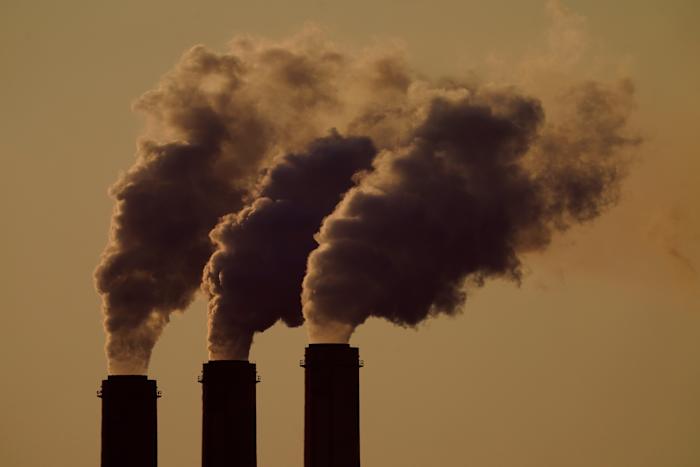
Emissions of nitrogen oxide, also known as NOx, form smog and soot that is harmful to human health and linked to serious heart and lung diseases. EPA’s final NOx rule, issued Monday, is substantially less restrictive than a proposal under the Biden administration. For some gas plants, the rule weakens protections in place for two decades.
The new rule does not estimate the economic value of health benefits from reducing NOx and other types of air pollution under the Clean Air Act. Critics said the change means EPA will ignore the economic value of lives saved, hospital visits avoided and lost work and school days prevented.
Under Trump, the EPA “recklessly refuses to place any value on protecting the health of millions of Americans from nitrogen oxides pollution in the face of mountains of medical science finding that this pollution contributes to asthma attacks, heart disease and other serious health problems.” said Noha Haggag, a lawyer for the Environmental Defense Fund, another environmental group.
“EPA is leaving millions of people in harm’s way when common sense solutions are at hand for modern national limits on nitrogen oxides pollution,” Haggag said.
Copyright 2026 The Associated Press. All rights reserved. This material may not be published, broadcast, rewritten or redistributed without permission.