
Share this @internewscast.com
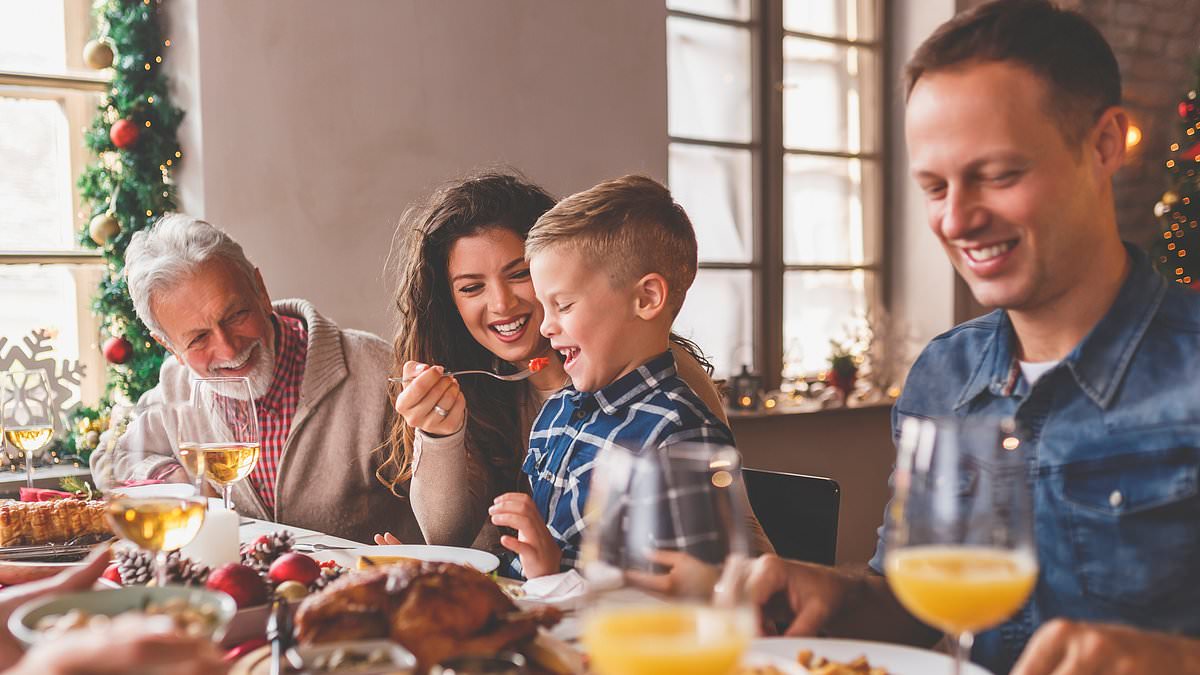
The holiday season is synonymous with family gatherings, unwrapping gifts, and indulging in a variety of sumptuous meals.
However, health specialists caution that some beloved holiday dishes might come with hidden, potentially dangerous health risks.
Consuming processed meats, fried foods, and sugary treats over time has been linked to harmful inflammation and DNA damage in the colon, which may increase the risk of cancer.
These warnings are particularly relevant as recent research indicates a concerning rise in colorectal cancer rates among individuals under 55 over the past ten years.
Moreover, there is a growing trend of advanced-stage colorectal cancer diagnoses in this younger demographic, often when the cancer has already metastasized, complicating treatment efforts.
Experts emphasize that some holiday foods pose immediate health risks by exposing consumers to dangerous bacteria.
The stars of the holiday table – such ham, certain side dishes and even classic cocktails – could be breeding grounds for bacteria that infect millions of Americans every year.
To lower the risk of cancer and foodborne illnesses, doctors and food safety experts have told the Daily Mail which foods to approach with a little extra caution – and which to avoid entirely.

As families prepare for festive gatherings, health experts warn that certain foods can influence long-term colorectal cancer risk
Turkey, ham and processed meats
Dr Elaine Siu, a dietitian and supervisor of clinical nutrition services at City of Hope in California, told the Daily Mail that processed meats like ham, bacon and sausage are classified by the World Health Organization (WHO) as Group 1 carcinogens, meaning there is strong evidence they can cause cancer in humans.
She pointed to research showing that just 50g per day (about two slices of bacon or one hot dog) can increase colorectal cancer risk by 18 percent.
One of the biggest problems is that processed meats are packed with preservatives, Dr Krushangi Patel, a medical oncologist also at City of Hope, told the Daily Mail.
Those common additives include sodium nitrite (used to preserve color and prevent bacterial growth), sodium erythorbate and ascorbate (antioxidants to stabilize color and flavor) and sodium phosphate (used to retain moisture and improve texture).
These meats are generally high in sodium, which can raise blood pressure and contribute to gastric cancer risk.
The combination of preservatives, sodium levels and processing at high temperatures can also play a role in disrupting the gut microbiome.

Raw turkey can contain salmonella Campylobacter, which can lead to bloody diarrhea, stomach cramps and vomiting (stock image)
Dr Suneel Kamath, a gastrointestinal oncologist at the Cleveland Clinic in Ohio, said that disruption – which damages beneficial bacteria – ‘makes the colon more prone to forming cancer cells.’
As for food safety, turkey and ham must be prepared correctly to eliminate illness-causing bacteria.
Ham, for instance, can carry salmonella, one of the leading causes of food poisoning in the US. Sickening 1.3 million Americans every year, the bacteria leads to bloody diarrhea, severe stomach cramps, vomiting and loss of appetite.
While most people recover on their own or have no symptoms, the bacteria can be especially dangerous to young children and the elderly, both of whom have weakened immune systems.
About 420 Americans die from salmonella every year.
Dr Darin Detwiler, food safety expert at Northeastern University in Boston, told the Daily Mail that raw ham also contains Campylobacter, which sickens 1.5 million people in the US annually and causes fever, stomach cramps and diarrhea.
‘These bacteria thrive in undercooked meat, particularly in thick areas near the bone,’ he said. ‘Improper thawing, such as leaving a frozen bird on the kitchen counter, can also give bacteria a chance to multiply.’
Detwiler, who is also a former advisor to the FDA and US Department of Agriculture (USDA), warns those cooking a turkey or ham against leaving it on the counter to defrost, as it can fall into the ‘danger zone’ of temperatures, between 40F and 140F.
‘Always thaw meat in the refrigerator,’ he said.

Sugary cocktails may raise the risk of colon cancer, experts warn. Some eggnog often uses raw eggs, which contain salmonella (stock image of eggnog)
Alcoholic and sugary drinks
Many people are still unaware that alcohol can cause cancer, said Kamath, who pointed out that acetaldehyde, a toxic byproduct of alcohol metabolism, can damage DNA and trigger mutations.
Holiday celebrators should also note, according to Siu, that alcohol is classified by the WHO as a Group 1 carcinogen and is a known risk factor for colorectal cancer, even at moderate levels. She noted that sugary and ultra-processed cocktails such as eggnog are common holiday indulgences that have been linked to increased colorectal cancer risk when consumed in excess.
A 2023 meta-analysis of 17 studies found that drinking more sugar-sweetened beverages was associated with a 17 percent higher risk of colorectal cancer.
So, she advised staying within the recommended limits during the festive season: no more than one drink per day for women and no more than two drinks per day for men.
Frequent holiday drinking can also disrupt sleep, irritate the digestive tract, weaken the immune system and increase inflammation, placing extra stress on the body, Dasgupta added.
While store-bought eggnog is pasteurized to kill bacteria, homemade, traditional versions are often made with raw eggs, which carry salmonella. While alcohol added to the drink can help kill bacteria by causing bacterial molecules to break down, it doesn’t completely eliminate the risk.
Detwiler suggested sticking with the store-bought beverage, but warned drinkers against letting it sit out in a serving container for hours.
The USDA recommends pasteurizing or heating eggnog to at least 160F to kill off bacteria before consuming.

Cranberry sauce runs the risk of being contaminated with bacteria if it comes into contact with raw meat (stock image)
Cranberry sauce and other side dishes
Mashed potatoes, mac and cheese and green bean casserole are often key players in holiday dinners.
While these ‘are typically safe when freshly cooked,’ they tend to be left out at room temperature for long periods of time while other dishes finish cooking or so guests can grab additional servings.
That’s when the problems can arise, Detwiler told the Daily Mail.
‘Gravy is particularly risky because it provides an ideal environment for Clostridium perfringens, a bacterium that can cause gastrointestinal illness if food is not kept hot or cooled quickly,’ he said.
Detwiler added that side dishes made with milk, butter or cream support the growth of listeria if left out. The USDA recommends leaving dishes out for no longer than two hours at a time so temperatures do not dip into the ‘danger zone.’
Cranberry sauce is naturally acidic and high in sugar, which helps inhibit bacterial growth. The low pH in highly acidic foods interferes with bacteria’s cellular processes and stops them from multiplying. Sugar reduces the amount of water available in food, which dehydrates bacteria and stops it from growing.
However, cranberry sauce ‘isn’t entirely risk free,’ Detwiler said.
‘If it’s made from scratch and prepared on surfaces contaminated by raw meat or poultry, cross-contamination becomes a concern.’
Fried foods
Patel pointed out that while fried holiday favorites, such as doughnuts, fritters and crispy appetizers, are not harmful when enjoyed occasionally, a diet consistently high in fried foods has been linked to increased risk of colorectal cancer.
One concern is that frying foods at high temperatures can produce compounds like acrylamides and advanced glycation end products (AGEs), which may increase cancer risk over time.
Acrylamides can be converted in the body to substances that damage DNA, potentially causing mutations that trigger cancer.
AGEs, on the other hand, promote oxidative stress and chronic inflammation, and activate pathways that encourage cell growth, creating an environment favorable to tumor development.
Kamath noted that these foods also fall under the umbrella of ultra-processed products (UPFs), a category increasingly tied to immune and microbiome disruption.
UPFs are foods that are highly processed and industrially formulated. Additionally, in contrast to whole foods, UPFs often contain additives, emulsifiers, preservatives, sweeteners and refined ingredients that disrupt the gut microbiome, promote chronic inflammation and contribute to tumor development in the colon.
Research over the past decade has linked high consumption of UPFs to increased colorectal cancer risk.
Traditionally fried holiday foods, however, can be made healthier by baking or air-frying instead of deep-frying, which reduces harmful compounds and excess fat.