
Share this @internewscast.com
Dani Brochu found herself in a terrifying situation, struggling to breathe as a tube tightened around her neck, threatening to cut off her airway.
Desperate cries for help barely escaped her lips, but they were just loud enough to alert the nurses and a security guard stationed nearby. They rushed into the room, responding to her muffled plea for assistance.
Moments earlier, Brochu, who was working as an emergency department technician at the time, had entered the room of a patient who was preparing for surgery. Despite strict pre-surgery fasting rules, the patient had secretly consumed a packet of graham crackers.
In an interview with the Daily Mail, Brochu recounted, “I told him, ‘I’m really sorry, but you’re not supposed to eat or drink anything before surgery.’ In response, he wrapped his oxygen tubing around my neck.”
The situation was swiftly brought under control, with the patient being subdued and restrained, but the emotional impact of the incident left a lasting mark on Brochu.
Today, Brochu oversees the intensive care unit and emergency department at the same Connecticut hospital system where she has dedicated the last decade of her career. She remains cautious, choosing never to wear her stethoscope around her neck.
Brochu’s is just one of countless harrowing accounts from nurses and doctors in the emergency department who have contended with violent and abusive patients who have caused lasting psychological harm and devastating physical consequences.
Michelle Renee Weihman, an ED nurse for 30 years turned patient advocate, told the Daily Mail: ‘Nurses are hit, kicked, bitten, threatened, spit on and have bodily fluids thrown on them. We also regularly find weapons on patients.’

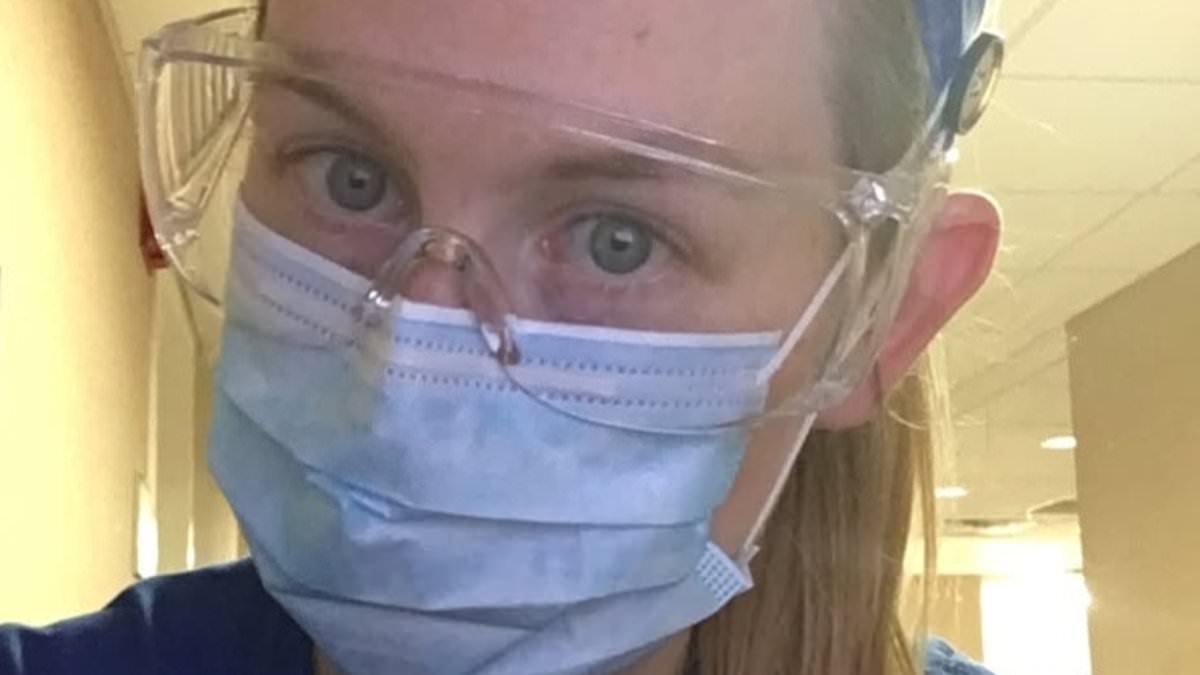
Dani Brochu has worked at the same Connecticut hospital for ten years, including its most critical units. Now, as an ICU and emergency department supervisor, she witnesses firsthand the strain of overworked nurses, suffering patients and chronic bed shortages

Brochu’s most violent assault happened before she was a nurse. In 2014, while working as an emergency room technician, a patient attacked her for reminding him he couldn’t eat before surgery
Dr Pam Vollmer, who was an ED nurse for eight years, also told the Daily Mail: ‘During those eight years, days without experiencing some sort of verbal or even physical abuse became the exception rather than the norm… The environment becomes a pressure cooker over time that is fueled by stress.’
A growing number of healthcare workers, especially nurses, are departing the emergency department, sometimes after decades, due to mounting safety concerns and ongoing threats of violence from patients.
Healthcare workers suffer a dramatically higher rate of violence on the job, enduring 73 percent of all nonfatal workplace injuries from violent acts.
With American emergency departments reporting average wait times of around three hours, a volatile mix of stressed patients, psychological distress and outright violence creates a recipe for assaults on the providers caring for patients.
Data from the Bureau of Labor Statistics shows ED staff are nearly four times more likely to be seriously hurt by workplace violence than employees in any other industry.
Annual tracking indicates the daily threats to frontline health workers are becoming more common.
An annual survey conducted by the American College of Emergency Physicians (ACEP) in 2022 found 85 percent of workers felt violence was becoming more common, with two-thirds reporting an assault in the prior year.
By 2024, the situation had worsened, with 91 percent of respondents saying they or a colleague had been the victim of an attack in the past year.

During a routine shift last April, nurse Matthew Harless was helping a patient to the bathroom when the patient suddenly assaulted him. He said: ‘I was attacked just doing my job’
Matthew Harless, a nurse and a 270-pound powerlifter, was helping a patient to the bathroom during a routine shift in April last year.
Without warning, the patient became violent, punching and kicking Harless all over his body, including his head, and scratching his forearms.
‘I was attacked just doing my job,’ Harless told the Daily Mail. ‘That moment shattered my sense of safety at work and exposed just how unprotected nurses really are.’
Another time, a patient threw a handheld urinal at his head and, ‘because I was focused on the urinal, I didn’t notice he was doing a roundhouse kick.’
But the true crisis began 20 minutes later, as the shock of the assault triggered a terrifying physical chain reaction. Harless was experiencing a transient ischemic attack (TIA), a warning stroke often caused by acute stress.
Weihman told the Daily Mail that this is part and parcel of working in a busy ED: ‘What’s especially frustrating is that after incidents, staff are often asked what they could have done differently, instead of focusing on what systems and security changes are needed to keep people safe.’
Covid had a chilling effect on the relationship between patients and the staff that care for them in the ED, exposing them to never-before-seen levels of aggression.

The assault triggered a terrifying physical chain reaction. Harless experienced a transient ischemic attack (TIA), a warning stroke often caused by acute stress
Attacks on healthcare workers surged during and since the pandemic, with verbal abuse, threats, and assault becoming alarmingly common.
Psychologists point to a dangerous dehumanization in which caregivers were seen not as people, but as expendable resources, stripping away the empathy that should have been their protection.
Brochu said: ‘People are scared, people are stressed, people are angry, quite often without recognizing it. And then that, coupled with just the overall frustration with the medical system as a whole and or with their diagnoses, it’s a perfect storm, and people just have short fuses.
This shift was fueled by pandemic-era pressures, including widespread misinformation, fear of the unknown and the simmering public frustration born from lockdowns and loss, creating a perfect storm of aggression in places meant for recovering.
A Mayo Clinic study found that between April 2020, which included answers from 259 people, and December 2020, with 221 respondents, verbal abuse intensified. The percentage of staff experiencing abuse daily or every other day doubled, from 6.2 percent to 12.7 percent.
The rise in physical assault was starker, jumping from 34.7 percent of staff to 45.7 percent over that six-month period, with a notable uptick in attacks involving bodily fluids. Alarmingly, despite this surge, staff perception of safety and their likelihood of reporting incidents remained unchanged.
The ongoing epidemic of violence against healthcare workers has caused an exodus of ED nurses who have been punched, kicked, spat on and verbally harassed.
A 2023 National Nurses United survey found that 65 percent of nurses regularly feel anxious or fearful at work, prompting 37 percent to consider leaving the profession altogether.
For Brochu and Harless and thousands of others, it wasn’t a single incident but an ongoing barrage of violence and abuse, compounded by a dismissive, anemic response from hospital administrations, that ultimately drove them to quit a profession many enter as a vocational calling.