
Share this @internewscast.com
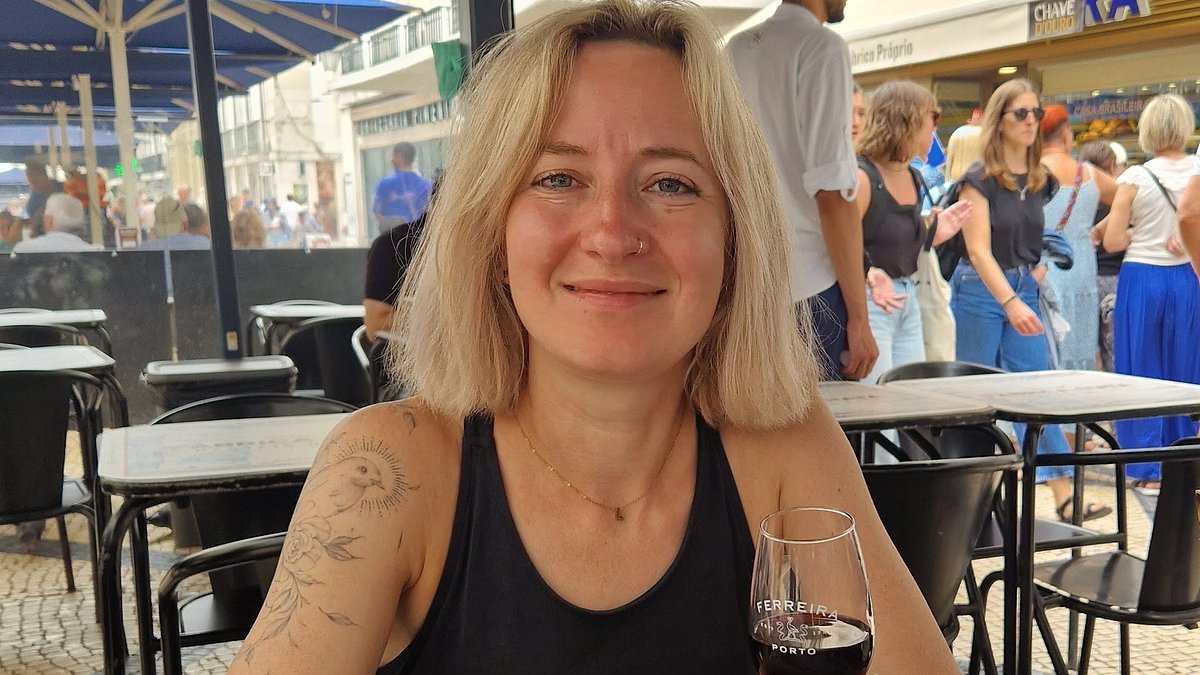
From a young age, Laura Graham-Claire was aware of a small freckle in her right eye. It was hardly noticeable, but it caught the optometrist’s attention during a routine eye examination.
Laura was informed that while it needed periodic monitoring, it likely wouldn’t pose any significant issues. Fast forward to 2023, Laura, now 40, began to observe unusual changes in her vision.
“Now and then, I would see flashes,” Laura recalls. “My vision seemed a bit blurry, and I’d experience sudden headaches—sharp, shooting pains in my head.”
Residing in East London and working in the publishing industry, Laura initially attributed these symptoms to the pressures of her demanding job.
“I assumed it was just fatigue from long working hours or the result of prolonged screen time. I wasn’t particularly worried,” she explains.
However, her perspective shifted dramatically during her routine eye check-up at Specsavers.
She mentioned the symptoms and was advised to undergo an optical coherence tomography test – a £30 detailed scan of the eye. It revealed that Laura’s freckle was growing. And it looked cancerous.
She was advised to urgently see an NHS eye specialist but, due to waiting lists, decided to go private, where she was told she had eye cancer.
Every year, around 900 people in the UK are diagnosed with eye cancer, making it one of the rarer forms of the disease. However, cases have risen by around 30 per cent since the 1990s for reasons that are not clear to doctors.

Laura was always told the blemish in her eye was just a freckle – but in her 40s she began to experience vision changes and was diagnosed with eye cancer

Every year, around 900 people in the UK are diagnosed with eye cancer, making it one of the rarer forms of the disease
Many cases of eye cancer are genetic – meaning they are not triggered by lifestyle factors. However, studies suggest that, over time, high exposure to UV rays from the sun increases the chance of the tumours developing.
While the cancer can occur anywhere in the eye, in most cases it forms in the uvea, which sits behind the iris, the coloured layer surrounding the pupil.
Concerningly, experts say many patients miss the early symptoms because they do not know about the cancer. The problem is also often not picked up because many people do not get regular eye tests.
Caught late, the cancer can lead to a loss of the eye, and also causes more than 100 deaths every year.
‘Eye cancer tends to be slow-growing, and the symptoms often aren’t obvious,’ says Mr Mfazo Hove, a consultant ophthalmic surgeon at Blue Fin Vision in London. ‘A tumour can grow for ten years without any noticeable loss in vision.
‘We only treat the occasional case but, when we do, it’s not unusual to remove the eye. Otherwise it can spread to the liver, lungs and other parts of the body and be deadly. The best way to spot eye cancer is during a routine vision test at the opticians, but most people don’t get one of these unless they need glasses.’
Laura says she was surprised to get her diagnosis. ‘I genuinely thought it was just vision problems or an issue with my glasses,’ she says. ‘When I was told I had eye cancer, I was worried I was going to lose my eye or worse.’
Laura was started on a treatment called plaque therapy, which involves sewing a thin patch on to the eyeball that contains a high-dose of radioactive chemicals to destroy the cancer.
The patch has a lead coating, to stop the radiation affecting other people or other parts of the body, and is typically worn for two days. Studies show that plaque therapy is around 90 per cent effective at destroying the cancer.
Thankfully, for Laura, the treatment was a success and she was eventually given the all-clear.
However, plaque therapy has long-lasting effects.
‘The radiation damages the eye, so I have to get injections every month that are designed to strengthen the blood vessels there,’ says Laura.
‘And it’s possible I might still lose some of my vision in the future because of the treatment.’
But Laura says she’s thankful that her cancer was spotted.
‘If I didn’t have glasses, I might not have gone for an eye test,’ she says.
Experts say more people should seek out an eye test – the NHS recommends they are checked at least every two years, even if there are no vision problems, and not just to catch eye cancer.
Many other conditions that lead to vision loss can often be treated if spotted early.
This includes glaucoma, where a build-up of fluid in the eye causes damage to the optic nerve – the cable connecting the eye to the brain. The first signs of the condition, which affects more than one million in the UK, are gradual loss of peripheral vision – but in its early stages there are typically no symptoms, making an eye test crucial for diagnosis. Treatment usually involves eye drops to reduce pressure levels in the eye.
More than two million people in the UK are estimated to live with sight loss, while around 90,000 begin to experience sight loss every year
‘The NHS has been effective at getting the message across that everyone should get an annual check at their dentist, but people don’t realise they need regular eye tests too,’ says Mr Hove. ‘Eye cancer is rare, but there are other, more common issues, people need to look out for as well.’