But what is the preservative, why is it the subject of controversy and will it affect vaccines in Australia?
What does RFK Jr have to do with this decision?
Robert F Kennedy Jr, a vaccine sceptic and the United States’ health secretary, overhauled the Advisory Committee for Immunization Practices (ACIP). He fired all 17 former members and appointed his ideological allies, some of whom have been associated with the spread of vaccine misinformation.
The chair of the American Academy of Pediatrics Committee on Infectious Diseases, Dr Sean O’Leary, said the world was looking at the new ACIP “in horror”, and that it was “truly an embarrassment”.
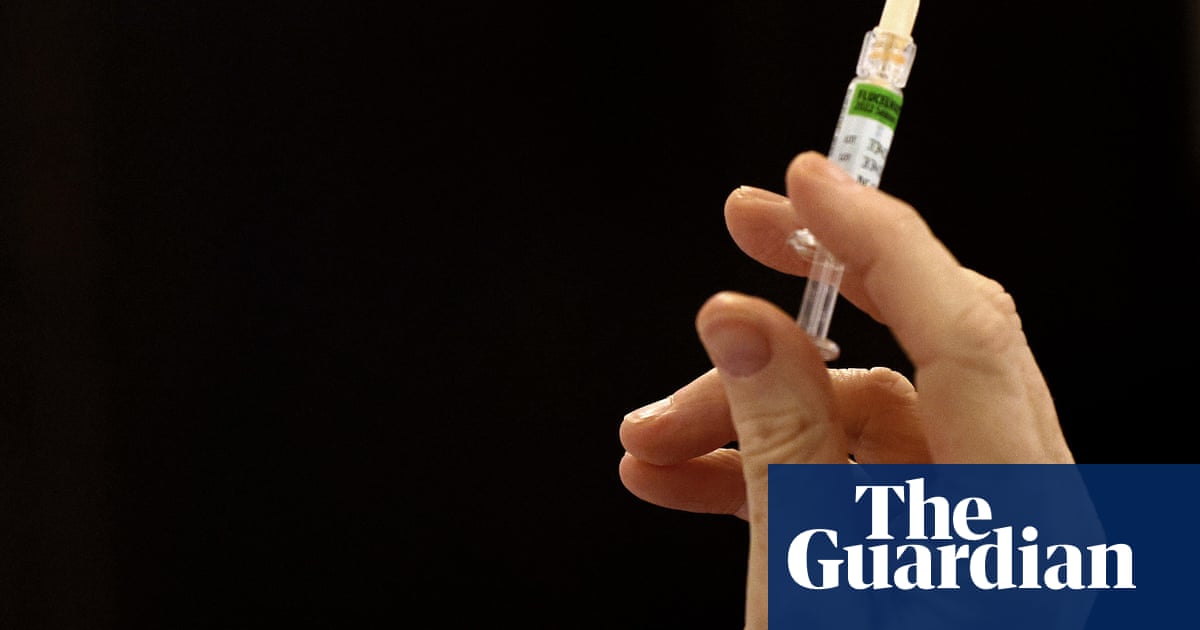
On Friday (Australia time) ACIP voted to recommend against influenza vaccines containing thimerosal, known in Australia as thiomersal. Anti-vaxxers have long scaremongered about thiomersal, a vaccine preservative, even though it is safe and makes vaccines safer by preventing bacterial and fungal contamination.
There are concerns the move could make vaccines more expensive and harder to get, and broader concerns are that ACIP’s decision could fuel misinformation and vaccine hesitancy.
Of the ACIP panel, five voted in favour, one abstained and Dr Cody Meissner, a paediatrics professor, was the sole “no” vote.
“Removing thimerosal from all vaccines used in other countries … is going to reduce access to these vaccines, it will increase costs, and I think it’s important to note that no study has ever indicated any harm from thimerosal,” he said.
What is thiomersal?
Thiomersal is a safe and effective preservative that is rarely, but sometimes, used in vaccines.
It is contains ethylmercury, which is not to be confused with methylmercury, which accumulates in the body and has toxic effects.
Ethylmercury, on the other hand, is more quickly converted in the body to inorganic mercury, then excreted.
The National Centre for Immunisation Research and Surveillance (NCIRS) says it has been used in very small amounts since the 1930s to prevent bacterial and fungal contamination, particularly in multi-dose vials where contamination is more likely.
At about the same time as Andrew Wakefield’s thoroughly debunked work that falsely linked vaccines with autism, a study on methylmercury (not ethylmercury, the one in thiomersal) came out.
People falsely conflated the two types of mercury and linked it with Wakefield’s false claims that vaccines were connected to autism.
Do we have it in Australian vaccines?
None of the vaccines listed on the National Immunisation Program use thiomersal. It is only present in the vaccine for Q fever, which is only recommended for people at risk through their contact with animals.
Thiomersal has not been used in any of the vaccines routinely given to children in Australia since 2000.
Dr Gary Grohmann, the former head of immunobiology evaluating vaccines at the Therapeutic Goods Administration, says Australia has one of the world’s best vaccine programs and is “pretty autonomous” from the US.
Grohmann also worked for the World Health Organisation in Geneva as a virologist.
He says thiomersal is generally not needed because Australia mostly uses single-dose vaccines that are not at the same risk of contamination as multi-dose vaccines. He says as well, out of an overabundance of caution and a concern with public perception, Australia decided not to use thiomersal even though it is safe.
In part, Professor Julie Leask, a social researcher specialising in vaccination at the University of Sydney, says that may have done more harm in the end, by “legitimising this idea” that it was harmful.
Also, while there is no evidence of potential harm, there was a purely theoretical concern about higher intakes in premature babies with low birth weights, as well as a more general wish to reduce children’s exposure to mercury.
So does RFK’s move matter here?
Leask says it will have “very little impact on vaccine availability” in Australia.
But there are other concerns.
A speculative one, she says, is that vaccine manufacturers could get spooked by ACIP’s move “throwing shade” on thiomersal and remove funding for vaccine research using it.
The far bigger problem she said, is the “super-spreading of misinformation or distortion of evidence” to make vaccines look harmful, by the sort of expert committee we were meant to be able to trust.
“This anti-vax sentiment is now at this very high level in the US government, and that gives it a form of legitimacy that it’s never really had before,” she says.
“We’ve never seen a western government so willing to undermine public confidence in vaccinations. I have never been so concerned about the propensity for vaccine confidence to be eroded by what’s happening in the US right now.”
Grohmann agrees. “The biggest problem is disinformation, which stops people getting their children vaccinated,” he says.
“Then you might get outbreaks of measles, of whooping cough, in unvaccinated communities.”
What should I do?
Leask says people should use their critical faculties to judge what they read, particularly online.
“When you seem to be bombarded with scary information about vaccines, often that is highly cherrypicked,” she says.
“Keep an eye on advice from Australia.
“You can still trust what you can read from authoritative sources in Australia, including NCIRS and the government.”
Grohmann says as well as dismissing disinformation and fearmongering about rare side effects, people should understand the benefits of vaccines for saving lives and for the economy.
Each dollar spent on vaccination saves $16, he says.
“There’s a positive economic benefit in terms of hospitalisations, GP visits, parents not missing work, kids not missing school,” he says.
His other advice is to “listen to experts, not YouTubers”. “We vaccinate for a reason,” he says. “It’s to stop people from dying.”
And, Leask says, there will be interesting tussles in the US between those who know the evidence and those who would distort it.
“There are still heroes within US agencies who are fighting a quiet, internal battle to keep good evidence in the spotlight,” she says.