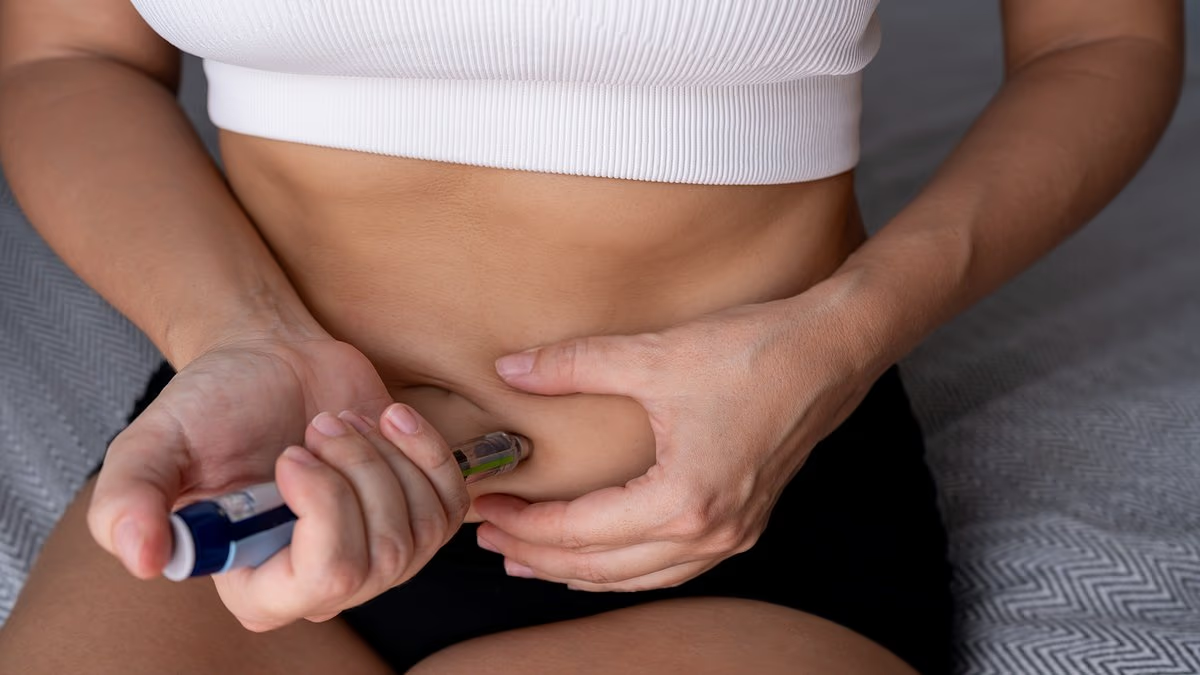

A next-generation weight-loss injection that targets fat beneath the skin could help some overweight adults achieve a flatter stomach within months, according to new research.
US scientists say the “remarkable” treatment could eventually offer an alternative to cosmetic procedures such as liposuction for people struggling with stubborn pockets of fat.
The drug may also tackle visceral fat, the hidden fat stored around vital organs that is linked to a higher risk of heart disease, type 2 diabetes and stroke.
Researchers also believe the injection could help prevent weight regain when used after treatment with popular drugs such as Mounjaro or Wegovy.
Experts from the University of Alabama found that CBL-514 produced a substantial reduction in subcutaneous fat—the layer directly beneath the skin—in 70 per cent of patients.
The study also suggested that combining CBL-514 with tirzepatide, the active ingredient in Mounjaro, could strengthen the overall weight-loss effect.
Dr Timothy Garvey, who presented the findings at the annual meeting of the European Association for the Study of Diabetes in Milan, said: “We expect that patients will be pleased by the cosmetic effects, such as the flatter stomach that can come with subcutaneous fat loss.
“But it is the reduction in body weight, loss of visceral fat and the improvements in blood pressure, cholesterol and the like that should be associated with this that will be important for health.”

A new weight-loss injection that directly targets fat cells could help reduce stubborn abdominal fat while also lowering dangerous visceral fat
Most widely used weight-loss injections imitate the hormone GLP-1, helping people feel fuller for longer. CBL-514 works differently by prompting fat cells to break themselves down.
In a phase 2 clinical trial, about 70 per cent of participants given the drug lost at least 150ml of visible fat during eight weeks of treatment.
Animal research also found that CBL-514 reduced visceral fat, potentially lowering the risk of cardiometabolic conditions including heart attack, stroke and fatty liver disease.
Rats treated with both CBL-514 and tirzepatide lost more weight than animals given either drug alone. They also regained less weight after tirzepatide treatment was withdrawn.
Scientists are not yet certain why the combination appeared to limit weight regain, but they suggest that removing fat cells may reduce the body’s capacity to store fat again.
Although Wegovy and Mounjaro can deliver significant weight loss, studies indicate that many people regain the weight within two years of stopping treatment.
The researchers hope CBL-514 could help people maintain weight loss for longer, supporting lasting improvements in blood pressure, blood sugar and cholesterol, Dr Garvey said.
However, larger and longer-term studies will be needed before researchers can confirm whether the drug has a sustained effect on weight regain and overall health.
The trial included 41 participants and was led by Dr Garvey, a specialist in metabolic disease, in collaboration with Caliway Biopharmaceuticals, the company developing CBL-514.
Participants were randomly assigned to receive doses of up to 600mg of CBL-514 or a placebo over a three-month period.
The researchers did not state how often the injections were administered, noting that the number of treatments varied according to the amount of abdominal fat each participant carried.
Hidden visceral fat was also measured throughout the study using MRI scans.
A month after the last treatment, those given CBL-514 had around 12 per cent less visceral fat than at the start of the study, while levels increased by almost 6 per cent in the placebo group.
After two months, participants who received the drug had about 10 per cent less dangerous visceral fat than when they started.
By contrast, those given a placebo had around 12 per cent (11.8) more.
CBL-514 was well-tolerated, with the only side-effects being redness and pain around the injection site.
The team concluded that CBL-514 could significantly reduce both dangerous visceral fat and stubborn belly fat, potentially offering a far less invasive alternative to surgical procedures that remove visible fat beneath the skin.
Two phase 3 trials – which will evaluate the safety and efficacy of the drug for belly fat reduction – are set to begin soon.
Dr Marie Spreckley, an expert in metabolic disorders at the University of Cambridge, who was not involved in the current study, described the results as ‘encouraging’.
However, she added larger trials with longer follow-up are needed to establish whether the fat reduction lasts and whether it leads to improvements in health.
Professor Justin Rochford, from the University of Aberdeen, added that while the drug was originally developed to target fat cells in unusual fatty lumps under the skin, it could be invaluable when it comes to the treatment of cardiometabolic diseases.
However, he cautioned, for it to be successful, researchers will have to show that it does not increase the risk of fat accumulation in other organs.
The findings follow new research that found a double-pronged fat jab, known as EloraTZP, could help patients lose almost a quarter of their body weight within 48 weeks.
Scientists found the drug – which contains both tirzepatide and a compound called eloralintide – resulted in an ‘astonishing’ weight loss of 23.3 per cent – suggesting the combination may be the most powerful yet when it comes to controlling hunger.


