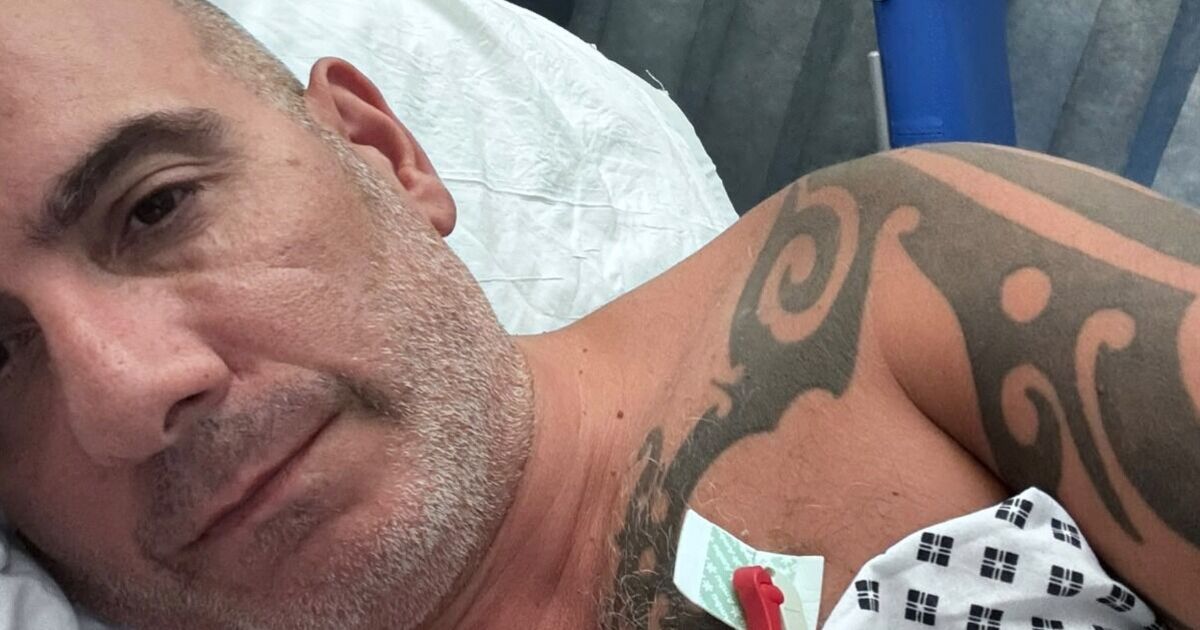


Ediz Mevlit became seriously unwell on the Tube while travelling home from work (Image: Ediz Mevlit)
A London man says he may not have survived without the intervention of a family friend, after claiming the NHS declined to send an ambulance when he suffered a medical emergency. Ediz Mevlit, 51, who works in the bus industry, began feeling unwell while travelling home on the London Underground after his shift on Sunday, September 7. Once he arrived home, his heart rate rose dramatically and he called the London Ambulance Service (LAS).
However, Mr Mevlit says the call handler told him his condition was “not an emergency”. Speaking to The Express, he said: “I worked as normal. On my way home I started to feel unwell on the Tube. I got home and deteriorated. My heart was pumping like crazy, around 160 to 170 beats per minute, and my blood pressure was very low. I checked it on my machine because I have atrial fibrillation.
“I started collapsing several times. At around 12.30am, I called 999 because I was struggling to breathe.”

Mr Mevlit spent a week in hospital (Image: Ediz Mevlit)
“I needed urgent help because I kept collapsing. I had been sick and thought I was going to die. The 999 operator did not take the situation seriously, reading from a script and asking strange questions that were not necessary at the time because I was terrified I might die.
“I was struggling to speak and becoming confused, so my wife took the phone. The LAS refused to send an ambulance because my condition was not considered necessary or urgent.
“We then called a close family friend, who picked me up from the floor after I fainted again and rushed me to hospital. When I arrived at A&E at North Middlesex Hospital, I was taken straight into resus.”
Mr Mevlit said: “I remember someone saying, ‘It’s up to 200[bpm] and he’s going.’ My whole body started to feel numb and I thought I was dying. They placed large pads on me in preparation for a shock. I’m not sure what medication they gave me, but I came around.
“I remained in resus for 12 hours before being moved to a ward, where I spent a week in hospital.”
The experience left Mr Mevlit struggling to understand why his call for help had not prompted an ambulance response.
He said: “I could not understand why I was left alone when I desperately needed help.
“Something went seriously wrong during that call. A tick-box exercise meant I did not receive the help I needed and was potentially left to die.”

Mr Mevlit’s heart rate soared during the emergency (Image: Ediz Mevlit)
“The human element had disappeared. Common sense had gone. This could have ended very badly.”
Despite his criticism, Mr Mevlit praised the hospital staff as “amazing” and stressed that “LAS responders are not to blame here”.
“This is a problem caused by not listening and failing to understand what was happening, rather than simply filling in boxes on a screen,” Mr Mevlit said.
“It was just like the famous Little Britain sketch: ‘Computer says no.’”
“If I had stayed at home instead of making the decision to go to hospital, I would not be here today.”
The London Ambulance Service has been contacted for comment.
In an email to Mr Mevlit, sent on Monday, September 21, it expressed its “sincere apologies” for the way he felt about his experience.
The service added: “I appreciate that contacting the emergency services can be a stressful and worrying time, and I am sorry to learn that the experience has left you feeling concerned and dissatisfied.
“We take all feedback seriously and are committed to listening to and understanding the experiences of those who contact our service.”


