
For much of the 20th century, tonsillectomy was one of Britain’s most routine operations. Tonsils are the two fleshy lumps at the back of the throat, and removing them to prevent repeated infections became something of a childhood rite of passage.
Sir Roger Moore, the legendary James Bond actor, recalled in his autobiography how doctors recommended the procedure after he contracted mumps and developed a ‘raging sore throat’ while growing up in 1930s London. ‘I wasn’t really too sure what this would entail,’ he wrote, although he had been promised ice cream when he woke up.
At the time, Sir Roger was among roughly 200,000 patients—most of them children—who underwent the operation every year.
Today, fewer than 27,000 NHS patients have their tonsils removed annually. One reason is that the operation is now classified as a ‘low clinical priority intervention’.
Experts agree that tonsillitis does not automatically mean a child needs surgery. In many cases, infections become less frequent as children grow older; they are most common between the ages of five and 15. Tonsillectomy also carries risks, including common post-operative bleeding and, in extremely rare cases, death [see panel on right].
However, a growing number of specialists believe NHS eligibility rules have become excessively strict. In some parts of the country, they say, patients who meet the criteria are still being refused treatment. As a result, thousands of children may be enduring repeated infections, missing substantial amounts of school or being admitted to hospital when they become seriously ill.

Fewer than 27,000 patients now have their tonsils removed on the NHS each year, partly because the procedure is classed as a ‘low clinical priority intervention’

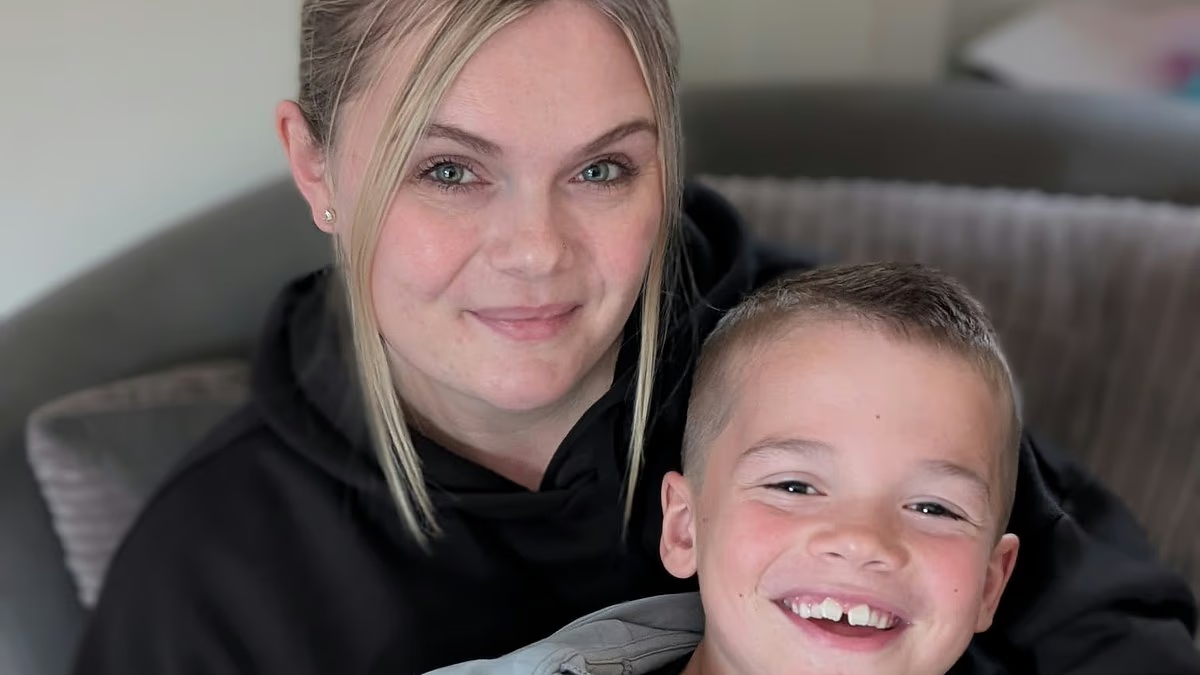
Rebecca Davies opted to pay for her son Taron’s tonsillectomy after he suffered ten bouts of tonsillitis last year but did not qualify for the operation on the NHS
It is little surprise that increasing numbers of parents are turning to private healthcare. Families who spoke to The Mail on Sunday said the roughly £3,000 cost of the operation was worthwhile if it brought an end to their child’s repeated suffering.
So when is tonsillectomy the right choice for a child—and is it fair that NHS rules make access so difficult?
To answer those questions, it is useful first to understand what tonsillitis is.
The tonsils are part of the body’s first line of defence against germs. However, they can also become infected and inflamed, leading to a severe sore throat, pain while swallowing, fever and swollen glands.
Most cases are caused by viruses and clear up without treatment within about a week. A significant minority are bacterial infections, most commonly caused by group A streptococcus, or strep A, and are generally treated with antibiotics.
Until the 1980s, tonsillectomies were performed almost on demand. That approach was challenged by a US study led by paediatrician Dr Jack Paradise of the Children’s Hospital of Pittsburgh, published in the New England Journal of Medicine in 1984.
The study followed children with frequent, severe throat infections, half of whom underwent tonsillectomy. Its threshold for surgery was seven or more documented attacks in one year, five or more attacks a year for two consecutive years, or three or more attacks a year for three years. This became known as the ‘3, 5, 7 rule’.
Children who had surgery experienced fewer infections, averaging two in the following year compared with three among those who did not have the operation. However, the improvement was modest and diminished over time.
The findings influenced NHS guidance, and the ‘3, 5, 7 rule’ became the standard eligibility test, subject to a small number of exceptions. These included recurrent quinsy, a serious complication in which abscesses develop.
For years, experts have questioned the scientific basis of the rule, pointing out that Dr Paradise devised the criteria himself rather than relying on earlier research.

Most cases of tonsillitis are viral and clear up within a week. A significant minority are bacterial, most often caused by group A streptococcus, or strep A
In 2019, the NHS went further by placing tonsillectomy on a list of procedures subject to rationing, alongside breast reductions and the removal of harmless skin lesions. The move formed part of an effort to save £200 million.
But experts say these criteria are arguably too strict.
‘I’m concerned the current guidelines make it harder than it could be for patients with severe tonsillitis to be offered this procedure,’ says Mr James O’Hara, a consultant ear, nose and throat surgeon and researcher at Newcastle University. ‘The NHS has to consider the cost-effectiveness of tonsillectomies to society, but the guidelines don’t take into account the potential impact of the illness on the lives of children and their parents.
‘For the child it’s a miserable illness, but there may be a financial cost for the family. When a child gets regular bouts of tonsillitis, their parents may end up having to take time off work to care for them, meaning they can lose out on pay. That can really add up.’
There is also evidence that many patients who do qualify are being wrongly refused. A University of Birmingham study published in the British Journal of General Practice in 2019, which examined the records of more than 1.6 million children, found that of nearly 16,000 who met the criteria, fewer than one in seven went on to have the operation.
And Newcastle University researchers have found some patients endure three times the recommended number of infections before they are even referred to a specialist.
‘Some areas will only count cases of tonsillitis that are recorded in medical records,’ says Mr O’Hara. ‘But many who regularly get tonsillitis don’t go to the doctor unless it’s really bad – meaning there’s no record.’
Between 1991 and 2011, the number of tonsillectomies in England fell by 44 per cent – but hospital admissions for tonsillitis rose by a staggering 310 per cent. In 2018, a study by Public Health England – now UK Health Security Agency – warned that since this reduction in surgeries, the number of children under 14 admitted to hospital with tonsillitis has soared.
So too, they added, have cases of invasive strep A, the most dangerous form of the infection.
The consequences can be tragic. During the winter of 2022, an unusually severe strep A outbreak claimed the lives of 61 children across the UK.
For most sufferers, tonsillitis is not life-threatening but it can be a distressing and debilitating condition. One of those affected is Taron Davies, seven, who suffered ten bouts of tonsillitis last year.
‘His tonsils would swell up so much that he would be in total agony,’ says his mother Rebecca, 34, a call centre worker. ‘He couldn’t speak, he couldn’t drink fluids. At times, he struggled to breathe. We were terrified he would stop breathing in the night. He would finish a course of antibiotics and the very next day his tonsils would start swelling up again.’
Although Taron met the official NHS criteria for a tonsillectomy, his local area had added requirements – something allowed under the 2019 rationing guidance.
‘We were told by our GP that Taron needed to have missed a significant number of school days to qualify,’ says Rebecca, who had her tonsils out at 20 after a bad case of quinsy. ‘But we’d tried to make sure he missed as little school as possible and some of his worst flare-ups had occurred on weekends. So we were told he didn’t qualify.’
Rebecca and her husband Jack decided to go private. The family had medical insurance, meaning it cost them only £100 – without insurance, it can cost between £2,500 and £4,000.
Taron had the surgery in August, which lasted about 30 minutes and he went home the same day. Since then, his mother says, he has not had any throat infections. ‘By now, he’d normally have had tonsillitis twice. The other day he was saying how nice it was to be able to breathe and eat normally.’
A new technique is increasingly used across the NHS, called coblation, where rather than cutting out the whole tonsil and surrounding tissue, as was done traditionally, surgeons use a low-temperature energy field to dissolve most of the tonsil while leaving a thin protective layer in place. Experts argue it means less pain, fewer bleeds and a faster return to eating and drinking normally.
‘There is a risk that the remaining tissue can get infected in future,’ says Mr Sri Mahalingam, a consultant ear, nose and throat surgeon at Nuffield Health Tunbridge Wells Hospital, who treated Taron. ‘But the risk is small.’
And there is a further problem. Many families simply cannot afford to go private – and research suggests they are the ones who need help most. A 2022 study of Scottish children found that rates of tonsillitis were highest in the most deprived areas.
‘I passionately believe that we need to conduct more research into the guidelines,’ says Mr O’Hara.
‘They are based on research that was carried out in the 1980s which lacked the input of patients, cost-effectiveness research, and consideration of the impact on a patient’s and their parents’ quality of life. Isn’t it time we looked at this again?’


