
Share this @internewscast.com
A relatively obscure yet highly contagious virus, known for causing severe diarrhea, is making a significant resurgence across the United States, according to recent data.
The Centers for Disease Control and Prevention (CDC) reports that rotavirus cases have climbed to their highest levels since April last year. In the week ending March 28, the virus showed a positivity rate of 6.77 percent, marking a 24 percent increase compared to the previous week.
Further data from wastewater monitoring, which analyzes virus presence in sewage systems, indicates that rotavirus concentrations are now considered ‘high’ across all four major regions of the U.S.
Rotavirus is a common viral infection, affecting approximately 2.7 million Americans annually. It typically sees a surge in cases from January through June, as the virus thrives in environments where people are in closer contact.
Transmission of this virus occurs easily through contact with surfaces that have been contaminated by fecal matter containing the virus.
It is easily transferred via contact with surfaces contaminated with feces that contain the virus.
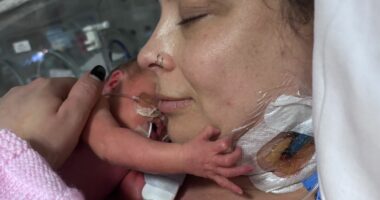
Infants and young children are most at risk from the infection, which can trigger watery diarrhea and vomiting that is so severe it can cause dehydration, which may lead to hospitalization or death.
Children are normally required to be vaccinated against the virus in the US at two months old, but in January this year, Robert F Kennedy Jr’s advisers said the jab should only be offered after a discussion with parents.

Latest data shows that rotavirus levels are surging in the US. Infants and young children are particularly at risk (stock image)
Before the vaccine was introduced in 1998, the virus caused up to 70,000 hospitalizations in the US annually and 20 to 60 deaths in children under five years old. It was the leading cause of severe diarrhea among children.
Today, health officials say these figures are much lower.
The CDC data showed that rotavirus levels have risen every week except one in the US since early January.
Separate data from WastewaterSCAN showed that, by region, in the Northeast and South, levels of rotavirus surged 21 percent over the week to April 1, the latest available.
The Northeast is now also registering the highest levels of rotavirus in the US, which are the highest nationwide for at least 24 months.
In the West, levels remain flat, although they are ‘high’ across the region, particularly in the Bay Area and San Diego.
In the South, levels are ‘high’ although infections fell by about 23 percent over the latest seven-day period.
Data was analyzed up to April 1, the most period with stable reporting, after provisional figures for April 3 showed an anomalous spike.
Rotavirus cases are highly seasonal and tend to rise in winter and cooler months as the conditions force people indoors.

The above graph shows the rotavirus positivity rate, the proportion of tests that detect the virus, has surged since January

Across the US, rotavirus levels are currently considered to be ‘high’ in all areas
People who are infected with rotavirus develop symptoms within about two days, commonly including severe, watery diarrhea, vomiting, fever and stomach pain.
These symptoms can last for three to eight days before subsiding.
In serious cases, it can progress to dehydration. Warning signs of this include decreased urination, dry mouth and throat, feeling dizzy when standing up, crying with few or no tears and unusual sleepiness or fussiness.
There is no specific medicine to treat rotavirus, but doctors may recommend over-the-counter medicines. They will also tell patients to drink plenty of fluids to avoid dehydration.
If dehydration is suspected, people are urged to seek immediate medical attention.
In these cases, hospitals may administer IV fluids to help stabilize levels in their bodies.
Estimates suggest that 74 percent of children under eight months old are currently vaccinated against rotavirus.
In January, Robert F Kennedy Jr’s health officials slashed the childhood immunization schedules to make six vaccines, including that for rotavirus, optional for parents.
The panel said that whether a child receives these should now be decided using ‘shared clinical decision-making’ between parents and their child’s doctor.