
Share this @internewscast.com

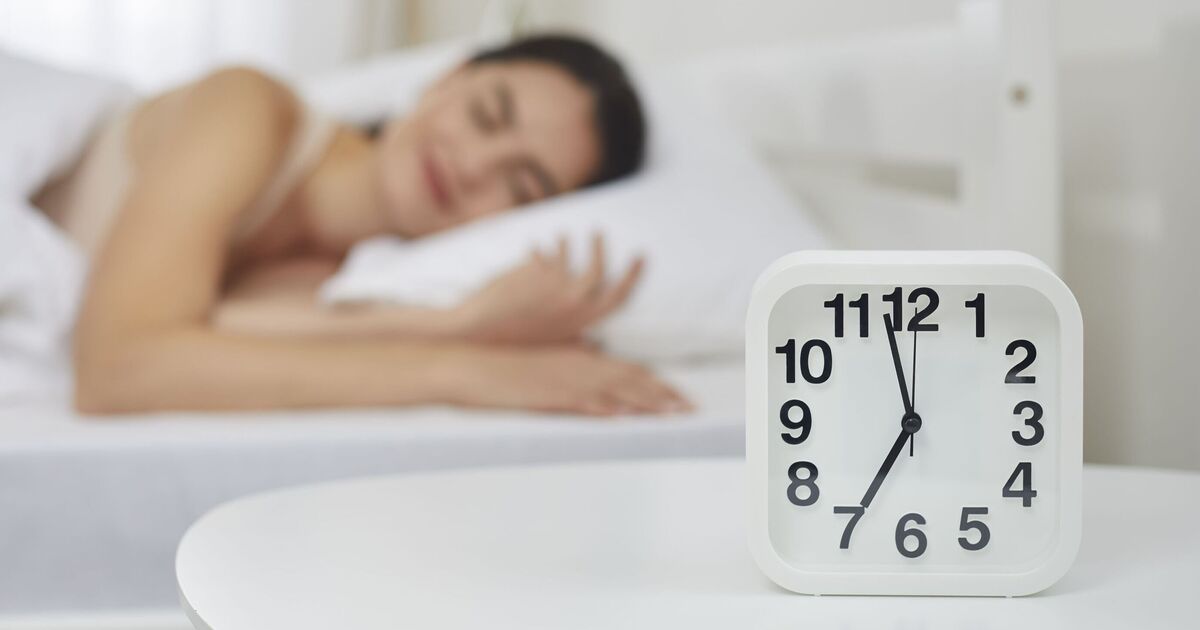
Clocks go forward on Sunday (stock image) (Image: Getty)
Brits are bracing themselves for a lost hour of sleep this weekend, as the clocks prepare to spring forward. However, there is a straightforward adjustment you can make to avoid suffering the effects of “jet lag” as we transition into summer, and it’s simpler to manage than you might expect.
As the UK prepares to “spring forward” this weekend, residents are gearing up for the annual loss of an hour’s sleep. Thankfully, there’s a simple strategy to help mitigate the so-called “jet lag” associated with this shift to British Summer Time, and it’s more manageable than you might think.
Rob Lucas, a Neuroscience Professor at the University of Manchester, has unveiled a straightforward tactic to help our internal clocks adjust smoothly. While feeling a bit off-kilter during the clock change is entirely normal, it’s unnecessary to let it disrupt your overall well-being.
This advice comes on the heels of a recent tip shared in response to a health advisory about the adjustment process.
A recent TikTok video from the university features Professor Lucas explaining the optimal method for adapting to the new time. When asked about his personal routine, he stated, “It’s really simple.”
“Our bodies have an intrinsic sense of biological time, which needs to be synchronized with what we consider the correct time of day. Our body clocks determine the time of day by being exposed to light—especially bright light—as much as possible,” he explained.
Read more: Health alert for cough syrup users
He also highlighted that the clock change takes place over Saturday night for good reason, adding: “Mostly, that’s the time – Saturday/Sunday – when people have most flexibility over their schedule. Take advantage of that flexibility.
“Not by ignoring the clock change, but by making Sunday the first day that you respond to the clock change and then, by the time you get to Monday, you’ll be a good way forward through that process of adjusting to the new time.”
Given that Professor Lucas serves as Director of the Centre for Biological Timing, his advice is well worth heeding. Indeed, there’s a compelling reason why exposing yourself to sunlight on Sunday is particularly beneficial.
How to adjust to clocks going forward
One of the most effective measures you can take to adapt to the clocks going forward is by keeping your bedroom dark at night, while increasing your exposure to bright, natural sunlight in the morning to help reset your body clock.
Morning sunlight is particularly crucial, as it assists your body in adapting to the new time. The shift to Daylight Saving Time (DST) disrupts your internal body clock (circadian rhythm) because it effectively creates darker mornings and lighter evenings.
Morning light serves as the principal signal to reset this clock, enabling you to feel more alert earlier in the day and drift off to sleep at the appropriate time each evening. Morning light exposure assists in overcoming the “lost hour” and enhances alertness throughout the day.
Typically, it’s recommended people spend approximately 15 minutes outdoors within the first 30 to 60 minutes of waking on Sunday, as well as the following days, to help adapt effectively. When the clocks spring forward, individuals frequently experience symptoms comparable to jet lag.
Despite no travel being involved, the abrupt one-hour adjustment disrupts the body’s internal clock (circadian rhythm), generating a phenomenon commonly described as “social jet lag”.