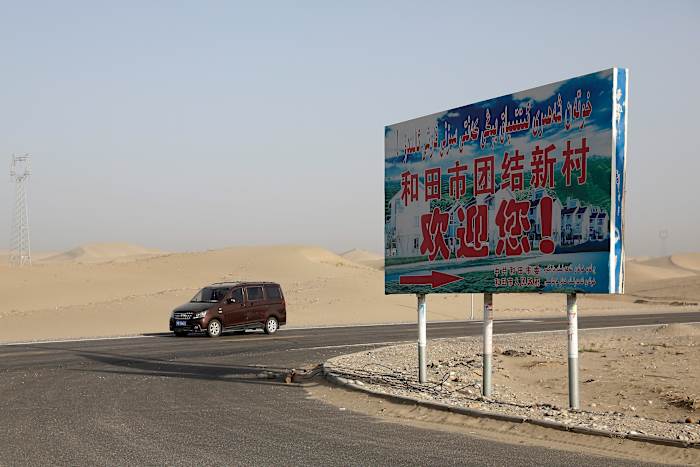

LONDON – Numerous global companies, including several renowned brands, may potentially be involved in utilizing forced labor through their supply chains in China. This is due to their reliance on critical minerals or on products derived from minerals sourced from China’s far-western Xinjiang region, as noted by an international rights organization on Wednesday.
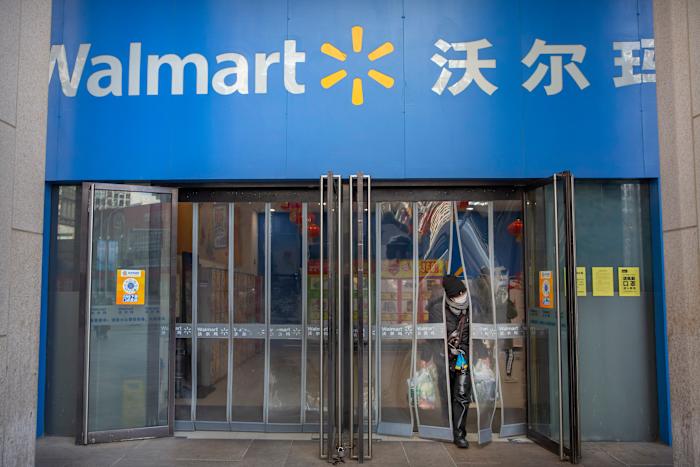
A report released by the Netherlands-based Global Rights Compliance indicates that companies such as Avon, Walmart, Nescafe, Coca-Cola, and paint supplier Sherwin-Williams could be associated with titanium sourced from Xinjiang. In this region, rights organizations allege the Chinese authorities conduct coercive labor practices, primarily affecting Muslim Uyghurs and other Turkic ethnic groups.
The report comes as China and the United States, the world’s two largest economies, continue talks aimed at easing their trade dispute.
The investigation identified 77 Chinese suppliers involved in the titanium, lithium, beryllium, and magnesium sectors operating within Xinjiang. It highlighted that these suppliers risk being part of the Chinese government’s “labor transfer programs,” where Uyghurs are compelled to work in factories. This initiative is part of a broader, ongoing campaign aimed at assimilation and mass detention.
Commercial paints, thermos cups and components for the aerospace, auto and defense industries are among products sold internationally that can trace their supply chains to minerals from Xinjiang, the report said. It said companies must review their supply chains.
“Mineral mining and processing in (Xinjiang) rely in part on the state’s forced labor programs for Uyghurs and other Turkic people in the region,” the report said.
The named companies did not immediately comment on the report.
A 2022 United Nations report found China may have committed crimes against humanity in Xinjiang, where more than 1 million Uyghurs are estimated to have been arbitrarily detained as part of measures the Chinese government said were intended to target terrorism and separatism.
The Chinese government has rejected the U.N. claims and defended its actions in Xinjiang as fighting terror and ensuring stability.
In 2021, former U.S. President Joe Biden signed a law to block imports from the Xinjiang region unless businesses can prove the items were made without forced labor. The law initially targeted solar products, tomatoes, cotton and apparel, but the U.S. government recently added new sectors for enforcement, including aluminum and seafood.
A recent report by the International Energy Agency said the world’s sources of critical minerals are increasingly concentrated in a few countries, notably China, which is also a leading refining and processing base for lithium, cobalt, graphite and other minerals.
Many of China’s major minerals corporations have invested in the exploration and mining of lithium, a key component for electric vehicle batteries, in Xinjiang, Global Rights Compliance said. Xinjiang is also China’s top source of beryllium, a mineral used for aerospace, defense and telecommunications, its report said.
Copyright 2025 The Associated Press. All rights reserved. This material may not be published, broadcast, rewritten or redistributed without permission.