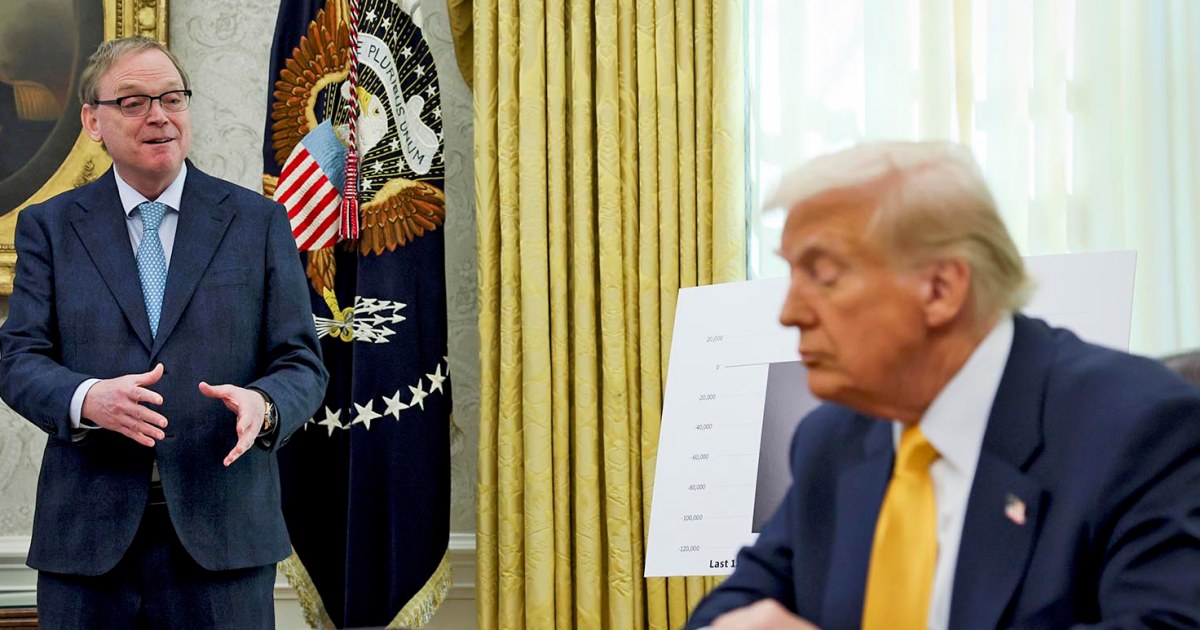

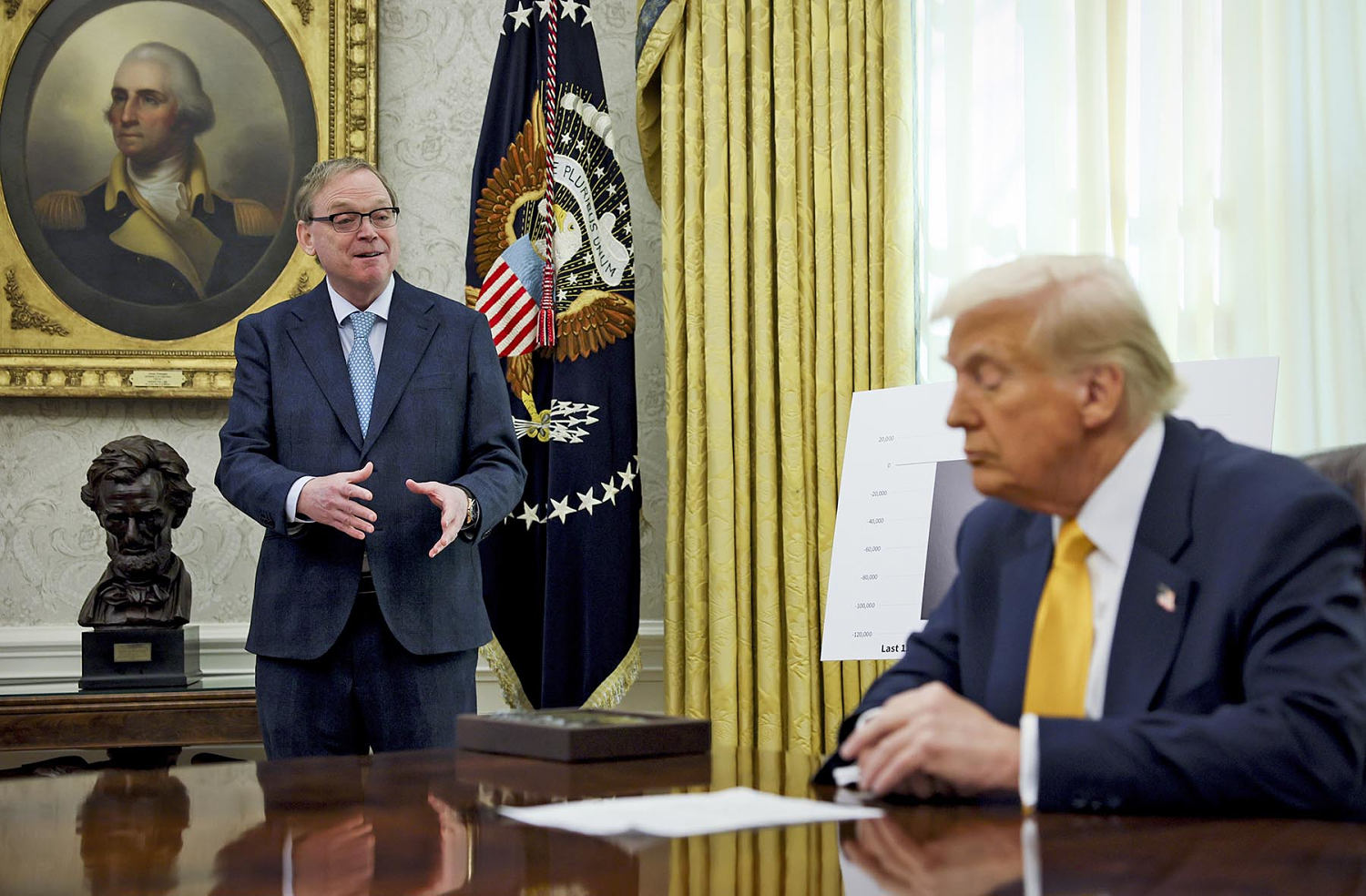
The U.S. government may begin acquiring equity stakes in more businesses in the future, potentially through the establishment of an American sovereign wealth fund, as suggested by one of President Donald Trump’s key economic advisers.
Kevin Hassett, Director of the National Economic Council, made these comments on Monday, shortly after the U.S. secured nearly a 10% stake in Intel. This stake was acquired using funds designated for grants under the CHIPS and Science Act, which was enacted during the Biden administration.
Discussing the new investment in Intel, Hassett told CNBC: “It’s like a down payment on a sovereign wealth fund, which many countries have.” Such funds are used by governments across Europe, Asia, and the Middle East to invest in businesses and other financial assets.
The federal government has previously taken ownership interests in private enterprises, but predominantly under unusual circumstances, such as the 2008 global financial crisis.
Hassett described the Intel stake as a “very, very special circumstance due to the substantial amount of CHIPS Act spending that was directed towards Intel.”
He added: “So I’m sure that at some point there’ll be more transactions, if not in this industry, in other industries.”
The CHIPS Act was formulated to enable the government to offer financial support and capital to both foreign and domestic companies producing semiconductors and related products within the United States.
Americans and the American economy received the benefit of more than $200 billion in private capital investments since the act was signed into law, according to the Council on Foreign Relations. Many companies also announced plans to create new U.S. manufacturing and construction jobs.
Hassett said previously the money was “going out and disappearing into the ether.”
He also said “we’re absolutely not in the business of picking winners and losers.” However, the U.S. is now Intel’s largest single shareholder. The administration has also took a “golden share” in U.S. Steel as part of approving its merger with Japan’s Nippon Steel. Trump also said he negotiated with Nvidia CEO Jensen Huang to take a 15% cut of the chipmaker’s revenue from some chips sold in China. Trump also has a similar deal with rival chipmaker AMD.
After Hassett’s interview Trump took to Truth Social to say: “I PAID ZERO FOR INTEL, IT IS WORTH APPROXIMATELY 11 BILLION DOLLARS. All goes to the USA.” He also said he would “help those companies that make such lucrative deals with the United States.”
It was unclear why the president said the U.S. did not pay anything for the stake. The government purchased 433.3 million Intel shares at $20.47 each, which equates to $8.9 billion.
Trump has also pushed companies to change course on key products, such as when he pre-emptively announced that Coca-Cola would add cane sugar to an American version of its namesake product.
Trump has also threatened firms such as Amazon, Mattel, Hasbro and Walmart with retaliation for hiking prices as a result of his sweeping global tariff regime.
The president’s intervention in private industry has sparked widespread criticism, including from Republicans. Trump’s former U.N. ambassador, and a former Boeing board member Nikki Haley, said on X: “Intel will become a test case of what not to do.”
After the CNBC interview, NBC News asked Hassett about setting up a sovereign wealth fund.
“As we acquire things like Intel, then there’s sort of a question of where it goes and it’s held by the U.S. Treasury. And if the U.S. Treasury has more of that stuff, that is starting to look like sovereign wealth fund, whether an official sovereign wealth fund is established is another question,” Hassett said.
“But it’s not unprecedented for the U.S. to own equity” in private companies, he added.
The U.S. took equity stakes in private companies during the global financial meltdown of 2008 and 2009.
Then, the U.S. bought troubled assets and took equity stakes in the likes of JPMorgan, Wells Fargo, Citigroup, Bank of America, AIG, and other systemically important firms in order to stabilize the global financial system.
Trump has expanded his power over the business world, fueled by his view that the U.S. economy is like “a department store, and we set the price.”
“I meet with the companies, and then I set a fair price, what I consider to be a fair price, and they can pay it, or they don’t have to pay it,” Trump said in an April interview.


