
HONG KONG – Asian markets delivered a mixed performance Monday, while oil prices slid sharply as investors grew more hopeful that diplomatic efforts between the United States and Iran could make progress.
U.S. stock futures moved higher after Wall Street suffered its steepest one-day decline since June on Friday, led by heavy selling in technology and artificial intelligence shares.
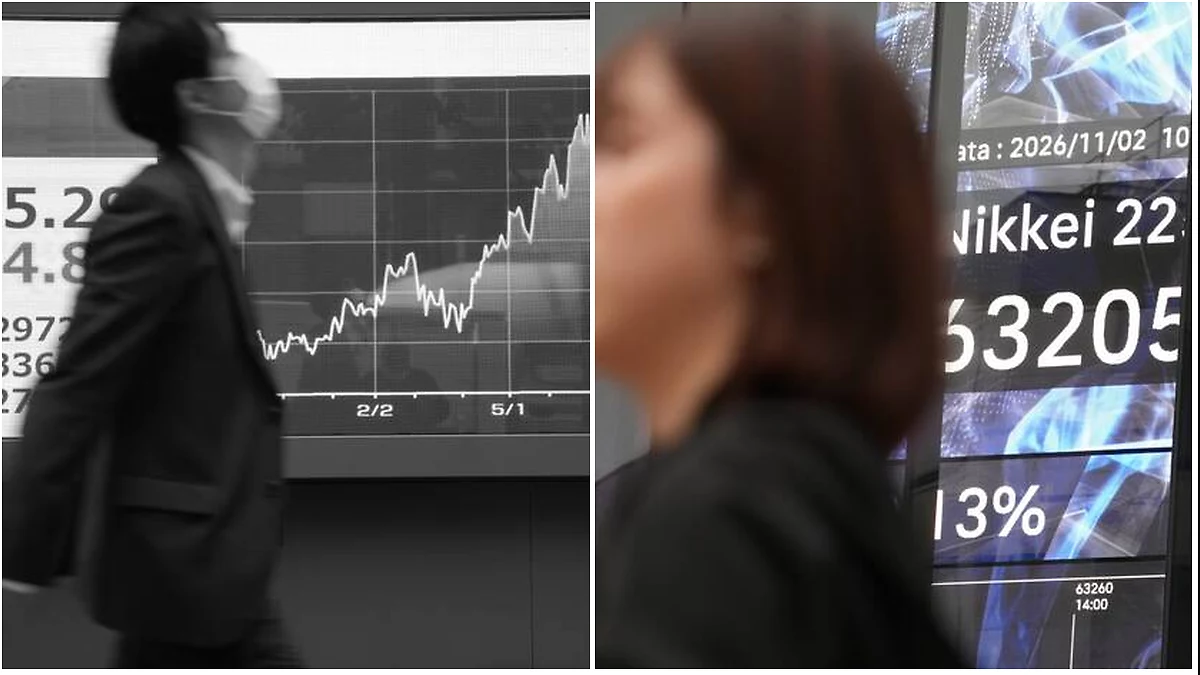
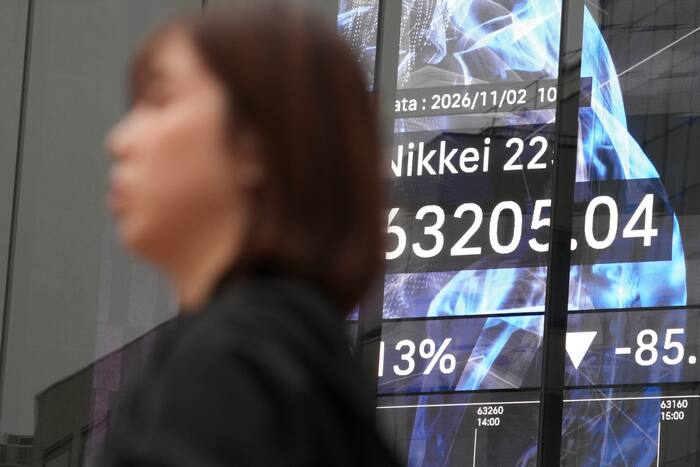
Japan’s Nikkei 225 surrendered its early advance and fell 0.3% to 63,081.86, pressured by weakness among several major technology companies.
SoftBank Group, an investor in OpenAI, declined 1.6%. Kioxia Holdings, Japan’s leading memory-chip manufacturer, plunged 15.8% after its earnings outlook fell short of expectations for some analysts and investors.
South Korea moved in the opposite direction, with the benchmark Kospi gaining 2.2% to 5,859.08. Samsung Electronics climbed 1.8%, while SK Hynix, another major memory-chip producer, advanced 3.8%.
Technology shares have remained volatile as concerns grow that the rapid expansion of artificial intelligence investment could be creating a market bubble.
Apple is scheduled to release its latest financial results later Monday. Earnings from Google parent Alphabet and Amazon last week unsettled investors, reviving concerns about whether enormous AI spending will generate profitable returns as quickly as markets had anticipated.
The recent turbulence does not necessarily signal that the AI boom is collapsing, but the debate surrounding the sector is entering a new stage, Sunil Tirumalai of UBS Global Research wrote in a recent note.
Rather than turning against technology stocks broadly, investors have become “distinctly more nervous about a handful of companies with weaker balance sheets or bigger financial commitments,” Tirumalai said.
“Some cracks have appeared,” he wrote. “Increasingly, the question will be whether all the money being spent on it can generate adequate financial returns.”
Over the past month, the Nikkei 225 has lost more than 7%, while South Korea’s Kospi has dropped over 16%.
Taiwan’s Taiex slipped 0.7%, with Taiwan Semiconductor Manufacturing Co., the island’s dominant chipmaker, falling 1.7%.
Hong Kong’s Hang Seng rose 0.5% to 23,411.49. The Shanghai Composite added 1.1% to 3,638.03, even after China reported over the weekend that factory activity had contracted again in October, a sign that economic momentum may be weakening.
China’s central bank and securities regulator held talks with financial institutions Monday about measures to bolster the markets, according to Chinese media reports. The Shanghai Composite has declined 14.6% over the past year.
Australia’s S&P/ASX 200 fell 0.6% to 8,856.50.
India’s Sensex advanced 1.3%.
In the United States, the benchmark S&P 500 dropped 1.8% Friday, while the technology-heavy Nasdaq Composite sank 2.9%. The Dow Jones Industrial Average declined 1.1%.
Markets are also focused on Tuesday’s U.S. midterm elections. Voters from across the political spectrum have expressed growing concern over artificial intelligence and data centers, as well as inflation and other major issues.
Oil prices fell more than 2% in early Monday trading. Brent crude, the global benchmark, dropped 2.8% to $110.24 per barrel, while U.S. benchmark crude declined 3.1% to $100.85.
Iran’s top diplomat said in an interview posted over the weekend on his Telegram channel that Iranian negotiators were in Qatar discussing a proposal that could allow the Strait of Hormuz to reopen within two days if Washington meets several conditions. He emphasized, however, that Iran was not engaged in direct negotiations with the United States.
He said the prospects for avoiding a return to full-scale war would depend on the answers the United States provides to what he called the “Iranian questions.”
Elsewhere in early trading Monday, the U.S. dollar strengthened to 157.83 Japanese yen from 157.49 yen. The euro rose to $1.1186 from $1.1160.


