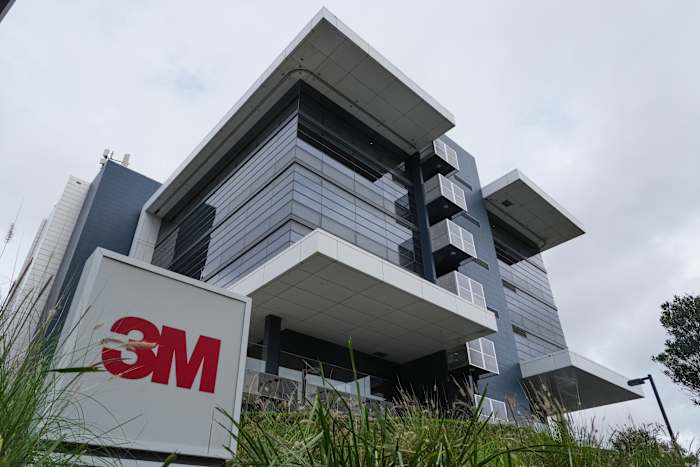

MELBOURNE – In a landmark move, the Australian government has initiated a lawsuit against the American multinational 3M, seeking over 2 billion Australian dollars (equivalent to $1.4 billion USD). The case centers on contamination by “forever chemicals” found in firefighting foam used at military bases, as announced on Thursday.
This lawsuit is Australia’s most substantial compensation claim to date, addressing pollution from per- and polyfluoroalkyl substances, or PFAS, across 28 defense sites. These synthetic chemicals are notoriously persistent in the environment, earning them the nickname “forever chemicals” due to their resistance to natural degradation.
The legal action was officially filed in the Federal Court of Minnesota, the home state of 3M’s headquarters, naming both 3M Company and its subsidiary, 3M Australia, as defendants.
3M has expressed its intention to contest the allegations made by Australia.
“3M has never produced PFAS in Australia and stopped selling the relevant products there about 20 years ago,” the company stated. “Nevertheless, the Australian Department of Defense continued using firefighting foams containing PFAS for nearly two more decades.”
Since the 1950s, PFAS have been integral to various household and industrial applications due to their ability to repel heat, stains, grease, and water. In particular, PFAS-based firefighting foams have been highly effective in combating fuel fires.
The Australian Defense Department warned residents near its Richmond Air Base outside Sydney in 2018 to reduce their consumption of locally produced fish and eggs, after PFAS was found in nearby groundwater.
Attorney-General Michelle Rowland on Thursday accused 3M of withholding information about environmental risks the foam posed.
“The Commonwealth (of Australia) is seeking more than AU$2 billion ($1.4 billion) in damages to recover significant past and future expenses incurred in investigating and managing contamination resulting from the historic storage and use of this foam,” Rowland told reporters.
Assistant Defense Minister Peter Khalil said his department had already spent AU$1.3 billion ($920 million) on managing and mitigating environmental impacts of the foam. The department had removed 200,000 metric tons (220,000 U.S. tons) of contaminated earth from bases and treated 13 billion liters (3.4 billion gallons) of contaminated water, Khalil said.
“We are prepared to take on powerful corporations when Australians and Australian communities have been impacted,” Khalil said.


