

WASHINGTON – Bay Area voters who were once represented by former Democratic U.S. Rep. Eric Swalwell will head to the polls Tuesday to trim a crowded field of nearly a dozen candidates competing to succeed him in a special congressional primary. For several contenders, it will mark their second appearance on the ballot for the same U.S. House seat in just two weeks.
A Democratic victory in the heavily blue district would further chip away at the already narrow Republican majority in the U.S. House.
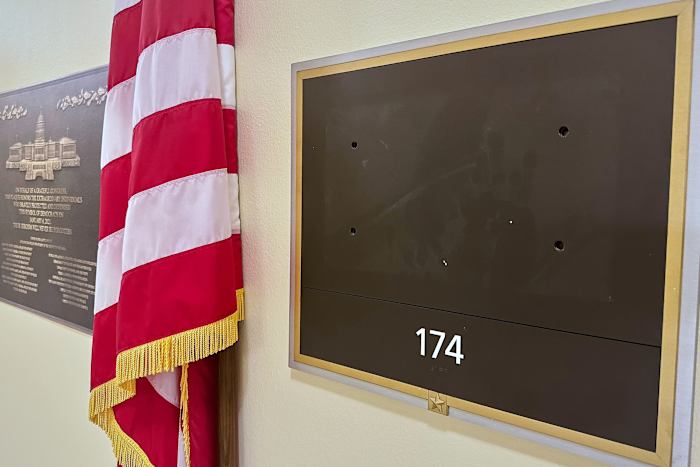
Swalwell stepped down from Congress in April after sexual-assault allegations surfaced, which he has denied. He also exited the California governor’s race, where he had been considered a leading contender.
Voters are effectively deciding between two separate races for Swalwell’s old seat. One is the regularly scheduled contest for a full term in the next Congress, beginning in January 2027. The other is Tuesday’s special primary, which will determine who could serve the final 15 weeks of Swalwell’s current term.
Democrats in the special primary for the shortened term in the 14th District include former Dublin mayor and Bay Area Rapid Transit board member Melissa Hernandez, state Sen. Aisha Wahab, and attorney and education entrepreneur Rakhi Israni Singh. Republicans on the ballot include real estate investor Wendy Huang and small business owner Dena Maldonado. Under California’s top-two system, all candidates appear on the same ballot, and the two highest vote-getters, regardless of party, will move on to the Aug. 18 special general election.
Those five candidates also competed in the June 2 primary for the full-term seat, which featured a slightly smaller field of nine candidates. Wahab and Hernandez finished first and second in that race, ensuring the district will stay in Democratic hands next year.
The boundaries of the 14th Congressional District were redrawn as part of a new congressional map approved by voters in a 2025 statewide ballot measure known as Proposition 50. The map goes into effect for the full-term seat in January, while the winner of the special election will serve under the current boundaries for the remainder of the year.
Proposition 50 was placed on the ballot in response to mid-decade redistricting efforts led by President Donald Trump in several Republican-controlled states. While the plan created a congressional map more favorable to Democrats, no dramatic changes were made to the 14th District. Under the current boundaries, Democrats made up 50.4% of registered voters in October, compared with 17.6% for Republicans. Under the new boundaries, Democrats comprised about 49.7% of registered voters as of mid-May, compared with about 17.4% for Republicans.
In 2024, Democratic presidential nominee and Vice President Kamala Harris carried the current 14th District with 65.8% of the vote. If the election had been held under the new boundaries, she would have received 65.4% of the vote.
Both versions of the district are contained entirely within Alameda County in the East Bay. The current district includes Hayward, Livermore, Pleasanton and Union City, as well as parts of San Leandro, Fremont and Dublin.
Here are some of the key facts about the election and data points the AP Decision Team will monitor as the votes are tallied:
When do polls close?
Polls close at 8 p.m. PT, which is 11 p.m. ET.
What’s on the ballot?
The Associated Press will provide vote results and declare winners in the 14th Congressional District special primary.
Who gets to vote?
Any registered voter in the pre-redistricting, pre-Proposition 50 version of California’s 14th Congressional District may participate in the special primary.
How many voters are there?
As of October 2025, there were about 429,000 registered voters in California’s current 14th Congressional District, including about 216,000 Democrats, about 76,000 Republicans and about 114,000 voters with no party preference.
How many people actually vote?
About 214,000 voters in the current iteration of the 14th Congressional District cast ballots in the statewide Proposition 50 ballot measure in November 2025.
About 126,000 14th District voters cast ballots in March 2024, the last time the district held a primary under these boundaries.
How much of the vote is cast early or by absentee ballot?
About 93% of Alameda County voters in the March 2024 primary and about 87% of 2024 general election voters cast their ballots either early in person or by mail.
As of Friday, about 106,000 ballots had already been cast in Tuesday’s election, including about 57% from Democrats, about 19% from Republicans and about 20% from unaffiliated voters.
When are early and absentee votes released?
In Alameda County, the first vote update of the night usually includes only results from mail voting, but the county typically still has a sizable number of mail ballots left to tally by the next morning.
Since mail voting tends to favor Democrats and in-person Election Day voting tends to favor Republicans, the release of only mail voting results at the start of the night could result in an early lead for Democratic candidates, while Republican candidates may narrow the gap as more Election Day results are counted. It also means that Democratic candidates could see additional gains later on because of the number of mail ballots tabulated after election night.
How long does vote-counting usually take?
In the statewide special election for Proposition 50 on Nov. 4, 2025, the AP first reported results from Alameda County at 11:14 p.m. ET, or 14 minutes after polls closed. The last vote update of the night was at 1:33 a.m. ET, with about 57% of total votes counted. The county completed about 99% of the vote county by Nov. 10.
When will the AP declare a winner?
The AP does not make projections and will declare a winner only when it’s determined there is no scenario that would allow a trailing candidate to close the gap. If a race has not been called, the AP will continue to cover any newsworthy developments, such as candidate concessions or declarations of victory. In doing so, the AP will make clear that it has not yet declared a winner and explain why.
How do recounts work?
There are no automatic recounts in California. Any registered voter may request and pay for a recount. The AP may declare a winner in a race that is subject to a recount if it can determine the lead is too large for a recount or legal challenge to change the outcome.
Are we there yet?
As of Tuesday, there will be 63 days until the Aug. 18 special general election for Congressional District 14 and 140 days until the Nov. 3 midterm general election.
___
Follow the AP’s coverage of the 2026 election at