
Share this @internewscast.com

() After President Donald Trump loosened regulations for mining the ocean floor, companies are preparing to take part in what could be a deep-sea minerals boom.
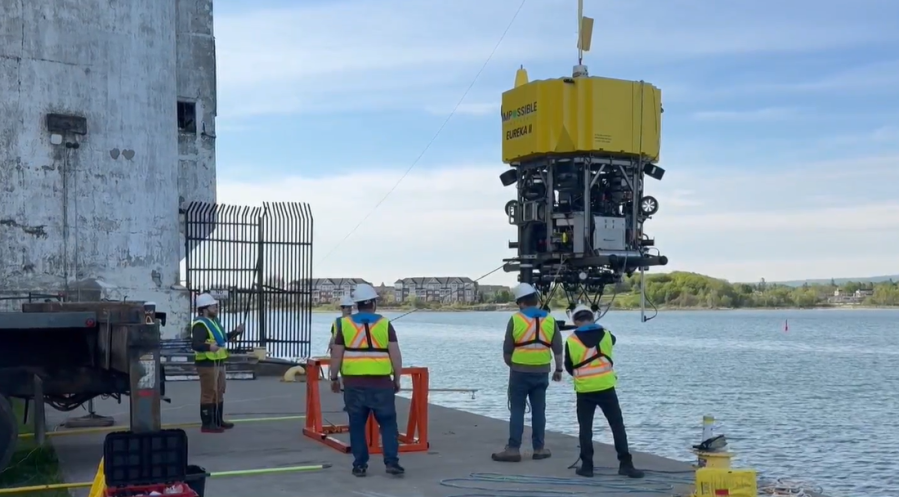
went behind the scenes with Impossible Metals, a company currently testing equipment to ensure it can handle the complexities of deep-sea mining.
The ocean floor holds value as a source of minerals such as manganese and nickel, which are metals used in applications like battery production.
With looser regulations, companies are in a worldwide race to bring technology up to speed and capitalize on a potential mining boom.
Impossible Metals showed its prototype deep-sea mineral harvesting system, including a high-tech underwater robot designed to responsibly retrieve nodules from the ocean floor and AI-enabled cameras that can ensure that any marine life is detected and avoided.
The rocks on the ocean floor are from long-extinct volcanoes and are rich in highly sought-after minerals, such as nickel, cobalt, and manganese, that can be used in the development of low-carbon energy.
Harvesting those rocks could help support the demand for batteries, which is expected to double by 2050. Combined with Trump’s recent executive order on regulations, this could spark a deep-sea mining boom.
“They are the planet’s biggest source of nickel and cobalt. Those are two very important minerals for batteries but also for defense,” said Impossible Metals cofounder Oliver Guhasekara. “They also have large quantities of copper and manganese. So these are all very important, what we would call critical metals that are needed for electrification and a whole range of industrial applications. And today, no one has actually mined these, so it is possible to find them in massive quantities in the deep ocean, and we believe we can extract them with much less cost than traditional land-based mining.”
The company envisions a future fleet of autonomous vehicles with cameras and robotic arms to pick up nodules individually and AI to detect and avoid marine life.