
Share this @internewscast.com

(NEXSTAR) It can be hard to imagine the dark, cold nights of November when you’re in the throes of August, but believe it or not, we’re not far from those drearier days.
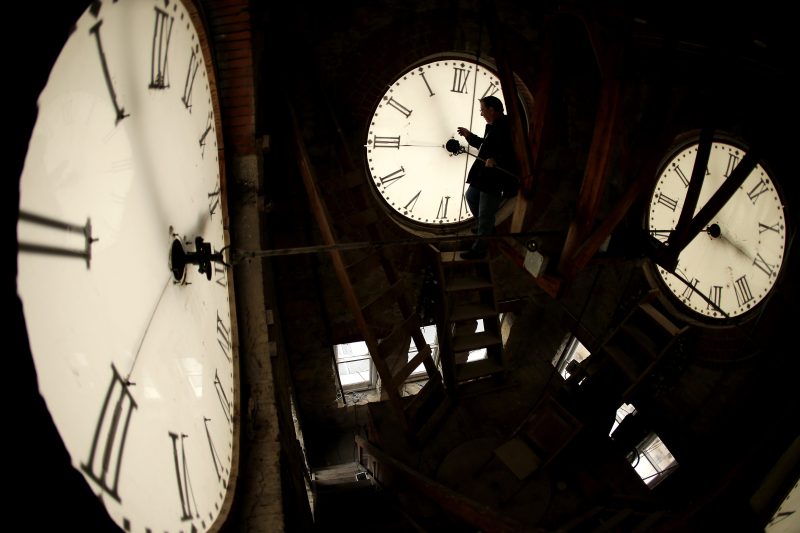
That means we’re also not far from the biannual tradition you either appreciate, despise, or otherwise forget about: the changing of the clocks for daylight saving time.
You don’t have to rush to check your calendar; we’re several weeks from November 2. But not long ago, it seemed the U.S. may have been gearing up to treat it like any other Sunday.
Within the last several months, bills to “lock the clocks” have been introduced, a Senate committee hearing has been held, and even President Donald Trump has weighed in on the discussions. Nonetheless, introduced bills have stalled, no more hearings have been held, and the need to set your clocks (in most states) back an hour remains.
So what does the future of the biannual changing of the clocks look like for the U.S.? So far, a lot like its past.
More than a century ago, the U.S. temporarily observed permanent daylight saving time setting the clocks forward an hour without setting them back a few months later during World War I. It lasted roughly a year and returned during World War II. That then set off decades of states and cities deciding what time to observe without much guidance.
There was a brief reprieve from the chaos when Congress passed the Uniform Time Act in 1966, formalizing when the country was on daylight saving time and standard time. A few years later, we tried permanent daylight saving time during an energy crisis, only for it to lose favor and be ditched. Since the mid-1970s, we’ve changed our clocks twice annually.
Most recent efforts targeting the practice primarily led by Congressmen from Florida have focused on putting the country back on permanent daylight saving time, a move many health experts disagree with. As in years past, the Senate and House bills to do as such have received bipartisan support and been passed off to committees, only to stall out.
The Senate Committee on Commerce, Science, and Transportation did hold a hearing in April that examined “the various issues around whether the country should continue ‘springing forward’ and ‘falling back’ each year with time.” Witnesses who support permanent daylight saving time and an alternative, permanent standard time, shared their opinions, and the bill advanced out of committee. It still needs a revote in the Senate, a spokesperson told Nexstar.
“Americans are sick and tired of changing their clocks twice a year it’s an unnecessary, decades-old practice that’s more of an annoyance to families than a benefit to them,” Senator Rick Scott (R-FL) previously said while introducing his Sunshine Protection Act alongside Senator Patty Murray (D-WA). Representative Vern Buchanan (R-FL) introduced companion legislation in the House. “President Trump and the American people are on board with locking the lock, and now it’s time we pass the Sunshine Protection Act to make Daylight Saving Time permanent.”
“It’s clear that Americans want to do away with changing their clocks twice a year, and my bill will end this outdated practice,” Rep Buchanan said in a statement to Nexstar. “We’ve had very promising conversations with House leadership, Energy and Commerce committee members and the Trump team about holding hearings and acting on my bill this Congress. It’s clear that public support and political headwinds are on our side, and I look forward to my bill becoming law.”
Some states, meanwhile, have taken it upon themselves to enact legislation that would put them on permanent daylight saving time in most cases, however, they need Congress’s approval.
Only two states observe year-round standard time, an option afforded them by Congress’ 1966 Uniform Time Act. States cannot opt for permanent daylight saving time. In most cases, the states standing on that side of the clock have introduced or passed measures calling on Congress to enact permanent daylight saving time or outlining conditions in which the state would observe daylight saving time permanently, typically based on actions by Congress or neighboring states.
A House bill to give states the power to observe daylight saving time all year has been introduced and referred to committee.
Multiple other states, however, have seen legislation introduced during their current legislative sessions to observe permanent standard time or exempt it from daylight saving time. Such bills in Arkansas, Kansas, Maine, Missouri, Nevada, North Dakota, Oregon, South Dakota, Utah, and Virginia have failed to pass already this year.
Legislation to observe permanent daylight saving time in Mississippi, Texas, and Virginia was also unable to pass.
Some states have not considered clock-locking legislation, either this year or in recent history. That includes Michigan, New Hampshire, and New Mexico. In the last five years, no related proposals have been brought forth in the District of Columbia or Rhode Island.
Regardless of state legislation, most of us are on track to gain an hour of sleep on November 2 as daylight saving time comes to an end.