

ANTALYA – The world has made no meaningful progress in slowing global warming over the past five years, as promised policies failed to materialize and positive steps were offset by decisions that increased emissions, according to a report released Thursday.
The assessment was issued during a United Nations climate conference in Antalya, Turkey, as government leaders gathered to discuss the accelerating effects of climate change and outline their next steps.
“Aggregated climate action has now essentially stalled for five consecutive years, with positive and negative actions canceling each other out,” the independent Climate Action Tracker said. In the five years following the 2015 Paris Agreement, global efforts reduced projected warming by a full degree Celsius (1.8 degrees Fahrenheit). Since then, however, projections have barely shifted.
Climate change is driven primarily by greenhouse gas emissions released when fuels such as coal, oil and gas are burned. Limiting the damage requires countries to make deep annual cuts in emissions. Each nation sets its own reduction plan, known as a nationally determined contribution, with targets and strategies varying around the world.
Because national efforts have not substantially lowered global emissions, the planet is now “headed toward an irrecoverable overshoot of 1.5 degrees Celsius” (2.7 degrees Fahrenheit) above preindustrial temperatures, the report said. That threshold was adopted by nations under the Paris Agreement as a key limit for avoiding the most dangerous climate impacts.
Even if every country fulfills its existing climate commitments — a highly uncertain prospect — global temperatures would still rise by 2.6 degrees Celsius (4.7 degrees Fahrenheit) above preindustrial levels by the end of this century. That projection is unchanged from 2024 and 2025, indicating that promises made last year have “failed to move the needle” on expected warming, said Sarah Heck, the report’s lead author and a climate policy analyst at Climate Analytics.
“This is still not enough,” Heck said. “Countries really do need to strengthen their targets.”
Island leaders delivered the same warning to the international community Wednesday, with more representatives from island nations expected to speak Thursday. Climate change is exposing every region to stronger storms, more intense heat waves, worsening droughts and floods. For low-lying island countries, however, rising seas are also steadily eroding and swallowing the land on which their communities depend.
“Every new oil well drilled, every piece of coal extracted is a threat to my country’s future. The discovery of new fossil fuel resources is not something to celebrate, but something to fear,” Marshall Islands President Hilda Heine said Wednesday. Leaders from Tuvalu, the Bahamas, Antigua and Barbuda, Niue and other island nations were expected to deliver similar appeals Thursday. “No one has the right to pollute their neighbors.”
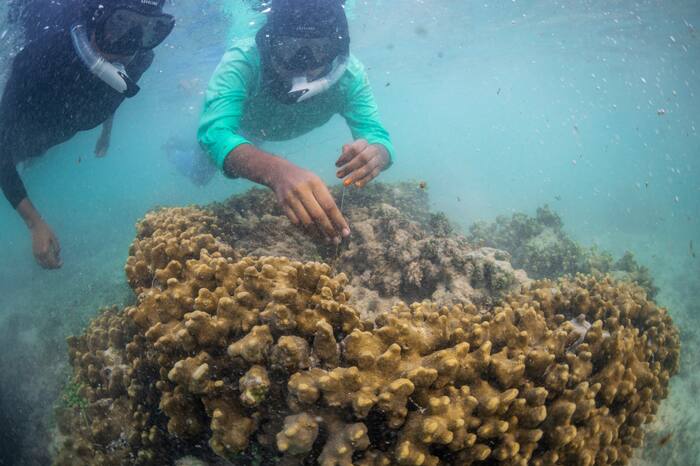
“It is time to wake up,” Heine said, describing coral she had watched transform from “bright and lush” to bleached white this year. The global response to passing the 1.5-degree target, she added, “must be overwhelming or the world we know is over.”
Barbados Prime Minister Mia Mottley said wealthy countries must do more than announce climate commitments. They also need to provide developing nations with the funding required to recover from climate disasters and adapt to rising temperatures.
“Pledges are not payments. But even the promised pledges are now 70% below previous levels,” Mottley told fellow leaders. “So the applause in this room, let us be clear, has never rebuilt a single home in any country.”
___
The Associated Press’ climate and environmental coverage receives financial support from multiple private foundations. AP is solely responsible for all content. Find AP’s standards for working with philanthropies, a list of supporters and funded coverage areas at AP.org.


