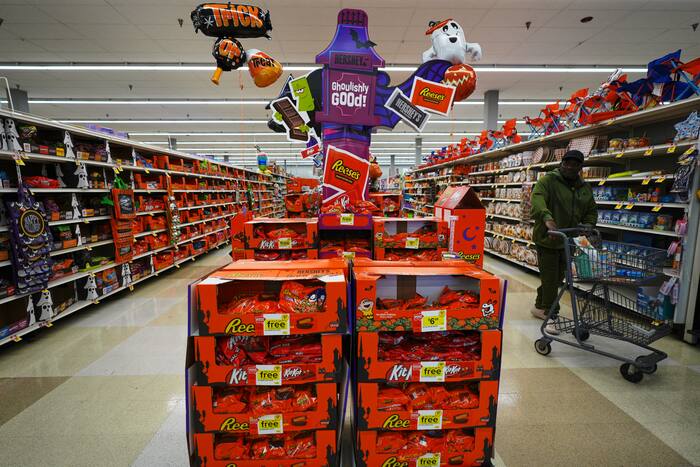


Halloween candy shoppers are starting the season cautiously, with steep chocolate prices and the broader cost-of-living squeeze weighing on U.S. sales.
Candy purchases dropped 6.7% during the four weeks ending Oct. 17 compared with the same period last year, according to market researcher NielsenIQ. The company also reported an 11.7% decline in mid-September, wiping out the early Halloween gains recorded over the previous two years.
Chris Costagli, a NielsenIQ vice president and food industry thought leader, said rising gasoline costs are adding to consumers’ affordability concerns and limiting spending on Halloween treats. The average U.S. price for regular gas stood at $4.29 a gallon as of Friday, nearly 40% higher than a year earlier.
Costagli said many households are directing more of their budgets toward essentials such as fuel, housing, clothing and groceries. As a result, he explained, some shoppers may not be skipping candy simply because they recognize higher prices—they may feel they no longer have enough money left to buy it at all.
Among the package sizes tracked through mid-October, only small bags posted sales growth. Larger and extra-large bags recorded the sharpest declines, suggesting shoppers are scaling back their Halloween candy purchases.
Candy prices have outpaced overall inflation for years. Government data shows that candy and chewing gum prices were 44% higher in September than five years earlier, while prices for food prepared and eaten at home rose 22.5% over the same period.
The price gap is especially visible in variety packs. Aldi was promoting a 135-piece Mars Inc. assortment—including Milky Way, Trix and Snickers—for $19.87 this week. That is nearly what shoppers paid for a 250-piece variety pack five years ago.
The biggest pressure point has been cocoa. Global cocoa prices soared to a record $10,710 per metric ton in January 2025, driven by poor weather in West Africa, the source of roughly 70% of the world’s chocolate, along with speculative activity in the cocoa futures market, according to the U.S. Bureau of Labor Statistics.
Prices then declined steadily, reaching $3,241 per metric ton in March, before beginning to rise again in the spring as the Iran war disrupted fertilizer supplies in Africa. The El Niño weather pattern is also expected to weigh on cocoa production, with hot and dry conditions forecast to continue through February.
Still, high prices do not fully explain the sluggish demand. Nielsen found that non-chocolate treats such as gummies and lollipops averaged $6.08 per pound during the nine weeks ending Oct. 17—about 3% below last year’s average. The lower price, however, did not translate into stronger sales.
Sally Lyons Wyatt, a global executive vice president and food industry adviser at Circana, said consumers are responding to expensive groceries by making smaller, more frequent shopping trips. They are also purchasing items closer to when they plan to use them, leading her to question whether many families are simply waiting until the final days before Halloween to buy candy.
Shoppers are approaching their food choices with greater care, both for holidays and everyday meals, Lyons Wyatt said. She expects candy sales to remain soft overall but does not believe the Halloween season is in danger.
The National Confectioners Association, which represents manufacturers including Mars, Smarties Candy Co. and Ferrara Candy Co., is taking a more upbeat view of the Halloween candy market.
“We are just now entering the peak period for Halloween and consumer enthusiasm remains incredibly strong,” the trade group said in a statement Friday.