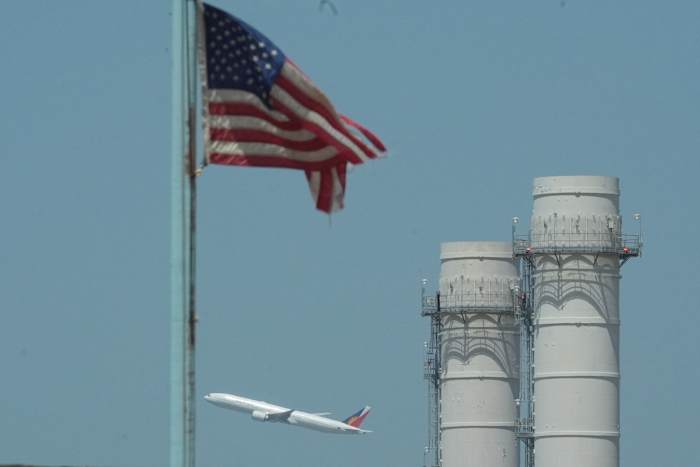


As tensions between the U.S., Israel, and Iran impact the global oil market, travelers face growing concerns about flight costs and availability for their upcoming late spring and summer vacations.
The International Energy Agency has sounded the alarm, indicating that Europe could soon face a shortage of jet fuel. This potential shortfall might compel airlines on the continent, along with those flying to Europe, to cut back on flights. Airlines have already responded to the rising price of jet fuel, which soared from approximately $99 per barrel in late February to a staggering $209 per barrel by early April, by increasing checked baggage fees and implementing fuel surcharges.
Illustrating the far-reaching effects of the conflict on the travel industry, Air Canada announced on Friday its plans to halt flights to New York’s John F. Kennedy International Airport from June 1 to October 25 to alleviate fuel expenses. Many other airlines, including U.S. giants like United and Delta, as well as international carriers such as Air France-KLM, SAS, Philippine Airlines, and Cathay Pacific, are trimming routes and either raising ticket prices or preparing to do so if tensions continue to disrupt oil flow through the Strait of Hormuz.
“Given the unpredictable nature of the current situation, airlines are opting for a cautious approach,” explained Shye Gilad, a former airline pilot now teaching at Georgetown University’s business school. He pointed out that this uncertainty is likely to keep airfare elevated until stability returns.
Despite escalating airfares and additional fees, travelers still have the opportunity to strategize and manage how much of their travel budgets are consumed by transportation expenses.
Act swiftly to secure the best deals.
While consumers may be tempted to see if the war ends before buying airline tickets, the “wait-and-see” approach to booking flights is riskier this year, travel experts say, especially the longer the war goes on and the closer to summer and other peak travel periods it gets.
“Presuming there is a lasting ceasefire — or better yet, peace agreement — it will take a few months for normal levels of jet fuel production and delivery to resume,” airline industry analyst Henry Harteveldt, president of Atmosphere Research Group, said.
Iran’s reversal on Saturday of its decision to reopen the Strait of Hormuz and President Donald Trump’s insistence on maintaining a U.S. blockade of Iranian ports illustrated the shakiness of prospects for oil flowing reliably again from the Persian Gulf and with it, an easing of the price pressure on airlines and their customers.
“My advice to travelers is this: If you find a flight whose schedule fits yours, with a fare you can afford, and on an airline you can at least tolerate, book it,” Harteveldt said. “But — and I cannot emphasize this enough —do not book a Basic Economy fare,” the cheapest but also the most restrictive airline ticket class.
Along with charging for checked bags and seat selection, most North American airlines do not give refunds or travel credits to passengers with Basic Economy tickets if they don’t cancel their trips within 24 hours of purchase. Policies may vary, but spending more for a Standard Economy ticket provides more flexibility, according to Harteveldt.
Paying more up-front for a refundable ticket also prove advantageous because “if the prices start to dramatically change, you can cancel and rebook for the better price,” Gilad said.
Travel experts say that for now, longstanding booking guidance offers a baseline for how early to reserve a flight to get the lowest airfare: international flights are typically the cheapest about two to five months in advance, and domestic trips about three to six weeks out.
Last-minute bookings and other situations that typically command higher prices are likely to keep climbing, Gilad said.
“Remember, especially if you’re traveling on the major airlines, they’re going to have more ability to adjust fares. If you book too close to your travel date, you’re going to pay more,” he said. “The farther out you can book, the better.”
Keep an open mind
Travelers who don’t want or need to reach a specific place at a specific time can find it easier to save on airfare. Shifting departure or return dates by a day or two — especially from peak weekends and holidays to midweek — often yields big price differences.
Choosing a different destination also may pay off. A flight from the U.S. may be significantly cheaper to one European city than another. Since budget airlines and trains connect much of Europe, and trains, an airport it cost less to get to can still provide easy access to a lot of other places.
Consumers not set on a certain arrival destination can try tools like Skyscanner’s “Explore Everywhere” feature to look for less-expensive options.
Looking beyond the closest airport for departures also can make a meaningful difference. Major hubs tend to offer more flights and lower fares than smaller regional airports.
In some cases, booking a separate short flight or train to a hub will unlock a cheaper long-haul airfare — think Milwaukee versus Chicago’s O’Hare International Airport.
Travel light
Sticking to a carry-on bag, when possible, can help avoid the higher fees for checking luggage that many major U.S. airlines introduced recently, including Delta, American, United, Southwest and JetBlue.
If packing light is not an option, plan ahead because airlines typically charge more to add bags closer to departure, especially within 24 hours of a flight.
Redeem your points
While fares are going up, the number of airline points needed for many flights has not increased at the same pace, said Adam Morvitz, CEO of points.me, a loyalty rewards redemption search platform.
Airlines still need to fill seats, Morvitz said, and offering more of them for fewer points is one way to do it.
Customers without enough points for a round-trip ticket still can redeem their travel rewards for one leg of a journey and free up cash for other travel expenses.
Many travelers redeem points directly through their credit card’s booking portal, where they’re typically worth about 1 cent each, Morvitz said. Transferring points to airline loyalty programs often unlocks significantly better value because most major credit card issuers partner with a range of airlines.
Take American Express, whose points can be transferred to Air France’s Flying Blue program. Travelers who don’t want to book with Air France still can use those points with the airline’s partner carriers, such as Delta, Morvitz said.
“Points are a form of wealth, and consumers should recognize that those points increase spending power,” he said.
Explore travel credit cards
For those new to travel credit cards, sign-up bonuses may yield benefits that can be put to use as soon as this summer. Some bonuses are large enough to cover a flight after meeting a minimum spending requirement.
“Even if you were to travel the entire year, taking one trip per month, you would still earn more points simply by signing up for the card than actually sitting on a seat and flying,” Morvitz said.
Points and rewards can add up through everyday spending on groceries, dining and gas. Some cards include perks like free or discounted checked bags.
Copyright 2026 The Associated Press. All rights reserved. This material may not be published, broadcast, rewritten or redistributed without permission.


