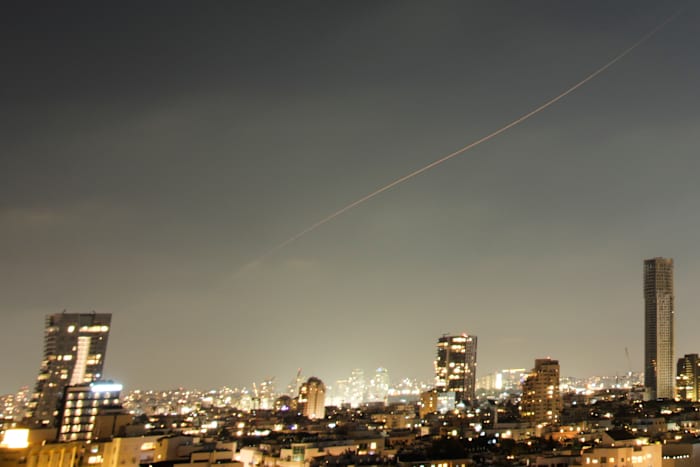


In a significant escalation, Israel conducted airstrikes targeting central and western regions of Iran early Monday, in retaliation for missile launches from Tehran. These developments have heightened tensions in the Middle East, stirring fears of a broader regional conflict.
Reports from Iranian state television confirmed explosions in cities such as Isfahan, Karaj, Tabriz, and Tehran, though details remained sparse initially. A witness in Tehran recounted hearing a major explosion to the west of the capital. As a precaution, Iran shut down the airspace around its primary aviation hub, Imam Khomeini International Airport, following the Israeli assault.
Iranian authorities have yet to disclose specifics about the targets or the extent of any damage. The country’s paramilitary Revolutionary Guard acknowledged the use of air-launched ballistic missiles by Israel but withheld further specifics.
In response to the strikes, the Israeli military issued a brief statement at dawn, confirming that the Israeli Air Force had targeted military sites linked to what they termed the “Iranian terror regime” in both western and central Iran, without providing additional information.
The White House remained silent on the matter, not commenting on whether the strikes had any coordination with the United States.
Prior to these events, efforts to maintain a fragile ceasefire between Iran and the United States had been hampered by ongoing clashes between Israel and Hezbollah, a Lebanese Shiite militia. Israel’s expansion into southern Lebanon, reclaiming territories they hadn’t held in 25 years, has further fueled concerns about an impending escalation of their military campaign.
On Sunday, Israel launched airstrikes in Beirut’s southern suburbs. Iran retaliated with its own strike on Israel, which led to Monday morning’s attack by Israel on Iran.
U.S. President Donald Trump earlier told a Fox News Channel reporter that he wanted the Iranians to stop firing missiles and return to the negotiating table. He also said that Israel’s strikes in Lebanon earlier Sunday were not coordinated with the U.S. and “I’m not happy about it.”
A senior U.S. official said Trump had called Netanyahu to urge him not to retaliate immediately for the Iranian missile attack. The official, who spoke on condition of anonymity to describe a private phone call, said that Trump believed he had convinced Netanyahu to wait.
Trump “got Bibi to hold off for the time being,” the official said. The official would not offer any other details of the call, and there was no immediate comment from Netanyahu’s office.
___ Matthew Lee in Washington and Michelle L. Price in Bridgewater, New Jersey, contributed to this report.


