
Share this @internewscast.com

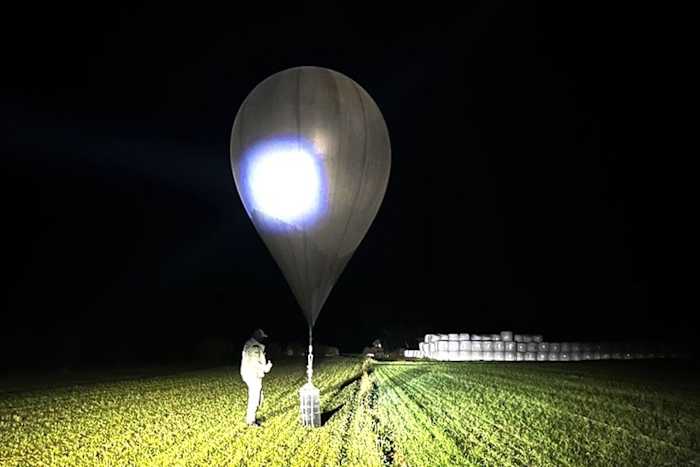
VILNIUS – In a decisive move, Lithuania’s government has proclaimed a state of national emergency, responding to security threats posed by balloons originating from Belarus, a close ally of Russia. These aerial incursions have breached Lithuanian airspace repeatedly in recent weeks, escalating regional tensions.
The situation has become increasingly strained as these meteorological balloons from Belarus have forced Lithuania to temporarily close its primary airport multiple times, causing significant disruption and leaving thousands of travelers stranded.
In an official statement, the Lithuanian government highlighted the “national security interests” that are at stake, emphasizing the potential danger to human life, property, and the environment. The government pointed out that these balloons have been used to transport “contraband” from Belarus, actions that some view as a form of hybrid warfare.
This declaration of emergency comes in the wake of a Cabinet meeting in the Baltic nation, which stands as a proud NATO member and a staunch supporter of Ukraine amidst its ongoing conflict with Russian forces, who invaded in February 2022.
Interior Minister Vladislavas Kondratovičius addressed the urgency of the situation, stating, “The emergency was declared due to disruptions in civil aviation and national security concerns. It’s imperative for institutions to enhance coordination.”
Kondratovičius assured that the emergency measures would be implemented with a focused and targeted approach, aiming to effectively address the challenges without unnecessary overreach.
While the balloons are used to smuggle cigarettes into Lithuania, officials in Vilnius see their numbers and trajectories as deliberate acts of disruption orchestrated by Belarus.
Europe overall has been on high alert after drone intrusions into NATO’s airspace reached an unprecedented scale in September and the Russian invasion of Ukraine nears its fourth year.
Copyright 2025 The Associated Press. All rights reserved. This material may not be published, broadcast, rewritten or redistributed without permission.