

SAN FRANCISCO – OpenAI, the innovative force behind ChatGPT, has taken a significant step towards becoming a publicly traded company, joining the ranks of other prominent artificial intelligence firms with eyes set on Wall Street.
On Monday, the San Francisco-based tech giant announced that it has filed confidential documents with the U.S. Securities and Exchange Commission. The company, known for its cutting-edge AI developments, is positioning itself alongside peers such as Anthropic, which similarly announced its intentions for an initial public offering in June. Both companies are now following the path blazed by Elon Musk’s SpaceX, as it gears up for an IPO, spotlighting its AI-driven space endeavors.
In a candid acknowledgment, OpenAI revealed, “We expect it to leak so we’re just announcing it. We have not decided on timing yet; it may be a while because there are things we want to do that are likely easier as a private company. But it’s a complicated set of tradeoffs and this gives us the option to go public sooner if that ends up being best.”
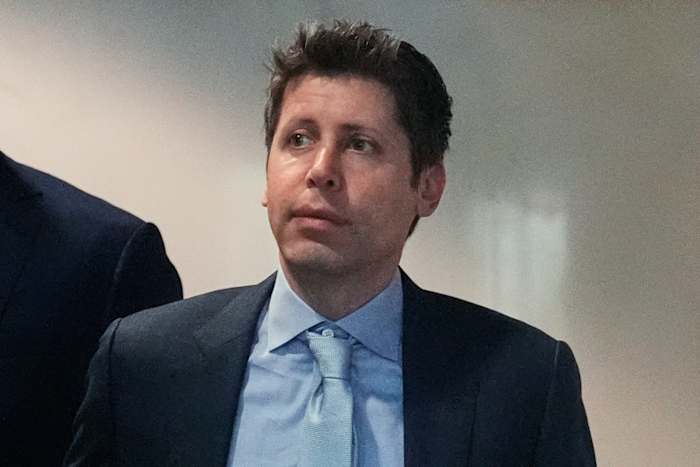
CEO Sam Altman had hinted at this strategic move last fall, suggesting an IPO as the “most likely path” due to the company’s considerable growth and the substantial capital required to push its technological boundaries further.
Founded in 2015 as a nonprofit with a mission to advance AI for the greater good, OpenAI has evolved into a significant player in the tech world, now boasting a valuation of $852 billion. As it stands on the cusp of a potential public offering, OpenAI’s journey reflects its relentless pursuit of innovation and influence in the AI sector.
OpenAI began in 2015 as a nonprofit dedicated to developing AI for the common good and is now a company valued at $852 billion.
Paving the way for going public was OpenAI’s decision last year to reorganize its business structure and convert itself into a public benefit corporation even as it remains technically under the control of a nonprofit.
In an April interview, OpenAI’s chief financial officer Sarah Friar declined to give a timeline for a potential IPO but said the company was already “acting with the good hygiene of a public company,” such as by measuring its revenue in the way a publicly traded firm would have to report earnings to the SEC.
“I want us to be ready,” she told The Associated Press. “I think it’s good to be able to tap the public markets. They’re much bigger than the private markets if you believe compute is a competitive advantage.”
She said OpenAI’s current valuation would make it one of the 15 biggest companies in the S&P 500.
She also said there is a “credentializing moment of being a public company.”
“At that point, people are checking your balance sheet, the SEC is governing you and so on,” she said.


