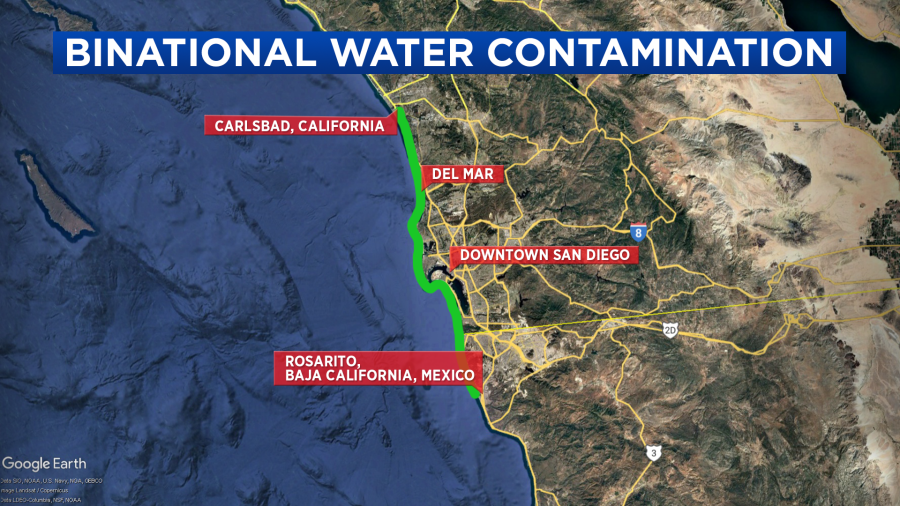

SAN DIEGO (Border Report) — A binational analysis of data from 20 beaches on both sides of the border shows fecal bacteria is present in the water and exceeds health standards almost year-round.
Over a two-year period, One Coast Project and the Permanent Forum of Binational Waters looked into water samples gathered since 1999 along the coastline from Carlsbad, California, about 50 miles north of the border, to Rosarito, Baja California, roughly 15 miles south of Tijuana.
The study found that in Southern California’s beaches, the highest concentrations of enterococci bacteria were reported during the spring, averaging over 15,000 units per 100 milliliters of water, nearly 100 times the binational legal limit average in both countries.
Samples taken during the winter also found high levels of the bacteria.
Enterococci appears when there is fecal contamination in the water, and it can cause gastrointestinal, skin, and urinary tract infections.
The research reveals that from 1999 to 2017, beaches in Mexico and the United States registered few cases exceeding enterococcus limits.

But since 2018 in Mexico and 2020 in the United States, contamination has risen sharply.
In 2025, nearly half of the samples from Mexican beaches and 3 out of 4 from U.S. beaches exceeded allowable enterococcus limits and were at record levels.
“In the U.S. side, there’s more standardized procedures in terms of how often testing is done, basically daily, but on the Mexico side it can be just once a month if that,” said Rosario Sanchez, director of One Coast Project.
Sanchez said their findings show that in the most critical years, on both sides of the border, coastal water quality fails to meet health standards for more than 325 days a year, leaving just 40 safe days for recreational use.
“This has impacts on both sides on both sides of the border, we’re not talking just water quality, but we’re talking about health.”
The research will be formally presented during the “Shared Waters and Responsible Economic Development: Data, Talent, and Competitiveness” event on Sept. 4 in Tijuana.
Research was taken from water quality data gathered by the California Water Board and the Tijuana State Public Utilities Commission (CESPT).
According to Sanchez, the goal of the study is to generate public awareness and to foster scientific collaboration, citizen participation and climate resilience in the border region.
You can see the study and its findings by clicking here.


