
Share this @internewscast.com

ORLANDO, Fla. – For many Floridians, the sight of unsightly algal blooms – those large, green masses that cloud many waterways and natural springs – is all too familiar.
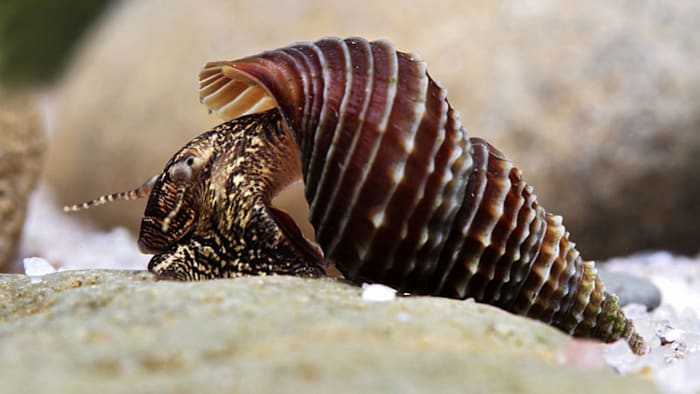
Interestingly, an unexpected ally might help tackle this persistent issue: snails.
This intriguing possibility comes from a study by scientists at the University of Florida’s Institute of Food and Agricultural Sciences (UF/IFAS), who have explored this ecological connection.
According to a statement from UF/IFAS, the blame for frequent algal blooms in Florida’s springs has traditionally been placed on elevated nitrate levels in the water.
Nonetheless, the research suggests that the dwindling numbers of algae-eating creatures, especially a type of freshwater snail known as “Elimia,” combined with reduced levels of dissolved oxygen, might be more significant factors in the proliferation of these blooms.
Researcher Dina Liebowitz noted, “Our surveys across eight different springs, conducted repeatedly over a year, revealed a strong negative correlation between snail presence and filamentous algae blooms, indicating that algae levels were typically low where snail populations were high.”
Per Liebowitz, in environments with low amounts of algae and healthy oxygen levels, these snails can help to balance the ecosystem.
As such, when it comes to keeping algae at manageable levels, factors like the Elimia snail population and the condition of dissolved oxygen need more consideration by environmental management groups.
“Depleted dissolved oxygen supplies can make the snails lose vigor for foraging activity and, even though there’s still plenty of algae to be eaten, their survivability plummets, or they can slink off somewhere else,” the release reads.
In all, researchers say the overall success of snail control of algae blooms depends on three factors:
-
The amount of algae initially present
-
The size of the snail population
-
The levels of dissolved oxygen
“When you have these balanced ecosystems and the snails are doing what they do, they’re little janitors,” Liebowitz continued. “They keep the springs beautiful for us, they provide an ecosystem service, and we don’t have to do anything.”
Copyright 2026 by WKMG ClickOrlando – All rights reserved.