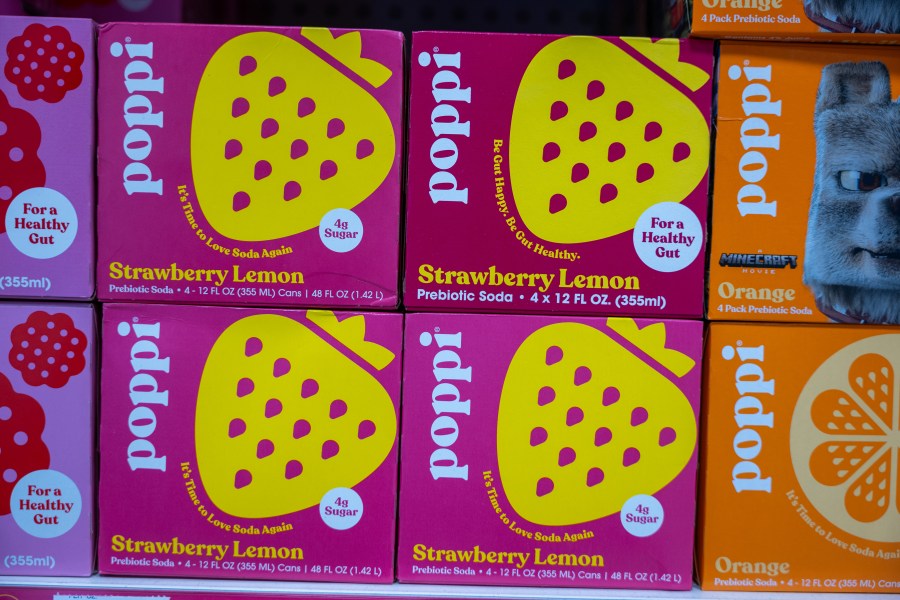

(NewsNation) — Prebiotic sodas are gaining traction, marketed as healthy, gut-supporting, and anti-inflammatory substitutes for standard soft drinks.
Some health specialists applaud prebiotic sodas for their potential digestive benefits, while others caution that the scientific evidence supporting these benefits is still developing.
Prebiotics refer to the beneficial microorganisms available in foods such as yogurt, cheese, kefir, and fermented veggies. Regular intake of probiotics can promote proper intestinal function, as noted by Harvard Health. Unlike traditional or diet sodas, prebiotic beverages often have reduced sugar content and are typically made with ingredients like inulin, a fiber-rich sweetener sourced from chicory root or other plants.
Inulin, though deemed safe by the Food and Drug Administration, can cause digestive issues for people with irritable bowel syndrome, for example, according to research published in the National Library of Medicine.
Cleveland Clinic Nutritionist Julia Zumpano told The Hill that she recommends checking your prebiotic beverage’s sugar content.
“These drinks can contain a lot of added sugar which is not good for your overall health,” she explains, adding that it’s best to limit intake and opt for prebiotic foods most often.
UCLA Pediatric Dietitian Danielle Mein said in a recent blog post that drinks containing artificial sweeteners instead of sugar may cause a similar response in the body.
“The routine use of artificial or alternative sweeteners for children, especially in beverages, is not recommended. Consuming artificial or alternative sweeteners in a beverage can still result in the body responding similarly to ingesting regular sugar. So though these are touted as no- to low-calorie sweeteners, they still result in a similar response in the body; we taste something sweet, which then activates what is called the cephalic phase of digestion, resulting in insulin secretion, just as if we consumed regular sugar.”
Prebiotic soda sales reach $777M
Despite mixed opinions, prebiotic soda sales are booming.
“We found that consumers, especially wellness-focused Gen Z-ers and Millennials, were really interested in juice and prebiotic sodas,” Becca Kerr, CEO of Nutrition for The Coca‑Cola Company, said earlier this year.
Sales jumped from $33 million to $777 million over the past three years, according to NielsenIQ. Some of the more popular brands don’t contain nearly as much sugar as a typical soft drink.
“You’re looking at 50-plus grams of sugar in a can of soda, versus five grams of sugar in a Poppi or an Olipop,” said nutritionist Courtney Swan. “So, I think long-term, the trend of having lower sugar sodas will probably stay.”
Pepsi recently acquired Poppi for more than $1 billion.