
Share this @internewscast.com

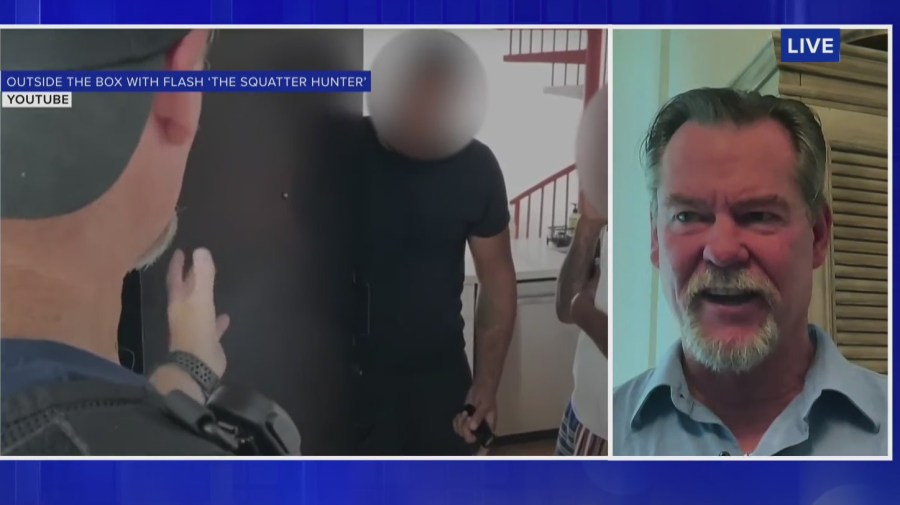
() Flash Shelton, known as “The Squatter Hunter,” who helps property owners remove illegal occupants, says homeowners can spend up to a year and at least $30,000 to $40,000 trying to evict squatters through the legal system.
Shelton, whose videos documenting his anti-squatter crusade have garnered more than 10 million YouTube views, said the lengthy legal process forces some homeowners to lose their properties entirely while paying mortgages on occupied homes and renting alternative housing.
“Some people are losing their homes over it,” Shelton said Wednesday on ’s “Elizabeth Vargas Reports,” explaining that homeowners often face enormous expenses beyond legal fees while squatters occupy their properties.
“it’s unfair and there’s no common sense the way the laws are written now,” he said.
Shelton developed his methods after his mother became a victim in 2019. He uses what he calls a “lockout” technique, waiting for squatters to leave before entering the property with his own lease and locking them out.
“All I did was just trying to figure out a system when my mom was a victim, and it was just using the same laws and rights that they’re using and just turning it against them,” Shelton said.
The problem has existed for decades, according to Shelton, who recalled hearing as a child that people could “live rent free for six months” without consequences before moving to another property.
He distinguishes modern squatters as “transient squatters” who seek free housing rather than property ownership through adverse possession.
Shelton’s approach includes threatening to expose squatters on television and camera, which he says motivates them to vacate voluntarily. His methods have attracted enough attention to land him a new show called “Squatters,” premiering July 1 on A&E.
The squatter problem has prompted legislative action in several states. Florida recently passed laws protecting both residential and commercial property owners, with Gov. Ron DeSantis signing legislation specifically addressing unauthorized occupants in commercial properties such as hotels and motels.
In many jurisdictions, police treat squatting as a civil landlord-tenant dispute rather than a criminal matter, leaving property owners with limited immediate recourse through law enforcement.