

AUSTIN (KXAN) Though roughly 700 miles from the Texas border, the New World screwworm poses a significant threat that could impact American beef prices without ever physically crossing into the United States.
According to the Centers for Disease Control and Prevention, New World screwworms are a species of fly larvae that infest and feed off the flesh of warm-blooded animals.
With the number of beef cows in the U.S. already at a low, it’s only a matter of time before Washington’s halt of cattle imports from Mexico in May could further reduce beef production.
“Screwworm is already leading to higher prices, and that’s because our response has been to close the border,” said David Anderson, professor and extension economist with Texas A&M AgriLife Extension Service. “We’re right here on the edge of when we should start seeing reduced beef production because of the loss of those animals.”
Anderson said that closing the border has caused the U.S. to lose out on its import of about 4% of feeder cattle, lightweight animals that go to feedlots until they are at market weight.
“Given our tight supplies in the U.S., that [4% reduction] becomes significant,” Anderson said. “It’s even more significant for Texas feedlots because most of [the calves] are fed here.”
The U.S. generally imports over a million cattle from Mexico every year, according to Reuters.
How much higher are beef prices?
This comes amid already record-high retail beef prices.
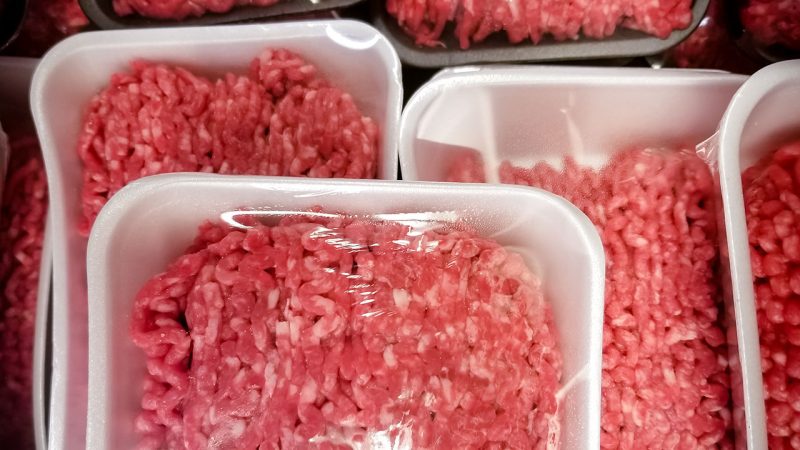
Retail prices for lean ground beef, which includes more affordable cuts and trimmings, have increased, rising from $6.73 per pound last year to $7.48 this year, according to Texas A&M AgriLife. This represents a substantial jump from $4.50 per pound in April 2019.
Choice ribeye steaks have gone from $9.75 per pound at the end of April 2024 to $14.18 during April 2025, according to Texas A&M AgriLife.
Anderson said it’s typical to see an additional spike during the summer grilling season, as there is a peak in demand.
While some consumers have shifted to meat alternatives because of inflated pricing, no data suggests that higher prices are turning most consumers away from purchasing beef, Anderson said.
“Do we get to some point where all of a sudden everybody goes, ‘My gosh, I’m not gonna buy. I refuse to pay that much?” he said. “So far, we haven’t gotten there.”